STOP LABORS TOWERS
NEWSLETTER – November 3 2025
WRL EES Hearing – Week 1
The Western Renewables Link (WRL) Environment Effects Statement (EES) public hearings commenced on Monday, October 27, 2025.
🗓️ Overview of the First Week
- Commencement: The hearings officially began on Monday, October 27, 2025, led by an independent Inquiry and Advisory Committee (IAC) appointed by the Victorian Minister for Planning.
- Initial Focus: The first week of the hearing focused on the Proponent’s (AusNet’s) case – introducing the project, its rationale, and summarising the findings of their Environment Effects Statement.
- Hearing Format: The hearing is designed to be a hybrid format, allowing participants and observers to attend both in person and online.
- Long-Running Process: It’s important to note that the WRL EES hearing is an extensive process, scheduled to run for approximately 15 weeks in total, concluding around March 5, 2026 (with a break over the Christmas/New Year period). The first week was just the start of this lengthy review.
The IAC’s role is to consider the EES, all public submissions, and the evidence presented at the hearing before providing a report and recommendations to the Minister for Planning.
Community Action Guide: Western Renewables Link (WRL) EES Hearings
Holding Power to Account
A strong community presence is essential to hold the proponent (AusNet) and its so-called independent experts accountable. In Week 1, we have already seen examples of the proponent’s witnesses downplaying significant and life-threatening risks associated with the project.
This disingenuous and dangerous approach must be confronted.
Your participation matters. Each voice contributes to transparency, truth, and community strength.
Below is a practical step-by-step guide to help you follow the hearings, access documents, and take part directly in questioning.
Step 1 – Access the Hearing Timetable
The Western Renewables Link (WRL) Environment Effects Statement (EES) Public Hearingscommenced on Monday, 27 October 2025, and will run through to Thursday, 5 March 2026.
How to Find It
- Visit the Inquiry and Advisory Committee (IAC) main page:
🔗 WRL EES Hearing Main Page - Go to “Tabled Documents.”
🔗 Tabled Documents Page - Download the latest Hearing Timetable (Document Here)
The timetable lists:
- Which expert witnesses are scheduled to appear,
- Their topics (e.g., bushfire risk, landscape and visual impacts, agriculture), and
- The session dates and times.
Community Submissions
The current timetable lists expert evidence, councils, and agencies through to late December 2025.
Community submitters are expected to present between January and March 2026, with Ballarat hearings (Weeks 11–14) scheduled for February 2026.
Keep checking for timetable updates to confirm your appearance date.
Step 2 – Review Expert Materials
Before each presentation, the proponent’s “independent” experts usually upload an overview of their evidence to the Tabled Documents section.
You can find them here:
🔗 Tabled Documents – Expert Evidence
Examples of Key Expert Documents
- Joint Expert Statement – Economics (AusNet)
- Joint Expert Statement – Bushfire (AusNet)
- Joint Expert Statement – Landscape and Visual (AusNet)
Additional Resource – Counterarguments and Rebuttals
Within the Tabled Documents section, you’ll also find Counterarguments and Rebuttals submitted by other parties. These documents are particularly valuable, as they often challenge or expose weaknesses in the proponent’s expert evidence.
Tip
Read these expert summaries before their scheduled presentation.
They reveal the assumptions, omissions, and technical biases underpinning the evidence – crucial for preparing questions or identifying misleading claims.
Step 3 – Request to Cross-Examine (Ask a Question)
If you wish to pose a question or cross-examine an expert, you must register your intent with the IAC Secretariat no later than 12:00 pm the day beforethe expert is due to appear.
| Requirement | Actionto Take | Details/ Contact |
| Notify the IAC | Email your intention to cross-examine. | 📧 planning.panels@transport.vic.gov.au |
| Deadline | Before 12:00 PM (noon) on the day prior to the expert’s scheduled appearance. | Confirm the expert’s date in the hearing timetable. |
| Email Content | Simply state your name, the expert or topic, and the approximate time required. | Example: “[Your Name] requests time to cross-examine [Expert Name] on [Topic] and estimates [X] minutes is required.” |
| Your Safeguard | You are formally listed as a participant for that part of the evidence. If your question is answered during the session, you may simply pass. | This ensures your right to speak is protected and recorded. |
Why This Matters
By following these steps, you help ensure the WRL hearing process remains transparent and accountable.
Every individual who observes, questions, or challenges the evidence strengthens the integrity of the process.
The hearings are not merely procedural – they are a test of truth.
When the facts are distorted, community participation becomes the only real counterbalance to corporate spin and political complacency.
Quick Links Recap
The Price of Indifference: How Bureaucratic Hubris and Corporate Cynicism Conspired Against Rural Victoria
AusNet’s – Western Renewables Link Benefit Sharing Program
There are few spectacles more revolting than a government and its corporate proxies congratulating themselves for robbing the very people they were elected or licensed to serve. The so-called Western Renewables Link Benefit Sharing Program is one such spectacle. In it, we see the modern Australian state at its most decadent: indifferent to truth, allergic to shame, and entirely convinced that money-particularly other people’s-can purchase moral legitimacy.
Let us strip away the euphemisms. The $55 million “Benefit Sharing Program” is not a benefit – it is hush money.It is a shallow, tokenistic offering designed to decorate the $3.5 billion Western Renewables Link, an act of coercion dressed in the trappings of consent. AusNet and the Victorian Government call it “community investment”; in reality, it is the administrative equivalent of tossing loose change at the peasants while erecting steel pylons through their backyards.
Coercion Dressed as Collaboration
The beauty of this deception lies in its presentation. The proponent speaks of partnerships and consultation, yet landholders who refuse access to their properties face significant fines. It is extortion with an environmentalist smile.
It is: a marriage of ideology and cowardice. Bureaucrats who fancy themselves as planet-savers outsource the moral cost to those who cannot fight back. They know what they are doing. They simply no longer care who pays the price.
The Theatre of “Critical Infrastructure”
Labeling the Western Renewables Link as “critical infrastructure” was a masterstroke of Orwellian branding. The phrase gives moral cover to what is, in essence, a compulsory acquisition program masquerading as climate action. The designation allows the state to override local opposition, ignore environmental contradictions, and treat legitimate protest as a nuisance rather than a warning.
Under the antiseptic language of regulation – “RIT-T”, “net market benefit”, “cost-effective delivery”- lurks a simple truth: the cheapest solution has been deliberately chosen because it externalizes every cost imaginable. Visual blight, biodiversity loss, property devaluation, social fracture-these are all off-balance-sheet liabilities. The rural landholder becomes collateral damage in a war waged not for the planet, but for political convenience.
The Great Lie of Cost and the Religion of Expedience
To justify their desecration of Western Victoria’s landscape, AusNet inflated the cost of undergrounding the transmission line by up to thirty times. Independent engineers estimate the real multiplier at roughly two to four but when applied with a triple bottom line analysis undergrounding is superior. But the truth would have been inconvenient. If undergrounding were seen as viable, the illusion of necessity would collapse.
The state then invoked urgency as its final defence: “We must act now; there’s no time for alternatives.” A familiar refrain. It is the same moral blackmail used in every bureaucratic panic, from lockdowns to renewables. The emergency, invariably of their own making, becomes the justification for every indecency that follows.
The Arrogance of Undervaluation
If one seeks the moral rot at the heart of this enterprise, it lies in the contempt with which the EES describes farmland as “relatively low-value.” Here, one hears the cold voice of technocracy-calculating, indifferent, derisive. Land that sustains families and communities is reduced to a footnote in an accountant’s spreadsheet.
It is this arrogance that defines the age: a governing class so insulated by ideology that it no longer perceives its own cruelty. They see “low-value land”; the people who live there see their heritage, their livelihood, their home. The bureaucrat’s indifference is the greatest violence of all.
A Theatre of Tokenism
The Benefit Sharing Program’s projects-a $200,000 playground here, a few mobile towers there-are masterpieces of propaganda. Cheap, photogenic, and strategically timed to coincide with inquiry hearings, they serve a single purpose: to manufacture headlines of goodwill while concealing a landscape of betrayal.
The $55 million, amounting to a mere 1.57% of total projected project cost, is not designed to benefit anyone. It is designed to be seen. The optics are everything. The outcome-ruined vistas, divided communities, diminished capital-is someone else’s problem.
Conclusion: Indifference as Policy
The Price of Indifference is precisely that-a moral economy where betrayal is subsidized and integrity penalized. The $55 million fund is a public relations invoice, not an act of restitution. It buys narrative control, not justice.
In another era, governments at least pretended to act in the public interest. Today, they simply brand their indifference as progress. The proposed towers are not monuments to renewable energy; they are monuments to the extinction of accountability.
The tragedy is not that we have lost our moral compass. It is that we now mistake our apathy for virtue-and call it the future.
Labor’s environmental reform racket by Mike Seccombe, The Saturday Paper, 25 October 2025

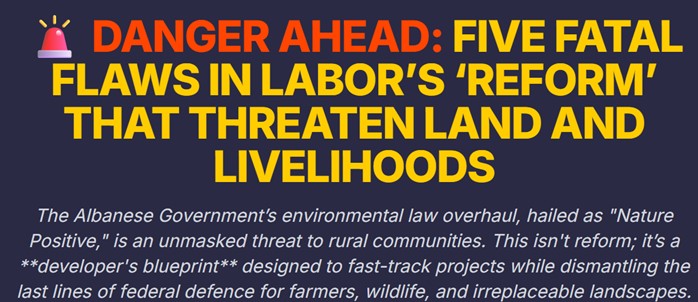
Labor’s ‘Blank Cheque’ Betrayal: New Nature Laws Prioritise Developers Over Extinction Crisis
The Albanese Labor Government is facing a furious backlash from conservation groups and crossbench senators over its planned overhaul of Australia’s core environmental laws, with critics condemning the rushed package as a “blank cheque” for developers that is worse than the status quo.
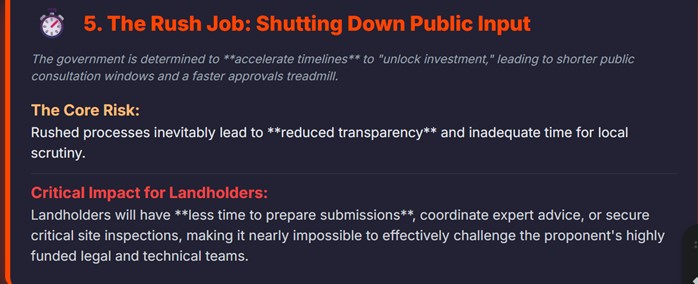
Despite promising to deliver “Nature Positive” reforms, the government is accused of pushing legislation that prioritises the fast-tracking of industry approvals – including for mining and large-scale infrastructure – while watering down federal environmental protection.
The Core Problem: No Standards, No Scrutiny
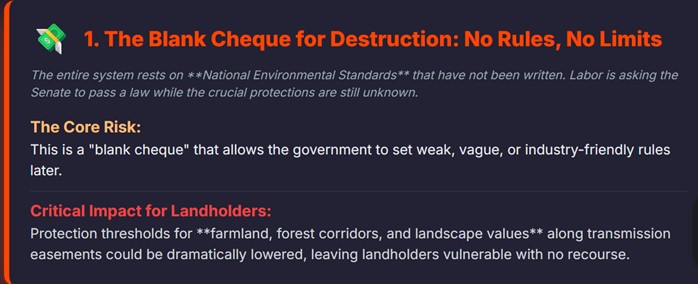
The central failing of the proposed reform to the Environment Protection and Biodiversity Conservation Act 1999 (EPBC Act) is a fundamental lack of detail on the most crucial component: the National Environmental Standards.
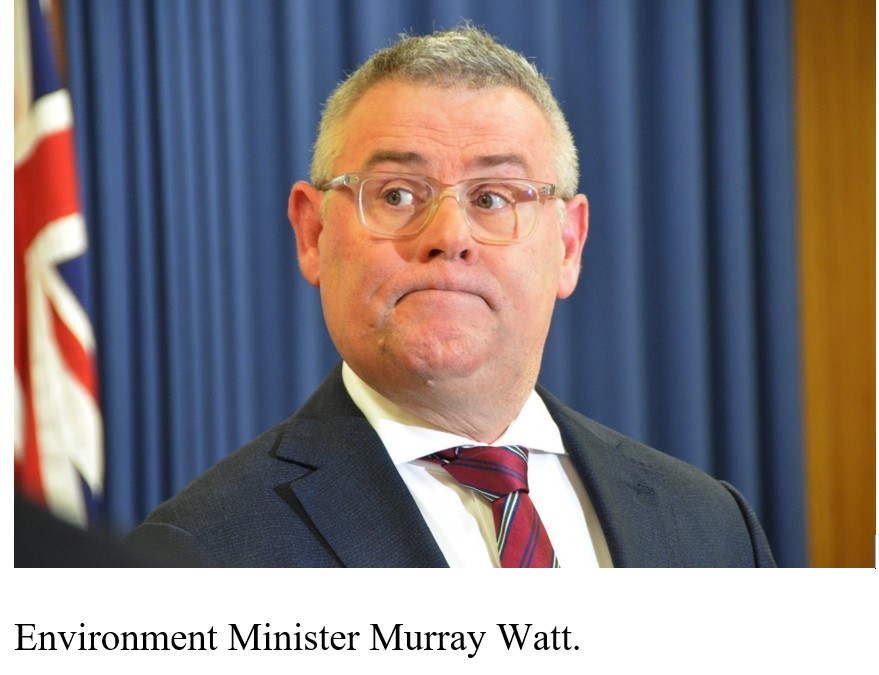
The Blank Cheque: Environment Minister Murray Watt is seeking to rush the primary legislation through parliament before the end of the year, but the legally binding standards that define what developers must actually protect will only be set later in 2026. Critics, including Greens Senator Sarah Hanson-Young, argue the Senate is being asked to “sign a blank cheque” that hands power to developers without knowing the environmental rules they must follow.
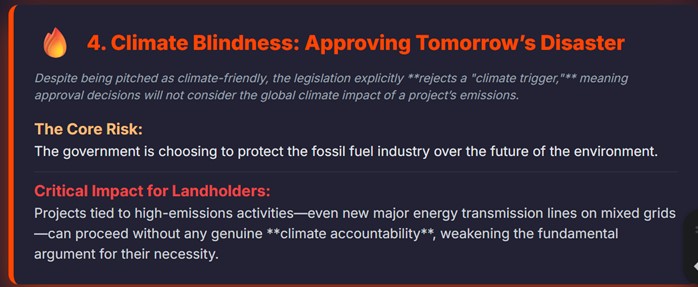
The Climate Handbrake:
In a major disappointment to environmentalists, the government has ruled out a “climate trigger.” This means that the global climate effect of high-emissions projects (like new gas or coal proposals) will not be a determining factor in their approval, contradicting the government’s own climate rhetoric. Companies will merely have to disclose their emissions, not limit them under this Act.
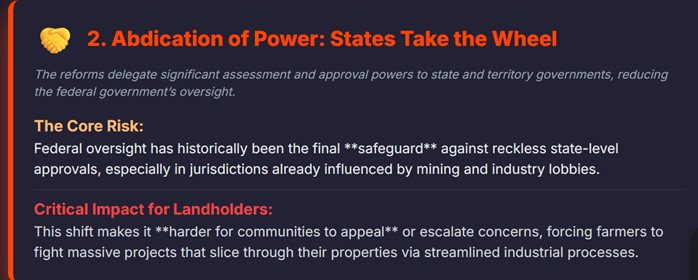
Power Shift: Handing Protection Back to the States
A key element of the proposed “streamlining” is the delegation of assessment and approval powers to state and territory governments. This has been met with “shock and anger” by community groups who fear a race to the bottom on environmental standards.
The government’s proposal weakens environmental protections and makes destroying nature easier, faster and cheaper for industry. There’s no protection for native forests or the climate. The package is worse than the status quo.”— Greens Senator Sarah Hanson-Young.
Environmental organisations warn that handing control to jurisdictions with weaker lobbying laws (such as the Northern Territory or Western Australia) will allow farmers, rural communities, and Traditional Owners to be “railroaded by corporate giants.”
Greenwashing the Destruction
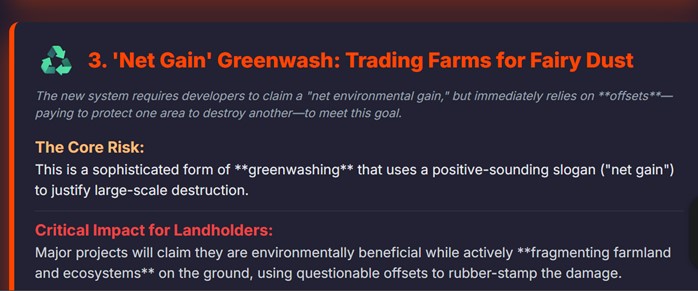
While the reforms include headline-grabbing features – such as fines up to “A$825 million” for companies that breach the new laws and a requirement for developers to show “net gain” for the environment – critics say these measures are insufficient cover for institutionalised environmental destruction:
Offsets First: The “net gain” requirement is weakened because it still allows developers to heavily rely on offsets (compensating for destruction elsewhere), which conservationists routinely argue fail to protect “like-for-like” habitat.
Faster, Easier, Cheaper: The primary political calculation appears to be meeting industry’s demand to expedite approvals for critical infrastructure like transmission lines and housing, rather than fixing the underlying biodiversity crisis that has seen an area the size of Tasmania cleared since the current Act was introduced.
The question for every Australian is whether the government seeks reforms that actually protect nature, or reforms weighted towards making it easier and cheaper for business to destroy it. The current package, rushed through with crucial details missing, strongly suggests the latter.
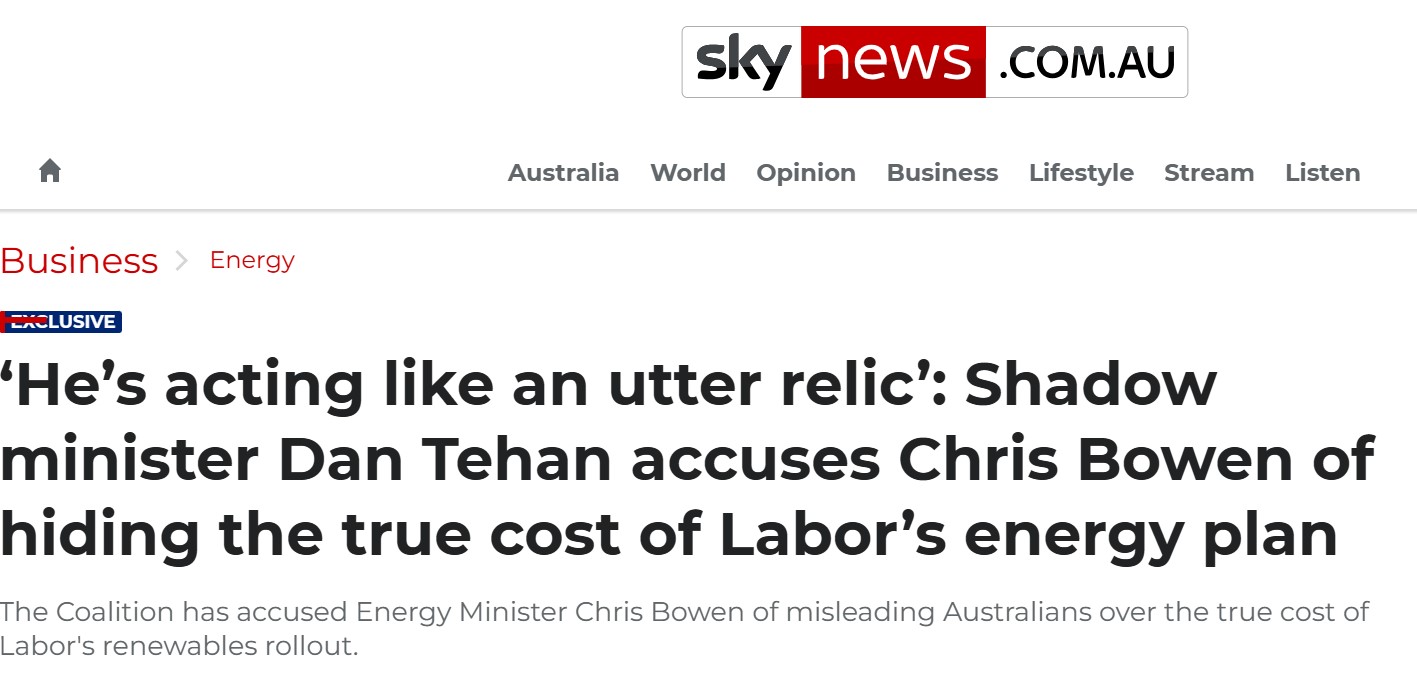
‘He’s acting like an utter relic’: Shadow minister Dan Tehan accuses Chris Bowen of hiding the true cost of Labor’s energy plan
Labor’s Towering Deception: The Bill They Don’t Want You to See
The Tower Deal: What Labor Won’t Put on the Record
On the surface, the Australian Labor Party’s energy transition plan is sold as a simple promise: cleaner energy and lower bills.
But according to internal documents reviewed by individuals with direct knowledge of the planning process, and interviews with current and former energy officials, the real cost of this plan has been deliberately obscured. Behind the slogans is a strategy built not on transparency, but on shifting billions in costs onto the bills of ordinary Australians while ensuring guaranteed profits for transmission companies.
The centrepiece of that plan in Victoria is the Western Renewables Link (WRL).
A Promise Crafted for the Podium
When Chris Bowen repeated the $275 energy bill reduction pledge, officials inside the department already had modelling that told a different story. One former adviser involved in early briefing work said the number was “a political line, not an economic forecast.”
According to this individual, briefing notes prepared in the months leading up to the 2022 federal election contained explicit warnings about “infrastructure cost pressures” and “network volatility” that could offset or erase any promised savings. None of those warnings were included in public statements.
The Structure No One Talks About
Three senior energy officials familiar with the structure of the transmission rollout described how the cost is being buried in the regulated asset base—a mechanism that guarantees private operators long-term returns.
“The government doesn’t pay. The companies don’t pay. Consumers pay,” one regulatory insider said. “It’s neat. It’s invisible. And it’s locked in for decades.”
Under this model, new transmission infrastructure like the WRL will be financed through private capital but recovered through network charges on consumer power bills. These charges do not require a parliamentary vote, and they never appear in budget papers.
“It’s the perfect political tool,” a former energy department staffer said. “You can build a $10 billion project and tell the public you’re spending nothing.”
The People Who Weren’t Asked
Between Sydenham and North Ballarat, hundreds of landholders have received letters about easements, access, and compulsory acquisitions. Many of them found out not through consultation, but through legal notices.
In interviews, several landowners described the same pattern: information sessions with no meaningful options, consultants acting on behalf of the project proponent, and legal pressure to comply. A volunteer firefighter who has lived on his family’s property for four generations said, “They talk about climate, but they don’t talk about towers through fire country. And they’re not the ones who’ll be here when it burns.”
According to two sources familiar with DEECA’s project files, internal risk assessments flagged bushfire implications in several tower corridors. Those assessments have not been made public.
A Deliberate Omission
Two individuals who previously worked on the communications strategy for the energy portfolio confirmed what they called an “intentional minimisation” of transmission discussions in public messaging. “The instructions were simple,” one said. “‘Cheaper power. Jobs. Climate. Don’t talk about the wires.’”
It is not just spin. It is structure. Transmission costs are quietly embedded in the grid in ways the average consumer never sees. That silence is the point.
Follow the Guarantees
Documents provided by an energy regulatory consultant show that transmission companies operating these projects are guaranteed regulated returns on capital expenditure. These returns can exceed 6 percent annually, indexed over decades.
“Once the towers go up,” one financial analyst said, “the cash flows are fixed. There’s no political cost for the government, no real risk for the companies. The only people who can’t walk away are the consumers.”
The Deal Beneath the Slogans
This isn’t a climate debate. It’s an accounting strategy. The WRL is a financial instrument disguised as infrastructure, with steel towers and farm easements as its collateral.
The government gets the political credit for “building the future.” The corporations get guaranteed returns. The public gets the bill.
What’s buried in contracts and regulatory filings will not stay buried forever. Because as one senior energy official put it bluntly: “When those towers start going up, people are going to ask how this was allowed to happen. And the truth is, they were never meant to notice until it was too late.”