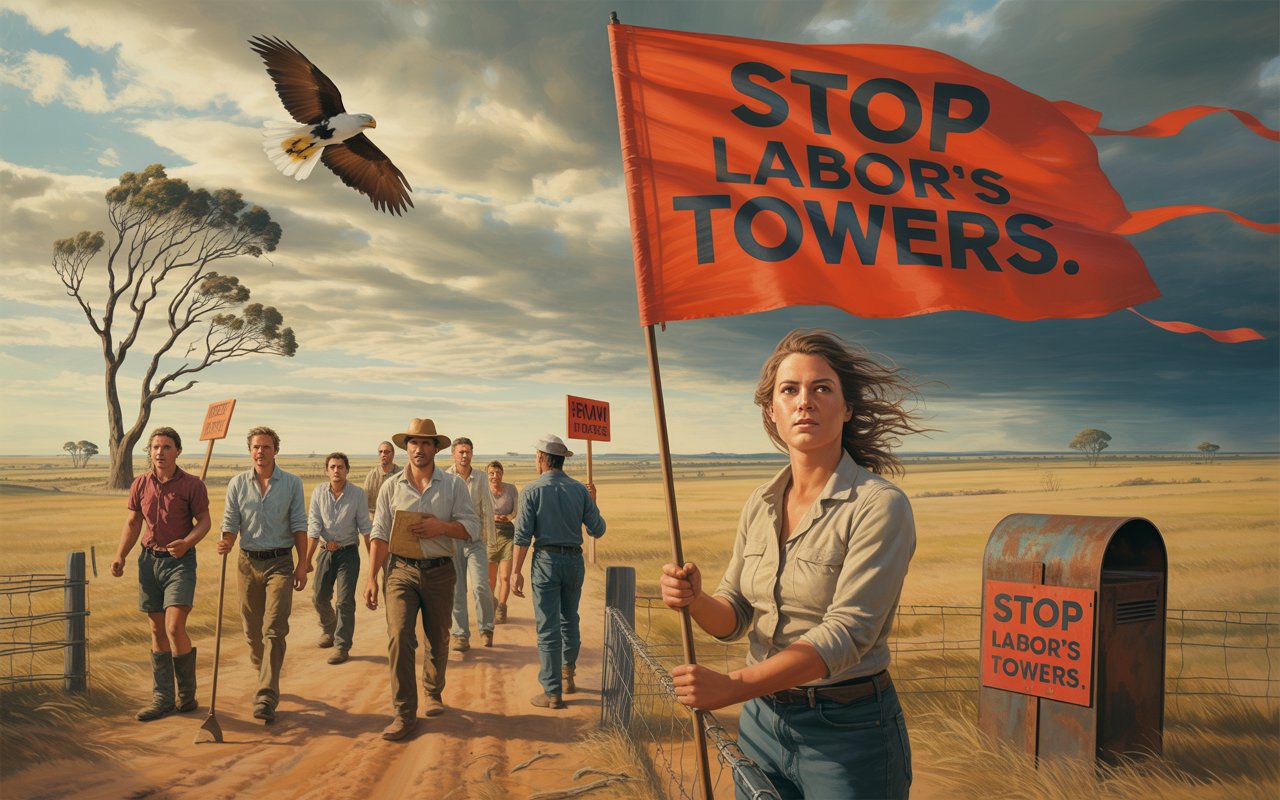
STOP LABORS TOWERS
NEWSLETTER – November 16 2025
Coalition Reframes Climate Policy
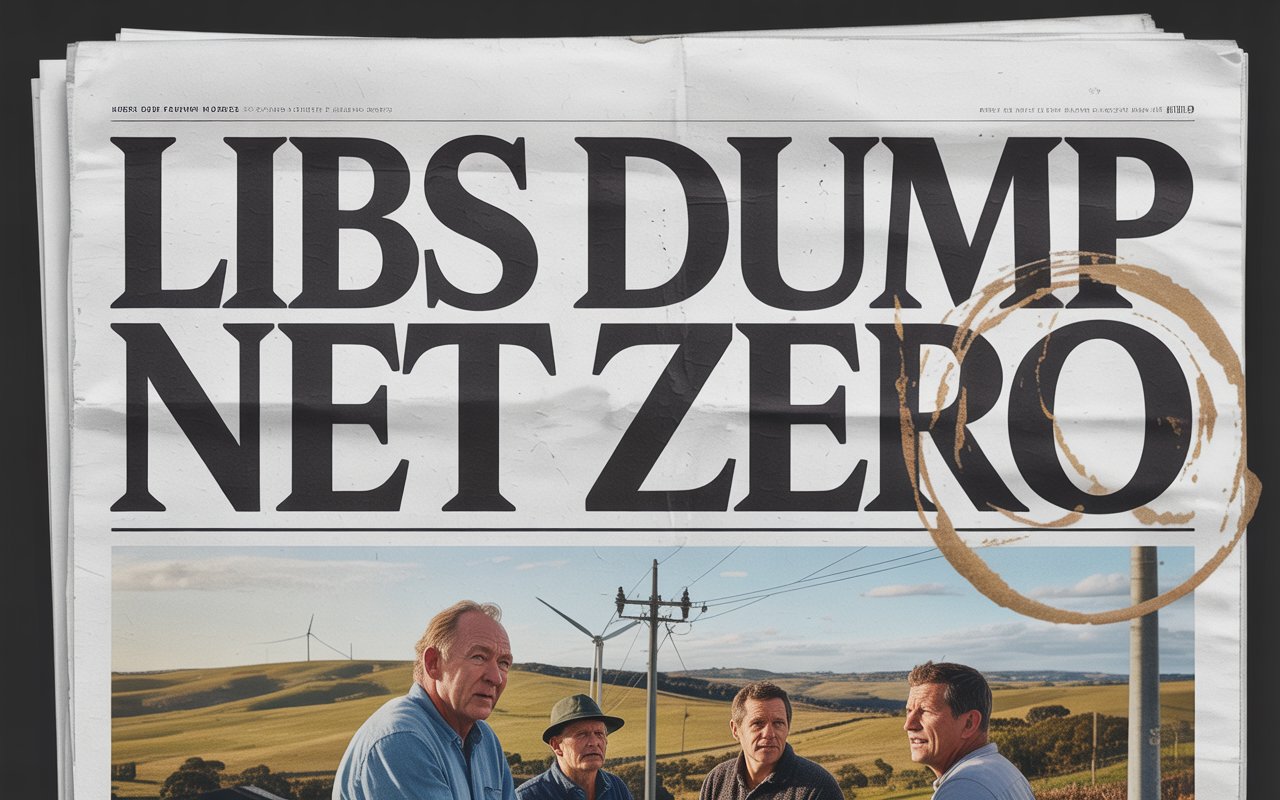
The Coalition’s decision this week to formally drop its commitment to net zero emissions by 2050 marks a major turning point in Australian climate and energy policy.
Coalition leaders say the move puts energy affordability and the interests of households and industry at the heart of the opposition’s platform, reflecting strong grassroots support in many regions.
Coalition Reframes Climate Policy
The Liberal Party, led by Sussan Ley, announced it had abandoned the net zero target adopted under former Prime Minister Scott Morrison. The party now aims for “responsible emissions reduction” guided by available technology and without imposing mandated costs, prioritizing affordable energy for all Australians. Liberal spokesperson Dan Tehan emphasized that Australia will continue reducing emissions “year on year,” referencing a new plan for emissions reduction in line with comparable countries.
Positive Reception Among Coalition Supporters
Nationals leader David Littleproud welcomed the Liberal Party’s shift, calling it “great maturity and leadership” and noting that both Coalition parties can now work together to develop a strong climate and energy platform ahead of the next election. Senior figures within the Coalition and grassroots supporters have praised the focus on lower energy prices and a technology-driven approach, arguing it will strengthen the economy and protect jobs, especially in resource and regional communities.
What’s Next?
The Coalition’s new policy direction includes a push for new gas supply and lifting bans on zero-emission nuclear energy, aiming to harness all available technology to drive prices down for families and businesses. Leaders insist this approach delivers real action while avoiding the costs and uncertainties associated with “unrealistic” international targets.
This bold move by the Coalition is winning strong support from its base and signals a clear economic and technological focus for the alternative government in the coming years.
Opinion: The Libs and Nats Must Stop Environmental Destruction, Not Just Talk Energy Prices
While the Coalition’s retreat from net zero targets dominated headlines this week, it’s critical not to lose sight of the environmental destruction that accompanies the current approach to net zero – especially the rampant rollout of transmission infrastructure like the Western Renewables Link (WRL).
Transmission lines crisscrossing regional Victoria are being justified in the name of “clean energy,” but the rapid build is coming at the direct expense of local biodiversity, farming landscapes, and the rights of communities who bear the brunt of these projects. The focus from both the Liberal and National parties should not simply be on cost reductions and energy affordability, but equally on halting the large-scale environmental impacts that bulldozed transmission corridors bring.
This is a chance for the Coalition to show real leadership by demanding a moratorium on destructive transmission projects, prioritizing local conservation over corporate profits, and genuinely listening to affected landholders. Australia has the resources, creativity, and public will to achieve meaningful emissions reductions without sacrificing precious ecosystems or turning rural areas into industrial sacrifice zones. A new path is needed – one that puts community and environment front and centre, not just the bottom line.
Net Zero In The News
- https://www.sbs.com.au/news/article/liberal-party-dumps-net-zero-by-2050-target-from-policy-platform/vol0x5gcq
- https://thenightly.com.au/politics/liberals-declare-power-bills-the-big-battle-and-lay-down-gauntlet-to-albanese-as-net-zero-dumped-c-20663019
- https://www.abc.net.au/news/2025-11-13/liberals-ditch-net-zero-commitment/106003712
- https://www.liberal.org.au/2025/11/13/affordable-and-responsible-the-liberal-plan-for-affordable-energy-and-lower-emissions
- https://theconversation.com/sussan-ley-buries-liberal-commitment-to-net-zero-but-offers-a-fig-leaf-to-moderates-269392
- https://www.sydneytimes.net.au/sydney-life/independent-allegra-spender-blasts-coalitions-net-zero-dump-armed-with-climate-200-evidence/
WRL EES Hearing – Week Three
WRL EES Hearing Update – Week 3
Week Three of the Western Renewables Link (WRL) Environmental Effects Statement (EES) hearings wrapped up last week.
The three-day session once again centred on the proponent’s witness statements and cross-examinations, covering key topics including Bushfire, Social and Wellbeing, and Biodiversity.
As has become the pattern, the proponent’s expert witnesses displayed a clear lack of objectivity, minimising or dismissing the serious consequences this project poses to communities, landscapes, the environment, and local livelihoods.
The hearings continue to highlight the value of a strong community presence, both in person and online. Every appearance, every question, and every challenge makes a difference in keeping this process transparent and ensuring the voices of regional Victorians are heard.
Call to Action
If you haven’t yet joined a hearing – either online or in person – now is the moment to step in.
After more than five years of standing together, your involvement in this stage is critical.
The coming fortnight will be among the most important in the entire hearing process, providing a rare opportunity to question, scrutinise, and exposethe proponent’s evidence.
This is the time to be visible.
To speak up.
To hold them accountable.
Ongoing Concerns
What continues to emerge through these proceedings is the proponent’s disregard for the communities most affected. Their so-called “experts” in reality, contracted employees of the proponent have chosen loyalty to their employer over professional integrity.
Whether their expertise lies in history, aviation, or visual impact, many have abandoned independence for convenience, showing little regard for the ethical or human consequences of their testimony.
This Week’s Schedule
- Tuesday: Agriculture and Forestry – Shayne Annett (RMCG)
- Wednesday: Traffic and Transport – Christina Emmitt (Jacobs)
- Thursday: Land Use and Planning / Planning Scheme Amendment – Rob Milner (Milner Planning Advisory)
The Independent Advisory Committee (IAC) will review the full EES, all public submissions, and every piece of evidence presented before providing its report and recommendations to the Minister for Planning.
Together, we must continue to stay active, stay united, and hold the line against this deeply flawed project.
Community Action Guide: Western Renewables Link (WRL) EES Hearings
Holding Power to Account
A strong community presence is essential to hold the proponent (AusNet) and its so-called independent experts accountable. In Week 1, we have already seen examples of the proponent’s witnesses downplaying significant and life-threatening risks associated with the project.
This disingenuous and dangerous approach must be confronted.
Your participation matters. Each voice contributes to transparency, truth, and community strength.
Below is a practical step-by-step guide to help you follow the hearings, access documents, and take part directly in questioning.
Step 1 – Access the Hearing Timetable
The Western Renewables Link (WRL) Environment Effects Statement (EES) Public Hearingscommenced on Monday, 27 October 2025, and will run through to Thursday, 5 March 2026.
How to Find It
- Visit the Inquiry and Advisory Committee (IAC) main page:
🔗 WRL EES Hearing Main Page - Go to “Tabled Documents.”
🔗 Tabled Documents Page - Download the latest Hearing Timetable (Document Here)
The timetable lists:
- Which expert witnesses are scheduled to appear,
- Their topics (e.g., bushfire risk, landscape and visual impacts, agriculture), and
- The session dates and times.
Community Submissions
The current timetable lists expert evidence, councils, and agencies through to late December 2025.
Community submitters are expected to present between January and March 2026, with Ballarat hearings (Weeks 11–14) scheduled for February 2026.
Keep checking for timetable updates to confirm your appearance date.
Step 2 – Review Expert Materials
Before each presentation, the proponent’s “independent” experts usually upload an overview of their evidence to the Tabled Documents section.
You can find them here:
🔗 Tabled Documents – Expert Evidence
Examples of Key Expert Documents
- Joint Expert Statement – Economics (AusNet)
- Joint Expert Statement – Bushfire (AusNet)
Tip
Read these expert summaries before their scheduled presentation.
They reveal the assumptions, omissions, and technical biases underpinning the evidence – crucial for preparing questions or identifying misleading claims.
Step 3 – Request to Cross-Examine (Ask a Question)
If you wish to pose a question or cross-examine an expert, you must register your intent with the IAC Secretariat no later than 12:00 pm the day beforethe expert is due to appear.
| Requirement | Action to Take | Details / Contact |
| Notify the IAC | Email your intention to cross-examine. | 📧 planning.panels@transport.vic.gov.au |
| Deadline | Before 12:00 PM (noon) on the day prior to the expert’s scheduled appearance. | Confirm the expert’s date in the hearing timetable. |
| Email Content | Simply state your name, the expert or topic, and the approximate time required. | Example: “[Your Name] requests time to cross-examine [Expert Name] on [Topic] and estimates [X] minutes is required.” |
| Your Safeguard | You are formally listed as a participant for that part of the evidence. If your question is answered during the session, you may simply pass. | This ensures your right to speak is protected and recorded. |
Why This Matters
By following these steps, you help ensure the WRL hearing process remains transparent and accountable.
Every individual who observes, questions, or challenges the evidence strengthens the integrity of the process.
The hearings are not merely procedural – they are a test of truth.
When the facts are distorted, community participation becomes the only real counterbalance to corporate spin and political complacency.
Quick Links Recap
The Net Zero Joke: A Wrecking Ball Masquerading as a Miracle
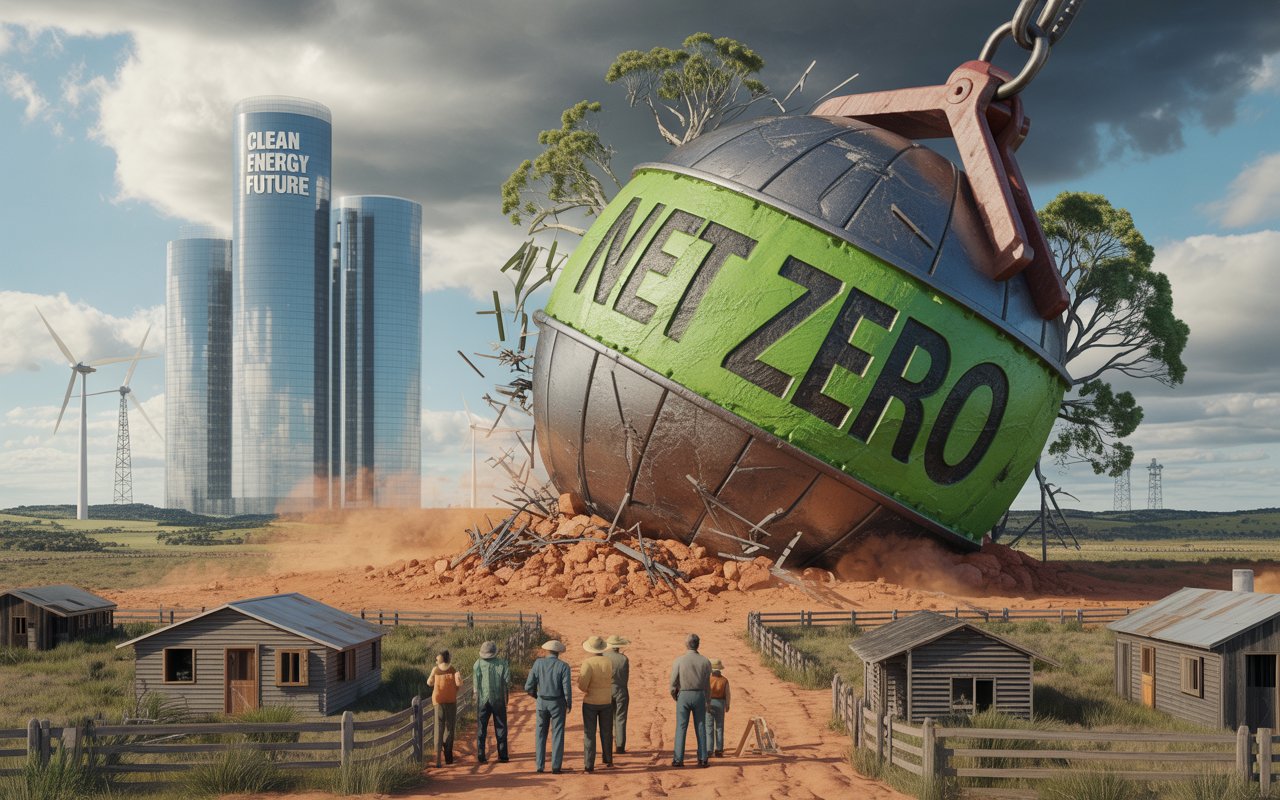
The Net Zero Joke: A Wrecking Ball Masquerading as a Miracle
We live in a time when the mere mention of “Net Zero by 2050” is supposed to conjure images of pristine skylines and humming green economies. But if you stop applauding for a minute and actually look at the policy, the “funny thing” about Net Zero isn’t the future it promises – it’s the environmental wrecking ball it is already proving to be.
The planet is warming; that much is real. No serious person denies the reality of climate change. But the policy designed to save us is, ironically, paving the way for a new set of ecological disasters, all in the name of a distant, politically convenient target.
________________________________________
The Parable of the Empty Land
The celebrated environmental author and social critic, Michael Shellenberger, isn’t a short story writer, but his powerful critique of the “climate scare” perfectly captures this tragic paradox. Shellenberger, a lifelong environmentalist who campaigned to save nuclear plants, has essentially written a modern parable about the cure being worse than the disease.
He points to the massive land requirements for the proposed 100% renewable energy future:
“The pursuit of 100% renewables would require increasing the land used for energy from today’s 0.5% to 50%.“
Think about that for a moment. To blanket the nation in solar farms and wind turbines – to chase this ‘Net Zero’ holy grail – we are talking about covering half of our usable landmass with industrial infrastructure.
This isn’t just an engineering problem; it’s an environmental crime in the making, and it’s the core of the Net Zero joke.
• The Land Grab: We are talking about sacrificing millions of acres of farmland, wild spaces, and natural habitat – the very biodiversity that keeps our ecosystems resilient – to install energy-dilute technologies. A single wind farm can wipe out migratory bird paths, and massive solar arrays fragment and destroy desert ecosystems.
• The Material Drain: This enormous undertaking demands a colossal increase in mining for copper, lithium, cobalt, and rare earth minerals. Where are these materials coming from? Often, from places with poor environmental and labour standards, leading to a global supply chain of ecological damage and human exploitation that is conveniently swept under the green carpet.
• The Power Density Delusion: Shellenberger rightly argues that progress has always been about moving to higher power density – from wood to coal, from coal to oil, and from oil to uranium (nuclear power). Net Zero’s obsession with land-intensive solar and wind is a profound step backwards, forcing us to consume land at an unprecedented, environmentally catastrophic rate just to generate intermittent power.
Why the Policy Must Be Dumped
Net Zero isn’t a science-based plan for energy independence; it is a politically-driven, faith-based crusade for technological self-harm. It acknowledges the threat of climate change, but proposes a solution that turns our own backyard into an industrial wasteland.
Instead of this destructive, all-or-nothing approach, we need a policy framework that prioritizes energy abundance, security, and reliability – a framework that is truly pro-human and pro-nature.
1. Embrace Nuclear Energy: The only technology proven to provide massive amounts of reliable, zero-carbon, and highly power-dense energy. It requires a tiny fraction of the land used by renewables and produces minimal waste that can be safely managed.
2. Innovate, Don’t Impose: Focus public funding on genuine breakthroughs in battery storage, geothermal, and next-generation nuclear, rather than subsidizing current, land-hungry, and intermittent technologies.
3. Prioritize Air Quality and Development: The biggest environmental gains in human history came not from restricting energy, but from moving to cleaner, more efficient sources. Wealthier, energy-secure nations are the ones with the resources to invest in environmental clean-up. Net Zero policies that drive up energy costs hurt the poor and hinder the development necessary to protect our environment.
The truth is, we can address climate change without making our civilisation poorer and our landscape ugly and degraded. The current path of Net Zero is not a sophisticated climate plan; it is an environmental wrecking ball aimed squarely at our natural world and our prosperity. It is time to retire the joke, dump the policy, and get serious about real, high-density, clean energy solutions.
“Play It Safe”
They’ll tell you to play it safe.
Keep your voice low.
Keep your head down.
Don’t make trouble.
They’ll say,
“Be reasonable. Trust the process.
These things take time.”
They’ll smile and call it consultation.
They’ll pat you on the shoulder and say,
“You’ve been heard.”
And then they’ll drive the first steel tower
through your paddock, your forest, your sky,
before the ink’s even dry.
Because silence, you see, is safety.
For them.
That’s the deal they’re offering.
Be silent.
Be compliant.
Be comfortable in your own defeat.
They call it progress.
They call it renewable.
They call it the future.
But it’s the same old story told by the powerful to the powerless –
stay quiet while we take what’s yours.
Well, not this time.
Because playing it safe is what they want.
It’s the easiest way to keep the truth out of the headlines
and the community divided.
Playing it safe
is how corruption thrives –
how farmland becomes a corridor,
how a home becomes an easement,
how a forest becomes a sacrifice zone,
how a bird becomes collateral,
how a creek becomes a drain,
and how a voice becomes a whisper
in a meeting room in Melbourne
where no one’s listening.
They’ll call their towers “visionary.”
They’ll say it’s “nation-building.”
But there’s nothing visionary
about cutting through living country
and calling it a miracle.
True vision
is the farmer who says no.
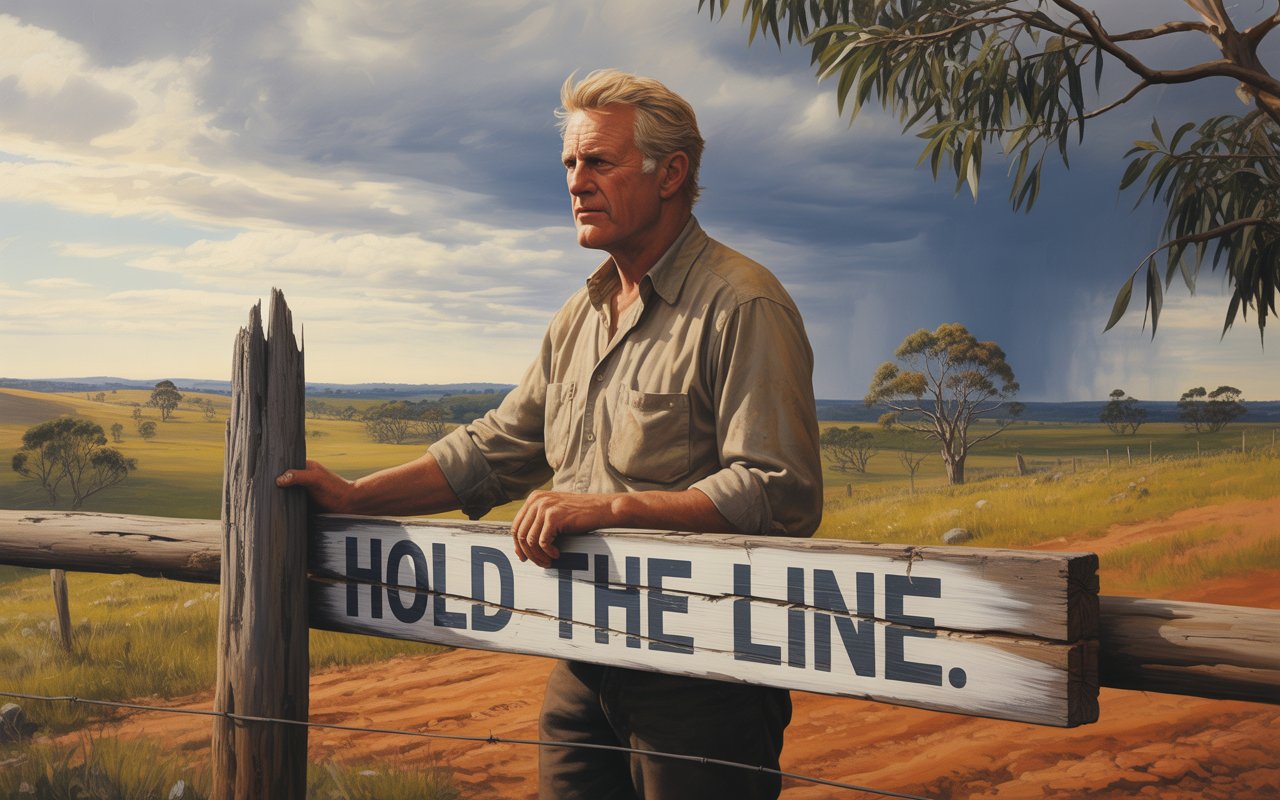
It’s the community that holds the line.
It’s the guardian who won’t let the wedge-tail’s nest fall.
It’s the child who wants to see the sky unscarred.
True vision is care.
Courage is protection.
And strength is knowing when to stand your ground.
That’s what courage looks like.
That’s what community looks like.
And that’s what we are.
We will not play it safe.
We will not be silent.
We will not be compliant.
We will raise our voices until they echo
from the Pyrenees to the plains,
through the gullies and gum trees,
from Darley to Ballarat,
from every farm, forest, and fenceline.
Because being safe is easy.
But being free takes noise.
Takes fight.
Takes all of us.
So go ahead –
tell us again to play it safe.
Tell us not to make waves.
And watch what happens
when the quiet ones
finally speak.