Stop Labors Towers Newsletter – August 1, 2026
If you think the corruption engulfing the Victorian Labor government is something distant that will never touch you, you are badly mistaken. What is playing out now is not a narrow scandal confined to one contract or one minister; it permeates the way this government manages money, exercises power and treats the public. When a government normalises secrecy, bends processes to protect its own, and treats communities as an obstacle to be managed rather than citizens to be respected, that culture seeps into everything – infrastructure, planning, health, education, law and order, and the state’s own finances. You see it in the ethics they are willing to discard, the character they reveal under pressure, and their casual dismissal of community evidence in processes like the WRL EES. This is not abstract. It shapes the laws over your land, the bills you pay, and the services your family relies on every day.
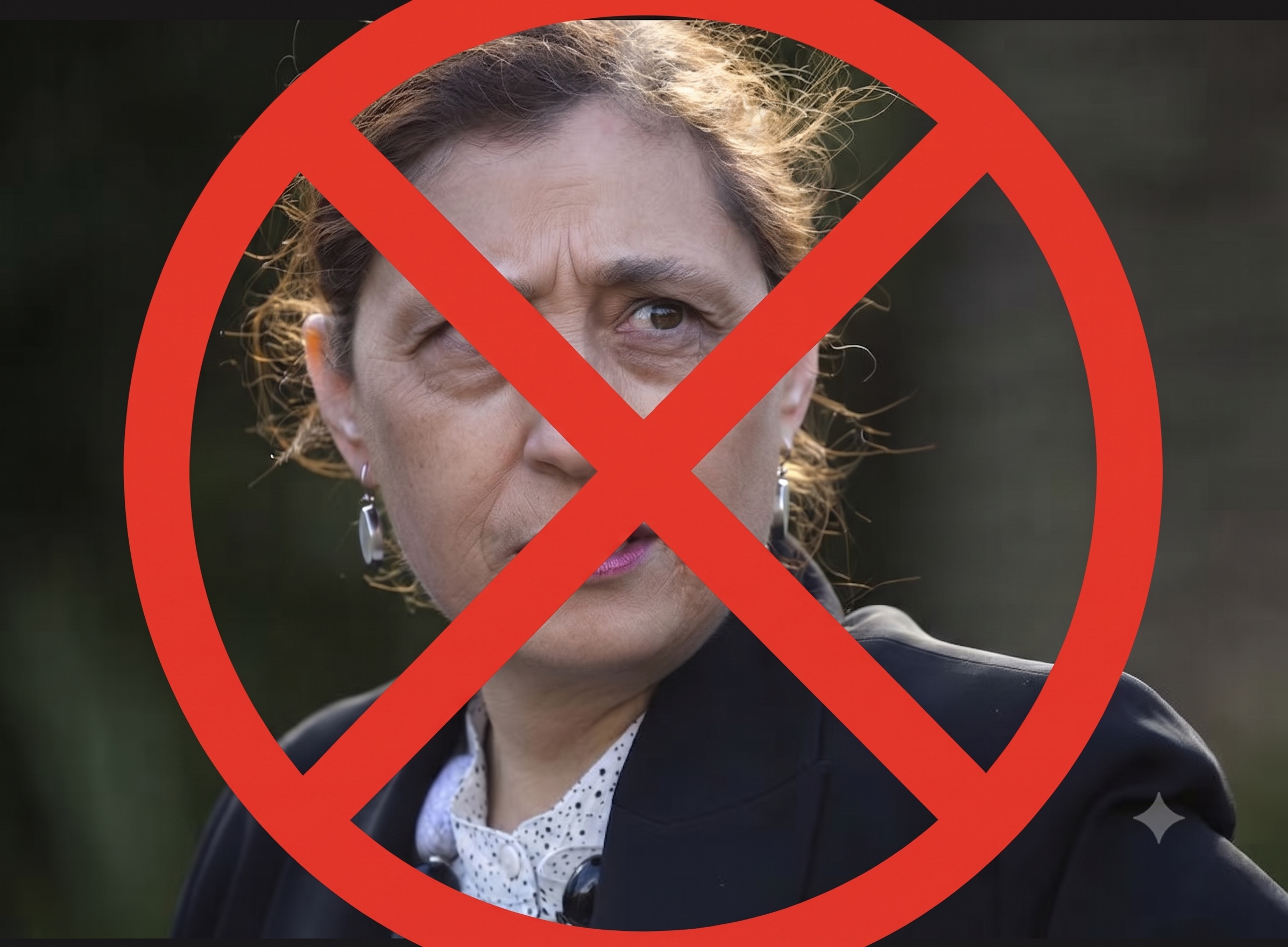
GOOD RIDDANCE.
Victorians have been instructed, at length, to see Lily D’Ambrosio as the conscience of the climate transition: the tireless minister whose “leadership” put the state at the forefront of renewable energy and made history smile upon Mill Park. The official tributes now arrive on cue – all moist‑eyed references to her “integrity”, “compassion”, and “strong sense of purpose”, as if the long years were spent serenely planting trees and reading poetry to orphans.
To listen to this liturgy is to enter a parallel universe, one in which Victoria’s transmission policy did not become the weakest link in the state’s energy transition, and Western Renewables Link and VNI West did not explode into symbols of governmental bad faith. In the actual universe, however, D’Ambrosio walks away as the architect of a reckless, unnecessary centralised grid agenda that treated regional communities as collateral damage and carved its way across farmland and fire‑ground under cover of modelling, euphemism and coercive law.
For more than a decade, she presented herself as a champion of climate action. In reality, she presided over a transmission and planning framework that seeks to bulldozed prime agricultural land, cut through highly fire‑prone landscapes and stripped farmers of basic rights, all in the name of “critical infrastructure”. The story of Lily D’Ambrisio and the WRL, VNI West and VicGrid is not climate leadership; it is environmental damage and institutional arrogance disguised as progress.
Under her watch, VicGrid was turned into a creature of central power – planner, developer, quasi‑regulator and enforcer in one – re‑armed with a legislative arsenal designed not to earn consent, but to smash through resistance. The VicGrid Stage 2 reforms did not merely tweak procedures. They endowed state officers with forced‑entry powers against private landholders, created criminal penalties for defending one’s own gate, explicitly exempted core planning and financial documents from Freedom of Information, and stripped appeal rights from those unlucky enough to inhabit the newly sacred corridors. All this was wrapped in the usual gauze of “delivering critical infrastructure”, but the practical effect was brutally simple: it made life easier for those who build towers and harder for those forced to live beneath them.
The Western Renewables Link and VNI West became the physical expression of that contempt. Long overhead HVAC lines, designed to march across high‑value paddocks and bush, were advanced via ministerial orders and assumptions baked into market modelling. Community opposition was treated as a problem of “engagement” to be managed, not evidence that something was fundamentally wrong. D’Ambrosio used her authority to confirm VNI West’s path and fuse it to WRL, welding Victoria into a 500 kV scheme that maximised impact and risk while serious alternatives were dismissed, delayed or reduced to footnotes.
When farmers and regional communities posed the obvious questions – why this route, why this technology, why no genuine comparison with brownfield upgrades, underground options or storage – they did not receive transparency. They got slogans. “No transition without transmission.” “Stick to the facts, stick to the plan.” Alternatives were waved away as fantasy, even as VicGrid inherited controversial projects and the anger in western Victoria intensified. This was “leadership” in practice: one path, one ideology, and a governing class impatient with dissent and allergic to doubt.
She did not simply get the transition wrong. She betrayed the people who trusted her.
When communities asked for transparency on WRL and VNI West – the true costs, the undisclosed risks, the alternatives excluded before the starting gun – they were handed selective modelling, redacted documents and glossy talking points. When landholders demanded to see the assumptions that justified the steel along their horizons, they met closed doors, legalistic stonewalling and the newly minted secrecy shields. This was not openness in the public interest; it was the narrow, defensive disclosure that keeps an unpopular plan alive by starving its critics of information.
At the same time, the legislation she sponsored systematically tilted the playing field. Forced‑entry powers, criminalisation of resistance, FOI exemptions, stripped VCAT appeal rights: these were not regrettable necessities but deliberate choices. There is a simple political definition of corruption that goes beyond envelopes stuffed with cash. It is a system in which certain interests and voices are reliably protected, and others are reliably crushed. Under D’Ambrosio’s framework, corporate and bureaucratic advice was treated as holy writ, even when it locked in overhead routes through fire‑prone country and ignored serious alternative designs. Community evidence, independent engineers and farmers who understand their own land were relegated, with great ceremony, to the margins.
It is in that sense that western Victorians use the language of betrayal and cover‑up. They were assured that they were being heard, that modelling was independent, that environmental and agricultural harm would be minimised. What they saw, instead, was a machinery designed to close ranks around a bad plan, then punish those who refused to applaud.
When the questions grew too sharp – over unpublished modelling, over coal closure arrangements, over transmission plans that treated WRL and VNI West as foregone conclusions – the answer was not to return the projects to first principles. It was to double down on the narrative and repeat the catechism of inevitability. Legal power and factional discipline were relied upon to smother dissent.
It is therefore no surprise that many rural and regional Victorians greet her resignation not with sorrow but with fury: they see a minister who chose ideology and control over honesty and genuine consent, and who now walks offstage before the full consequences of that choice are laid bare.
Unabridged Decipt
Victorians in the west were told, repeatedly, that Lily D’Ambrosio “understood their concerns”, that she had “heard” the Western Victorian Community Alliance, and that WRL would only proceed if it met high tests of necessity and fairness. In six formal meetings, including face‑to‑face sessions, she went further than warm words: she claimed that independent studies had been commissioned, that energy experts had tested alternative routes and technologies, and that this external advice supported the chosen corridor.
Those studies and consultations never existed. When alliance members later put detailed questions on the public record and sought the evidence she had described, there was nothing – no reports, no expert briefings, no independent analysis to match her assurances. Confronted with that fact, she did not correct the record. She deflected, defaulted to prepared slogans, and refused to acknowledge that what she had presented as completed, independent work was fiction. For communities that had taken her at her word, this was not a misunderstanding or a difference of opinion; it was a flat act of deceit.
ETU
Behind that behaviour sat a deeper problem: a minister who chose faction and union alignment over independent judgement. D’Ambrosio’s political loyalty to the ETU was never subtle, and it coloured her approach to WRL and VNI West from the outset. Instead of acting as an honest broker between communities, engineers and unions, she allowed herself to be blinded by one side of the table – treating any challenge to the overhead transmission blueprint as an attack on her allies, rather than a legitimate demand for safer, smarter alternatives. The result was a minister who could no longer see past the industrial and factional interests feeding her lines, and who treated rural resistance as something to be managed, not understood. In that light, her departure is not a tragic loss to the transition; it is a necessary clearing of the decks. Good riddance.
One might think, listening to the new premier’s eulogies, that this departure marks the end of the story. It should mark the beginning of a reckoning.
Ben Carroll now presents himself as a man of renewal, the face of a “new direction” in a government that has exhausted public patience. But the question before him is brutally simple: does he dismantle the transmission and planning framework D’Ambrosio and her colleagues constructed – the laws, the assumptions, the contemptuous habits – or does he quietly inherit it and hope that regional communities will, in time, forget the names on the signature blocks?
If he chooses the second path, he is not a break with the past; he is its custodian with fresher stationery.
ONE MINISTER DOWN, ONE MINISTER ROTTEN: THE MACHINERY OF BETRAYAL ROLLS ON
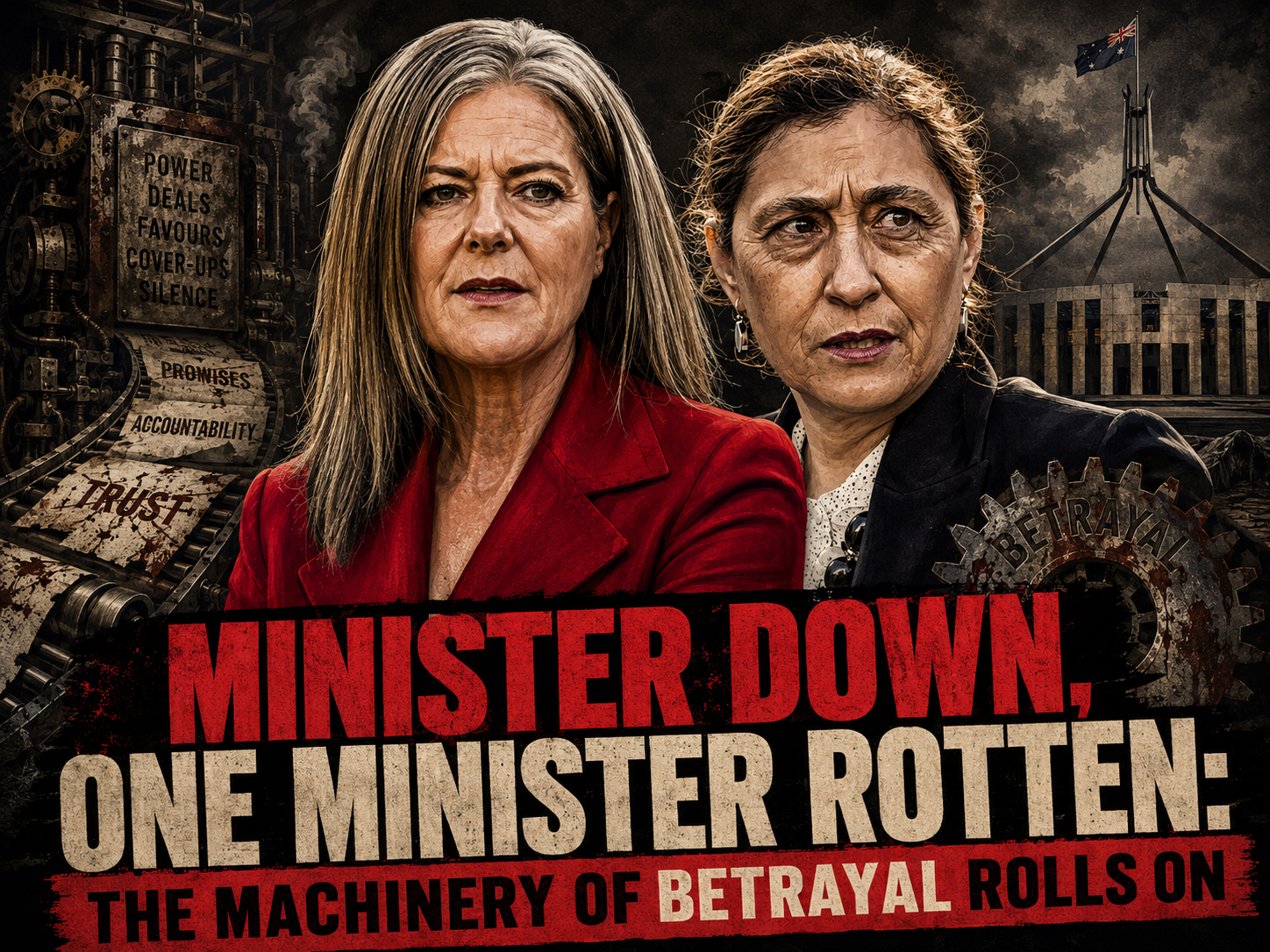
The scrutiny must not stop with the departed minister, D’Ambrisio. Victoria’s Planning Minister, Sonya Kilkenny – elevated from planning to Attorney‑General – sits at the centre of the apparatus that pushed WRL, VNI West and other contentious projects through opaque processes and into already weary communities. It was Kilkenny who was asked to impose Environment Effects Statements, who sits over the system that accepted these corridors through farmland and bush, and who oversees a planning regime rightly criticised for centralisation, delay and its habitual indifference to local impact.
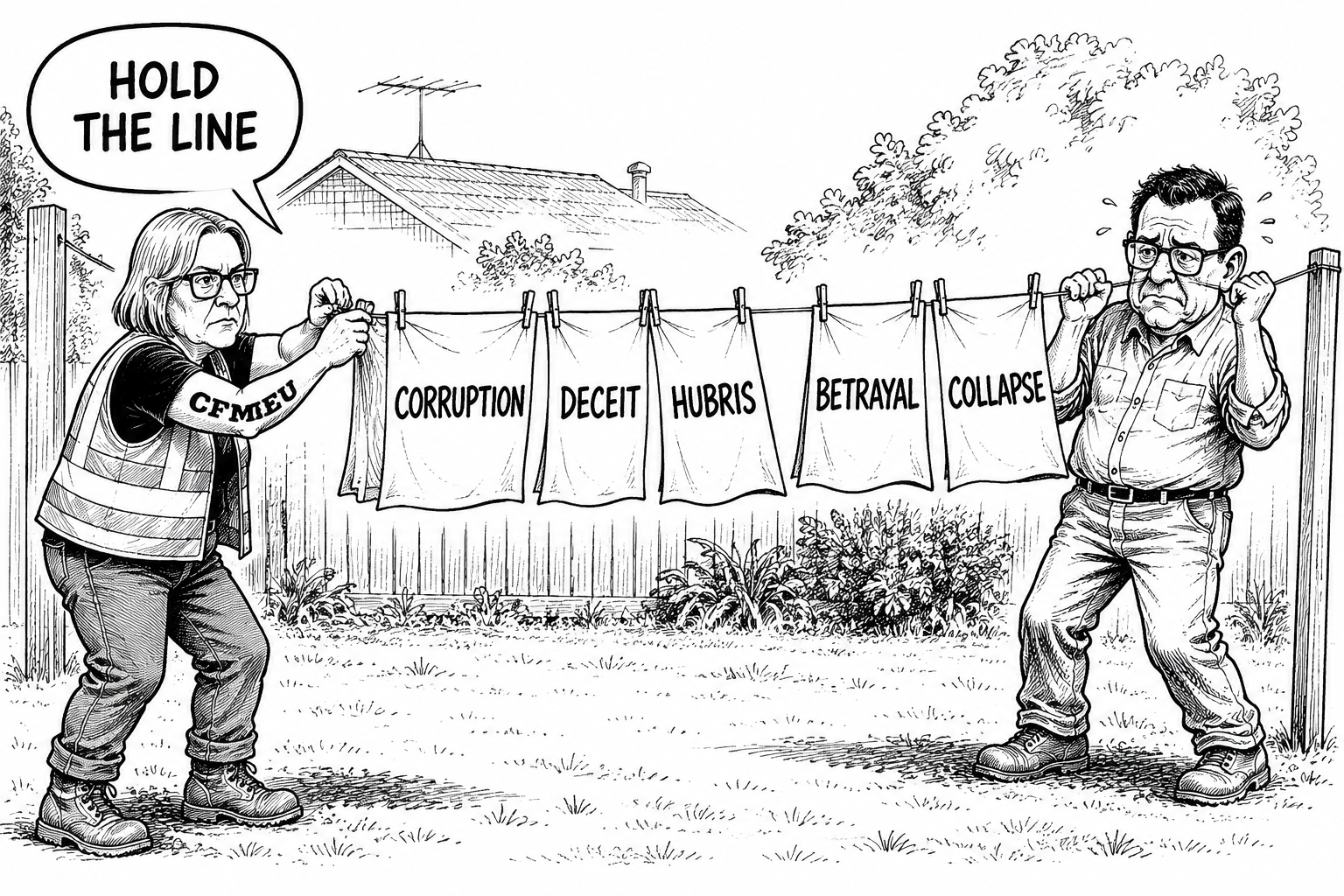
This is a minister who has already admitted misleading parliament about whether she referred allegations of CFMEU black‑banning to police – a matter that goes directly to the government’s handling of coercion and corruption on its cherished Big Build worksites. Law‑enforcement agencies say they can find no record of the referral she claimed. In any jurisdiction that still takes its own dignity seriously, such a confession would be a detonator, not a footnote. It tells every Victorian that the person charged with defending the law and overseeing planning can be caught out saying one thing in the chamber and delivering another in practice.
When you combine that record with the power to shape EES processes, to approve or refuse major projects, to lock in or rethink the routes that carve through landscapes, the picture clarifies. The minister who drove the transmission agenda and the minister who signed off its planning impacts both stand accused, in different ways, of betraying trust. Western Victorians are not merely annoyed by bad policy; they recognise a system that rewards secrecy, punishes dissent and shields itself from consequences.
If Carroll wished to prove that anything has changed, he would have to do more than rearrange titles and issue sentimental press releases about colleagues “never seeking the spotlight.” He would have to demand answers from Planning as well as Energy. He would have to make clear that misleading parliament is not tolerated, that legislation designed to strip citizens of rights will be unwound, and that modelling that treats contested projects as axioms will be thrown back into the furnace of independent scrutiny.
The minimal programme for decency is obvious. There must be an independent inquiry or royal commission into VicGrid Stage 2, WRL, VNI West and the culture of the Big Build – including the conduct of D’Ambrosio and Kilkenny. The forced‑entry powers, secrecy provisions and stripped appeal rights must be repealed, not merely rebranded. There must be a clean‑sheet, technology‑neutral review of WRL and VNI West that reruns the Victorian system with and without these projects, tests brownfield, underground and non‑network options on equal terms, and exposes the true lifetime costs, risks and liabilities without the comforting fog of political narrative.
Only then will Victorians be able to say that the departure of Lily D’Ambrosio meant something more than a change of faces, and that the Planning Minister who helped give the towers their path has been judged according to the damage, not her press releases. Until those steps are taken, western Victoria will remember this era in unflattering terms: not as a noble fight against climate change, but as the time when a government lied to them, rewrote the rules against them, and called the rubble under their feet “progress.”
And one day, when the towers fail in a storm, or the bushfire edges beneath their shadow, or the next minister assures us that all was done with compassion and integrity, some farmer in a scorched paddock will remember who signed the orders and who applauded them. That memory will be worth more than any official tribute.
A NEW COAT OF PAINT ON SPRING STREET
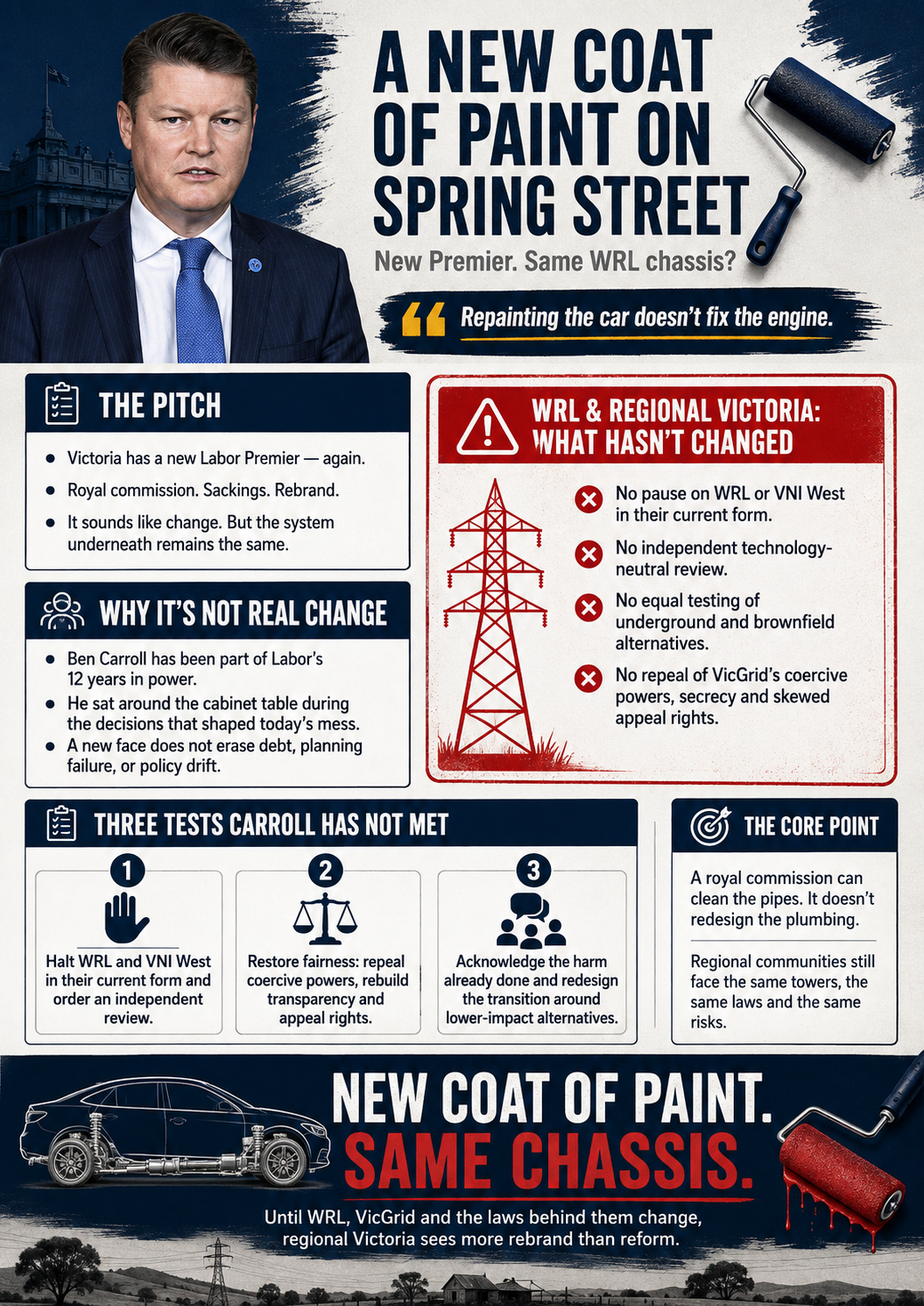
Labor has a new Premier. Again.
Four months out from an election, Victoria is on to its third Labor leader of this term and we are being told that this time, everything will be different. New face. New tone. New royal commission. It sounds like change. But is it?
Ben Carroll’s first week in the job has been noisy, not transformative. He has announced a royal commission, axed a top bureaucrat and rolled out a Kmart‑themed rebrand, but none of that alters the damage Labor has inflicted on regional communities through the Western Renewables Link (WRL), VNI West and the wider transmission agenda. It does not fix the way big projects are chosen, how communities are treated, or how risk is pushed onto the people who can least carry it.
Repainting the car doesn’t fix the engine. Changing the driver doesn’t rebuild the road. Swapping Premiers does not, on its own, repair a decade of debt, planning failure and policy drift.
A premier of pivots, not change
Carroll is working hard to sell himself as “not Andrews” and “not Allan”, stressing his Kmart past and casting his leadership as a fresh start. Yet he has been in parliament for all 12 years of Labor rule, and around the cabinet table for the decisions that defined those years: the Suburban Rail Loop, tearing up East West Link at a cost of $1.1 billion, dumping the Commonwealth Games, radical land tax changes and the social policy agenda that left Victoria more indebted and more divided.
His ministerial record runs through most of the state’s major failures: youth justice and crime prevention during the worst youth crime crisis in decades; roads while regional routes disintegrated into dangerous potholes; public transport as the Myki mess dragged on; and WorkSafe/TAC while Big Build worksites were plagued by union‑linked rorts and blowouts. His fingerprints are not on a new direction; they are on the existing mess.
So when a long‑serving insider declares that “change starts today”, the obvious question is: why not yesterday?
Royal commission and sackings: necessary but insufficient
Carroll’s headline act – calling a royal commission into construction corruption with a
special prosecutor alongside it – was widely demanded long before he arrived in the Premier’s office. It is a response to years of investigative reporting and pressure from integrity experts, not a spontaneous moment of moral courage.
Similarly, sacking Jeremi Moule from the upper reaches of the bureaucracy makes for an eye‑catching first shake‑up, but it does not in itself dismantle the planning and transmission machinery that has done so much harm to regional communities. WRL,
VNI West and VicGrid’s coercive powers remain unchanged. The laws that stripped farmers of rights and embedded secrecy in planning are still on the books. A change of personnel in Spring Street does nothing, by itself, to change conditions in a paddock at Myrniong or a bush block near Stawell.
A royal commission can clean the pipes. It doesn’t redesign the plumbing.
WRL and regional communities: nothing has changed
From a regional perspective, particularly along the WRL and VNI West corridors, Carroll’s first week is notable for what it has not done.
There has been:
- No commitment to pause WRL or VNI West in their current form.
- No clean‑sheet review of what new transmission Victoria actually needs, where it should go, and in what form.
- No pledge to test brownfield and underground alternatives on equal terms with overhead lines.
- No promise to repeal VicGrid’s forced‑entry powers, secrecy provisions and skewed appeal rights.
The communities facing carved‑up paddocks, fire‑ground constraints and coercive access orders see the same policy settings under a new face.
This matters because WRL and VNI West are not just lines on a map. They reshape fire behaviour, farm layouts, insurance risk, business plans and mental health. They dictate what kinds of innovation are possible on farm – from aerial firefighting to precision agriculture – and whether rural land can host the next generation of regenerative businesses, tourism and clean energy. A systems problem like that is not fixed by one press conference and one sacking.
The Net Zero gap
Underneath all this is the deeper Net Zero gap.
On paper, Victoria is racing towards ambitious emissions targets. In practice, large‑scale renewable investment is stalling, planning is bogged down, and the transmission program is running on an old‑fashioned, top‑down model that treats rural landscapes as empty canvases. Only a small fraction of the government‑backed projects being trumpeted in media releases are actually reaching final investment decision. Meanwhile, landholders along WRL are being told to absorb permanent easements, towers and restrictions with no coherent, trusted plan that links their sacrifice to real, measurable benefits for their communities.
That is not a technology failure. It is a governance failure. It is what happens when you try to deliver a 21st‑century energy transition with 20th‑century institutions and 19th‑century attitudes to land and people.
A genuinely Saul‑Griffith approach would start from the physics and the map: where are the loads, where are the resources, what existing corridors can be repurposed, and how do we minimise total harm while maximising total benefit? It would then design the institutions – planning rules, compensation models, benefit‑sharing – to serve that logic. Victoria is still doing this backwards: policy chasing politics, and projects chasing headlines.
Three tests Carroll has not met
For regional landholders and communities, especially those under the WRL shadow, any new Premier must be judged on three simple, practical tests:
- Will you halt WRL and VNI West in their current form and require an independent, technology‑neutral review before further irreversible commitments?
That means a review run at arm’s length from VicGrid, with genuine rural representation, that is free to consider undergrounding, alternative corridors and grid‑side storage on equal footing – not just rubber‑stamping what has already been decided. - Will you restore basic fairness to the law: repeal VicGrid’s coercive powers, rebuild transparency and appeal rights, and put social licence and environmental limits into statute?
That means no more forced entry without warrants, no secrecy clauses that block Freedom of Information, and clear “no‑go” zones where critical habitat, bushfire risk and heritage simply rule out overhead lines. - Will you openly acknowledge the harm that Labor’s planning and transmission decisions have already done to regional Victoria, and commit to re‑engineering the transition around lower‑impact alternatives?
That means admitting that some alignments are a mistake, that some landholders have been treated unjustly, and that the energy transition will only endure if it is built with communities, not done to them.
Ben Carroll’s first week has answered none of these tests in the affirmative. He has moved quickly where media and integrity pressure were strongest – construction corruption, CFMEU influence – and changed faces in the bureaucracy. But he has left untouched the WRL policy settings and the legislative framework that made these projects possible in the first place.
New coat of paint, same chassis
Politics loves a rebrand. New logos, new slogans, new “eras”. But systems do not respond to branding; they respond to structures and incentives.
If Victoria is going to decarbonise at the pace the science demands, it needs a grid that is smarter, fairer and more honest than the one we have today. That means fixing the wiring in our institutions, not just changing who stands in front of the microphones.
New coat of paint. Same chassis. Until this government – or the next – is prepared to open the bonnet on WRL, VicGrid and the laws that govern land, it should not expect regional Victoria to cheer for another test drive.