STOP LABORS TOWERS
NEWSLETTER – April 25, 2026
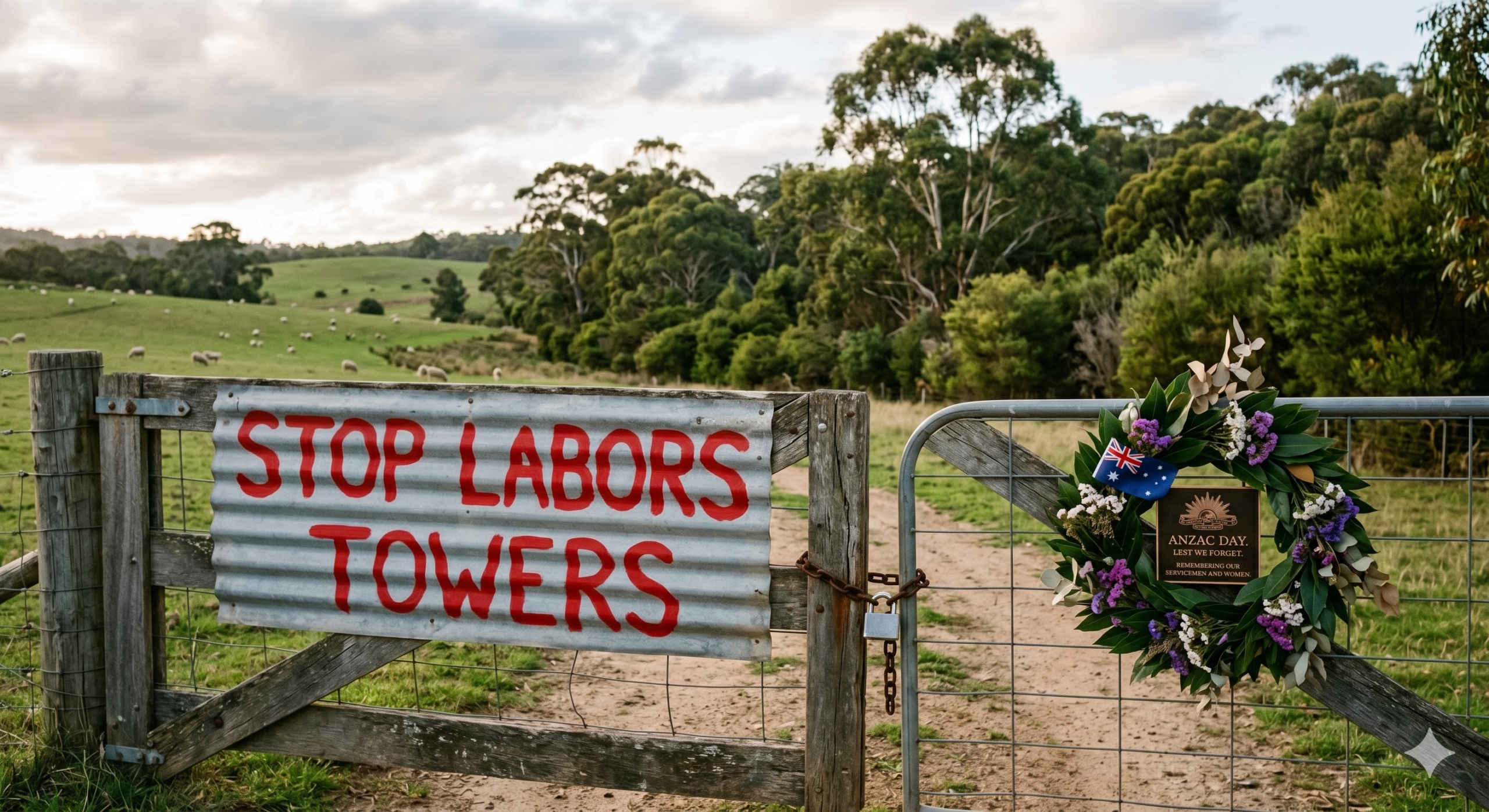
Today, we honour those who faced enemy fire overseas – and we reject a Victorian government that now treats its own people as an internal enemy, misusing its powers as weapons against the very freedoms the Anzacs fought to protect.
The most revealing thing about “7NEWS Spotlight: The dirty secret powering Australia’s green future” is not the pictures of children standing in toxic slurry in a Chinese‑run mine. It’s the silence in Canberra.
Here is a prime‑time Australian current affairs program documenting, in forensic detail, how our rush to “clean” energy is being built on child labour, environmental vandalism and an increasingly weaponised Chinese supply chain. And yet the government driving this transition behaves as if none of it has anything to do with them.
This newsletter is an invitation and a warning. You need to watch this investigation. Then you need to ask why the people in charge of our energy system are so determined not to talk about what it shows.
A green dream built on other people’s nightmares
In the Spotlight episode, Liam Bartlett travels to some of the poorest but most mineral‑rich corners of Africa – the Democratic Republic of Congo and Zambia – to examine the reality behind our “clean energy” branding.
What he finds is not the glossy brochure version of net zero:
- Chinese‑controlled mines feeding the global demand for cobalt, copper and other critical minerals.
- Children and desperate adults working in open pits and toxic tailings, in conditions that would shame any Australian workplace inspector.
- Locals describing “weaponised poverty”: a system in which misery is not an accident, but a business model.
This is the dirty secret powering Australia’s “green future”: a supply chain so concentrated and so abusive that any minister who boasts of “ethical climate leadership” should be forced to watch these images on loop.
Instead, we’re invited to clap politely while the government congratulates itself on another renewable milestone – and to ignore the children knee‑deep in sludge.
How did a resource superpower become this exposed?
Australia is a country that exports energy to the world. Coal, gas and uranium leave our shores by the shipload. Yet the documentary shows a nation increasingly unable to guarantee the basics of its own liquid fuel security, let alone the integrity of its future electricity grid.
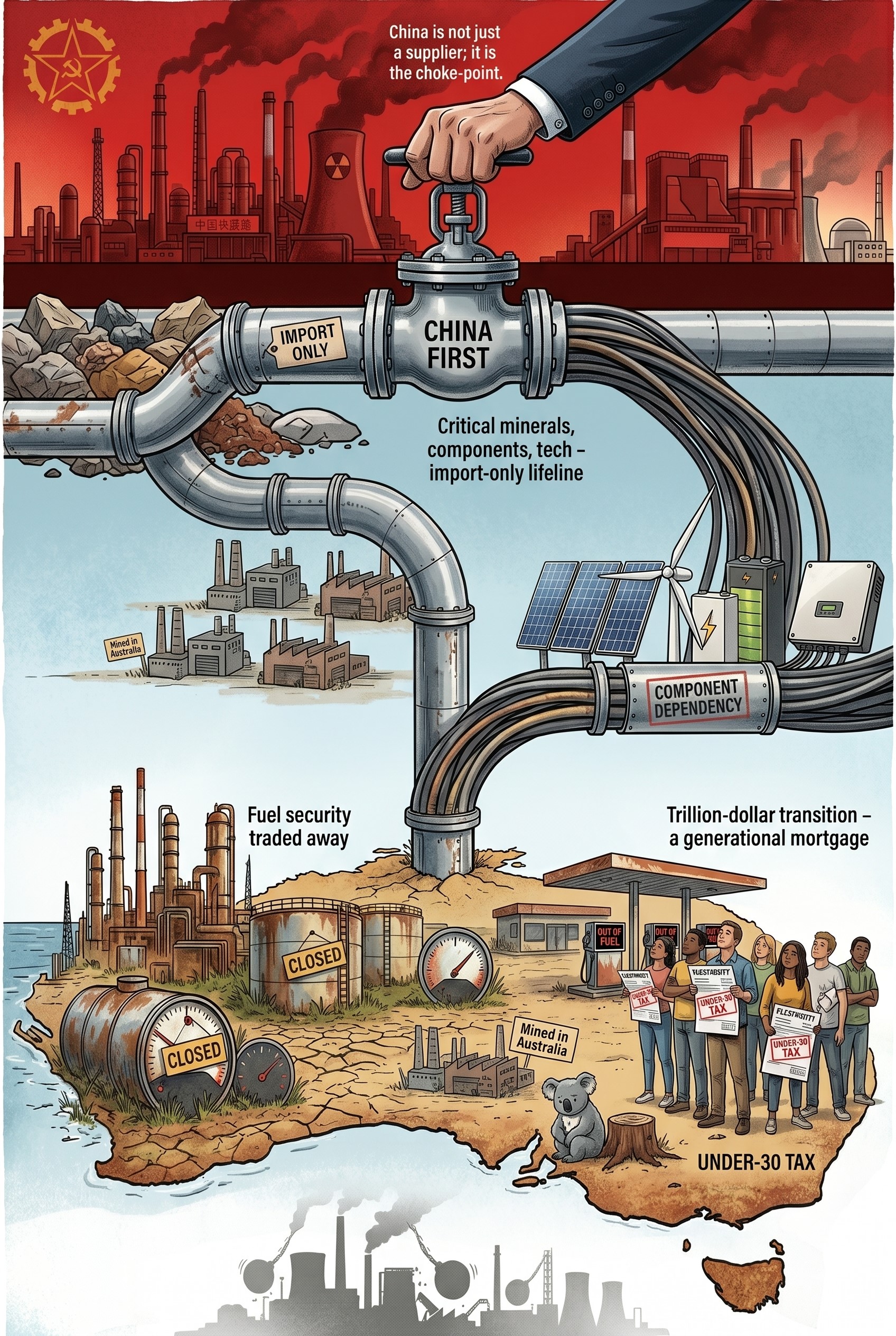
The investigation makes three core points any serious community member should care about:
- We have deliberately traded fuel security for an imported component dependency.
The capacity of our refineries has withered. We import most of our transport fuel and are now tying our future electricity system to hardware, minerals and technology that are overwhelmingly processed or controlled in China. - China is not just a supplier; it is the choke‑point.
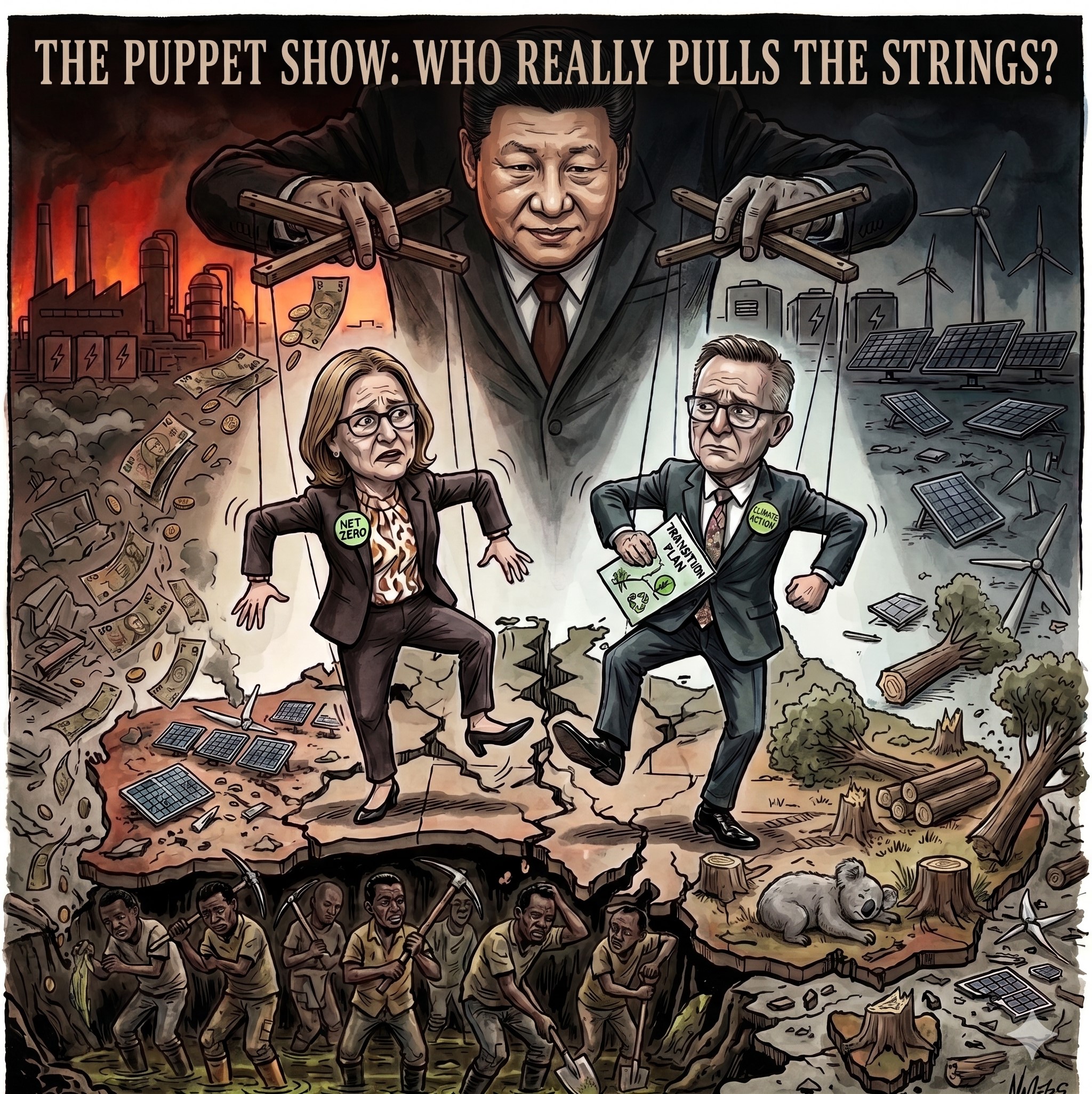
As other analysts have documented, China dominates the processing of critical minerals like cobalt, and is racing ahead on coal and nuclear capacity while we close dispatchable generators at home. The investigation shows, with uncomfortable clarity, what “China First” looks like in practice – and how little “Australia First” there is in our own planning. - The price tag is not a debating point; it is a generational mortgage.
Independent commentators have put the full‑system cost of the transition – once you include transmission, storage, decommissioning and retail effects – at around the trillion‑dollar mark over coming decades. The program frames this, rightly, as an “under‑30 tax”: a bill that today’s young Australians will be paying, with interest, long after the current crop of ministers have retired to the speakers’ circuit.
While the government still clings to earlier promises of lower bills, even Energy Minister Chris Bowen now frames the debate around long‑term benefits and models rather than any immediate household relief. The lived reality – climbing costs, grid uncertainty and an opaque pipeline of mega‑projects – is something quite different.
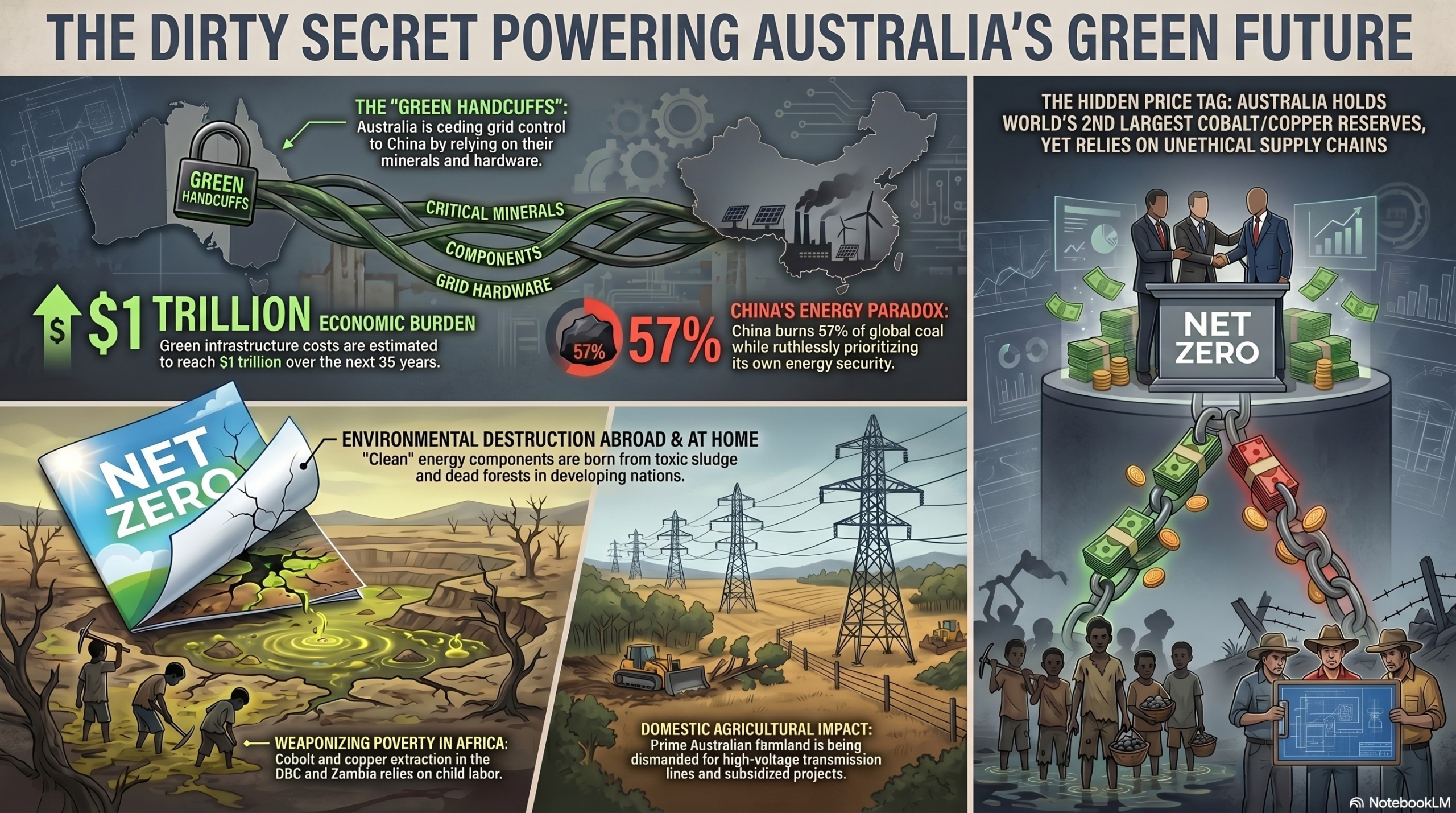
An energy policy written for the press release, not the map
The rhetoric:
Australia is told it is “leading” on climate, building a modern, ethical, renewables‑dominated grid that will deliver cheaper, cleaner power.
The evidence on screen:
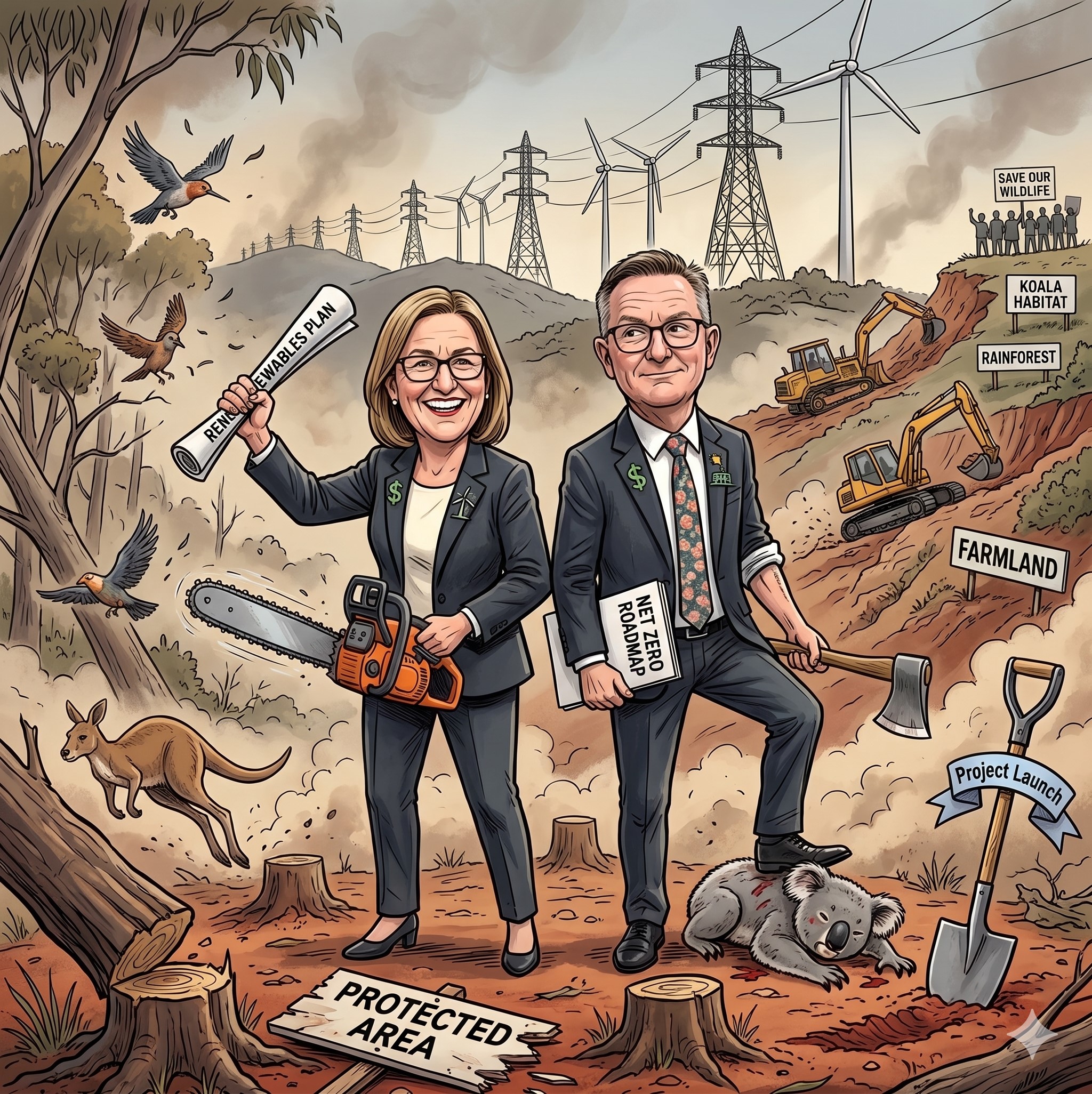
- Vast new transmission corridors slashing through forests and prime agricultural land, to host industrial‑scale wind and solar farms.
- Biodiversity and high‑value habitat bulldozed in the name of protecting nature.
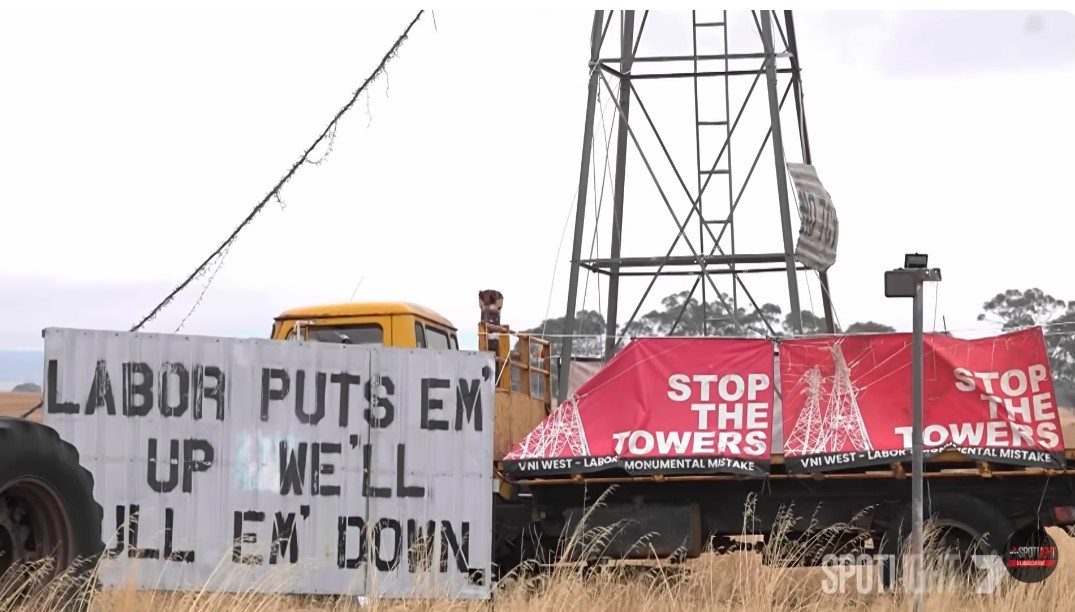
- Rural communities staring at maps of towers and lines marching across their properties, with little sense that they were ever given a real choice.
Environmental activist and cartographer Steven Nowakowski appears in the program to voice what many feel but few in government will admit: that the renewable rollout, as currently designed, is tearing up landscapes in ways that would once have been considered unthinkable.
If a coal miner proposed the same footprint, green groups would chain themselves to the gates. When it is done in the name of net zero, Canberra calls it progress.
When “opinion” does the investigative work government won’t
Officially, this broadcast is just another piece of television. Unofficially, it is doing the job that parliamentary committees, departmental risk units and ministers’ offices ought to be doing for themselves.
The program’s core charge is simple and devastating:
- The government has outsourced Australia’s energy future to a hostile, vertically integrated foreign power (China) and
- has done so while selling the public a fantasy of ethical, low‑cost, consequence‑free transition.
When challenged, ministers fall back on talking points. Bowen insists the transition is grounded in “facts”, cites the Australian Energy Market Operator’s modelling, and dismisses nuclear out of hand as “economically unfeasible”. But those carefully curated numbers do not answer the questions raised by this investigation:
- What happens when a concentrated Chinese supply chain decides to squeeze – on price, on availability, on conditions?
- Why was Australia so quick to close firm coal capacity without a robust, sovereign alternative in place – whether gas, nuclear or genuine domestic manufacturing of critical components?
- How can a government that constantly talks about “sovereign capability” tolerate this level of strategic exposure in the one system on which everything else depends: energy?
These are not ideological questions. They are the sort of cold, structural questions posed about any system where power and secrecy have coalesced.
Why you need to watch “The dirty secret powering Australia’s green future” – and what to look for
You should set aside an hour to watch the 7NEWS Spotlight investigation in full. It is available on Seven and 7plus under the title “7NEWS Spotlight: The dirty secret powering Australia’s green future” and on YouTube
As you watch, keep three things in mind:
- Follow the money and the maps.
Look carefully at who owns the mines, who finances the projects, and where the infrastructure is being built. Then compare that to where the benefits and risks fall in Australia. You’ll notice a pattern: profits and political virtue at the top; environmental damage and grid risk at the bottom. - Watch for the missing voices.
You will see African workers, Australian farmers, independent experts and activists. What you will not see much of is a detailed, line‑by‑line defence from the people signing off on this strategy. Departments offer cautious written statements. Ministers, when they do speak, prefer safer forums and friendlier interviewers. - Ask yourself whether this looks like a plan, or a panic.
A serious, national‑interest transition would sequence closures and investment to maintain firm, dispatchable capacity; diversify suppliers; and insist on ethical, domestic extraction where possible. What you see instead is a rush: close the old, buy the new, and hope the global supply chain never breaks.
This path can still be changed – but only if we stop pretending
Programs like this are not comfortable viewing for a government whose political capital is invested in the idea that the transition is inevitable, benign and already “on track”.
But reality is not obliged to fit a talking point.
A genuinely responsible response to what “The Green Dream” reveals would start with some basic acts of honesty:
- Admit that Australia has allowed itself to become dangerously dependent on a Chinese‑controlled critical‑minerals and component supply chain.
- Concede that the social, environmental and fiscal costs of the current rollout have been consistently understated, while the risks have been obscured behind modelling and slogans.
- Commit to re‑examining the pace and shape of the transition: prioritising domestic capability, base‑load security (whether via gas, nuclear or both) and ethical sourcing, rather than speed at any cost.
That would mean slowing or redesigning some projects. It would mean angering powerful lobbies and revisiting cherished timelines. It would mean, above all, admitting that mistakes have been made.
So far, there is precious little sign of such humility.