Stop Labors Towers Newsletter – August 22, 2026
VNI WEST: A VICTORY FOR THE PEOPLE WHO REFUSED TO BE RUN OVER
For years, communities along the proposed VNI West corridor were told to accept the inevitable.
Accept the towers. Accept the disruption. Accept the loss of productive land. Accept the “consultation” process in which decisions seemed to arrive pre-packaged, stamped and ready for delivery from Melbourne.
They did not accept it.
Farmers, landholders, families and regional communities kept speaking – at meetings, on roadsides, in submissions, in the media, and in the countless conversations that governments prefer to call “noise” when the public refuses to go away.
Now that persistence has produced a major result.
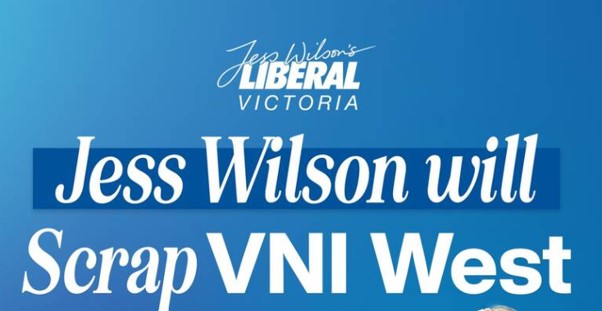
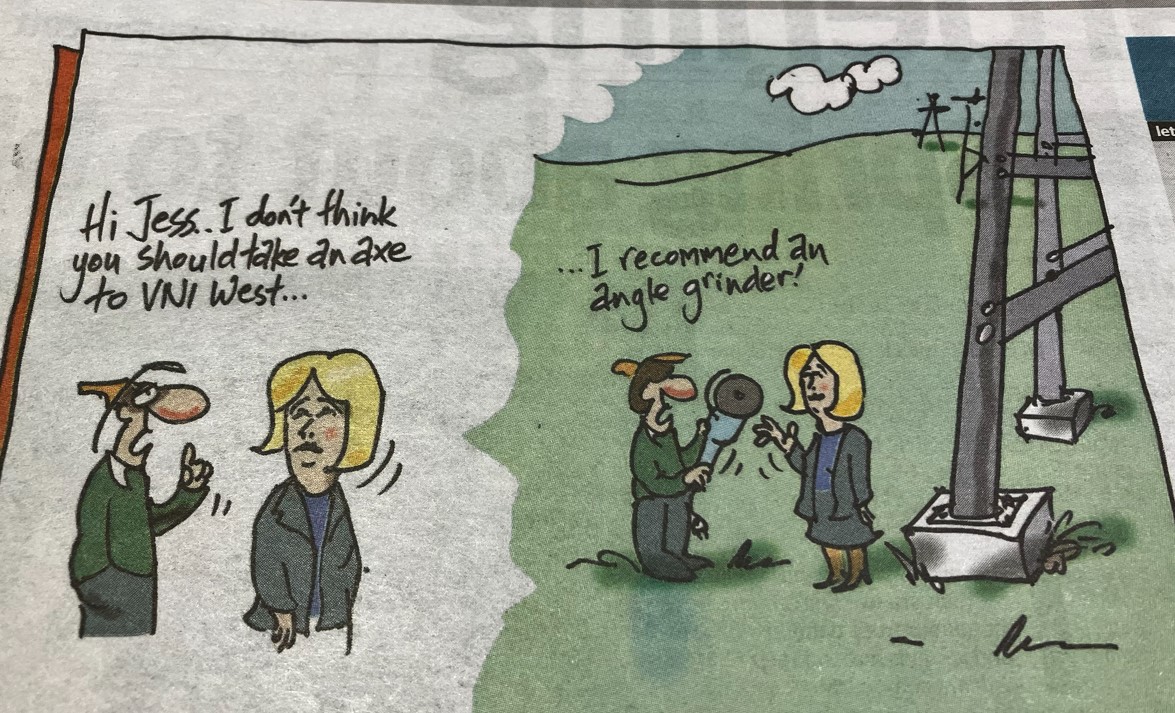
Victorian Opposition Leader Jess Wilson has announced that a Liberal–National Government would cancel VNI West if elected in November. The Coalition says the project’s estimated cost has escalated to between $7.6 billion and $11.4 billion, and that it does not stack up as an investment or as a fair deal for the communities expected to host it.
That is a significant win.
Credit belongs to the communities
This announcement did not arrive by accident. It did not emerge from the kindness of the political system. It was forced into the daylight by people who would not surrender their farms, their homes, their communities or their right to be heard.
The communities along VNI West showed what sustained local action can achieve:
- They challenged the assumption that regional Victoria exists merely as an energy corridor for metropolitan decision-makers.
- They exposed the human, agricultural and financial cost of a project that has grown dramatically in projected expense.
- They made land access, compulsory acquisition and property rights unavoidable political issues.
- They refused to let “renewable” become a magic word used to excuse coercion, poor planning and the bulldozing of rural communities.
The Victorian Farmers Federation has called the Coalition commitment a major victory for farming families and regional communities after years of uncertainty, division and coercion.
It is. And everyone who wrote, attended, objected, donated time, shared information, supported neighbours and simply refused to be intimidated should take a moment to recognise what has been achieved.
VNI West was supposed to be inevitable.
It is not inevitable now.
But WRL remains in the crosshairs
Celebration should last exactly long enough to recharge the batteries.
Because the Western Renewables Link remains a live threat.
WRL is not VNI West under a different logo. It is a separate 190-kilometre overhead high-voltage transmission proposal from Bulgana to Sydenham, moving through our communities and landscapes already designated as bushfire-prone.
The Coalition has not committed to cancelling WRL outright. Its public position is to halt the project and subject it to an independent review of its costs, business case, route and alternatives. It has also called on the Labor Government not to grant final planning approvals or compulsory-acquisition powers before the November election.
That is an important commitment – but it is not the end of the matter.
A pause is not a cancellation.
A review is not a safeguard.
And a promise to listen is only meaningful if it ends with a decision that actually protects the communities expected to live beneath, beside and around these structures.
The real test for the Coalition
The Coalition deserves credit for hearing VNI West communities and acting on that message.
It has also promised to repeal Labor’s compulsory-acquisition powers, restore landholder rights, remove fines connected to refusal of access, and review WRL.
Those commitments matter.
But the communities affected by WRL must not be asked to settle for a consolation prize while VNI West receives the full cancellation they deserve. Regional Victorians do not want a Government that runs roughshod over their rights, treats access to private land as an entitlement, or regards public consultation as an obstacle course to be managed.
They want a Government that listens.
Listening means recognising that WRL’s unresolved catastrophic impacts and risks are not confined to property values, construction disruption or visual amenity. They concern bushfire exposure, emergency access, aerial firefighting, agricultural land, environmental devastation and the basic right of communities to have a meaningful say before irreversible decisions are made.
The job is only half done
The VNI West decision proves that organised communities can move politics.
It also gives every WRL-affected community a clear message: keep going – go harder – hold the line.
Keep demanding independent scrutiny. Keep demanding that ministers explain why this route is necessary. Keep demanding full public disclosure of bushfire and firefighting implications. Keep demanding that “consultation” means consent, accountability and change – not another meeting in a hall after the decision has already been made.
VNI West has shown that there is nothing inevitable about bad policy.
The next task is to make sure WRL does not survive simply because the Government believes the people along its route have become too tired to fight.
We have not.
Lib’s Media Release
Regional Victorians don’t want a Government that runs roughshod over their rights and ignores them, they want a Government that listens.
That’s why today I have announced a Liberal Government will cancel VNI West.
It’s a Labor project that has blown out from $2 billion to as much as $11 billion and it won’t be ready to help keep the lights on after the expected closure of Yallourn.
Only a Liberal Government will value prime agricultural land and the livelihood of farmers and regional communities equally with our urban centres.
A Liberal Government will not allow regional communities and farmers to bear the brunt of poor decisions out of Melbourne.
Victoria doesn’t need more unnecessary poles and wires that bulldoze through regional communities. It needs more gas and more firm generation and that is exactly what my team will deliver.
I have also written to the latest Labor Premier to demand his government withhold the final planning approvals and compulsory acquisition powers AusNet needs to progress to the construction phase of WRL until after the election.
A Liberal Government will also:
· Repeal Labor’s divisive compulsory acquisition powers;
· Repeal laws that remove a farmer’s right to say no entry on their land and cancel fines for farmers who refuse access to their land;
· Scrap the Emergency Services Tax;
· Protect agricultural land for farmers by ensuring its agricultural value is taken into account in planning decisions; and
· Guarantee 25% of state-wide infrastructure spending is made in regional Victoria through our Fair Share Guarantee.
My team and I have listened, and we have acted. That is the type of Premier I will be if you do me the honour of electing me in November.
Jess Wilson MP
Victorian Liberal Leader
VNI WEST IS A VICTORY. WRL MUST GO NEXT.
The cancellation pledge for VNI West is a major victory for regional communities that refused to be silenced. But it is not the end of the fight not while the Western Renewables Link remains poised to carve through farms, towns and bushfire-prone country.
To every community along the VNI West route: stand with us now, as we stood with you.
A shared fight
For years, VNI West communities were told that resistance was pointless. That the towers were inevitable. That farmland, homes, landscapes and local rights were simply the price regional Victoria had to pay for decisions made elsewhere.
You proved them wrong.
Your persistence farmers, families, volunteers, local businesses and entire communities forced the political system to listen. The Coalition’s pledge to cancel VNI West did not come from nowhere. It came because people organised, spoke up and refused to surrender.
But communities along WRL have been fighting the same battle, for much longer.
Our communities have marched to Parliament, fought court cases, attended hearings, lodged submissions, demonstrated and lobbied for years.
We have been were resisting years before VNI West was even widely known.
The elephant in the room
The Coalition has committed to cancel VNI West. That deserves recognition.
But there is now a very large elephant in the room: WRL.
A promise to “review” WRL is not enough. A statement that its future depends on “value for money” is not enough. Communities cannot be asked to accept another years-long process while the Government, the proponent and bureaucrats continue to advance a project they have already rejected.
WRL has been presented as a project that will somehow serve the public good. Yet its cost has reportedly expanded from an early estimate of around $470 million to more than $3 billion. Its impacts on agricultural land, regional communities, emergency access, bushfire response, visual amenity and local confidence cannot be treated as side issues.
Nor is the project operating with social licence. A project without community consent is not a plan. It is a conflict being built in slow motion.
The Coalition must be clear
Votes in WRL-affected communities should not be taken for granted.
Regional Victorians want a government that listens. They do not want a new government that inherits Labor’s transmission agenda, changes the letterhead and expects communities to keep carrying the burden.
The Coalition must make a clear commitment:
Stop WRL in its current form. Cancel compulsory acquisition powers. Protect landholder rights. Develop a genuinely safer, fairer and evidence-based alternative – if additional transmission from the Western Renewable Energy Zone is truly required.
That is the minimum needed to restore confidence.
The Coalition has shown it can hear VNI West communities. Now it must show it hears the communities of Melton, Eureka and Ripon.
Our call to action
To our VNI West friends: your fight has opened a door. Help us push it all the way open.
Contact your local Liberal and Nationals candidates. Contact Jess Wilson, David Davis and your local MPs. Ask one direct question:
Will you commit to cancelling the Western Renewables Link in its current form – not merely reviewing it?
Tell them that regional votes are not automatic. Tell them that VNI West and WRL are part of the same story: communities denied a meaningful voice, productive land treated as expendable, and major infrastructure pushed forward without genuine social licence.
We congratulate the Coalition for listening on VNI West.
Now we ask it to listen again.
Regional Victoria will not accept a government that saves VNI West while leaving WRL communities to bear the cost, the danger and the potentially catastrophic consequences of Labor’s transmission agenda.
WRL: A CATASTROPHIC RISK LABOR CANNOT CLAIM IT DIDN’T SEE
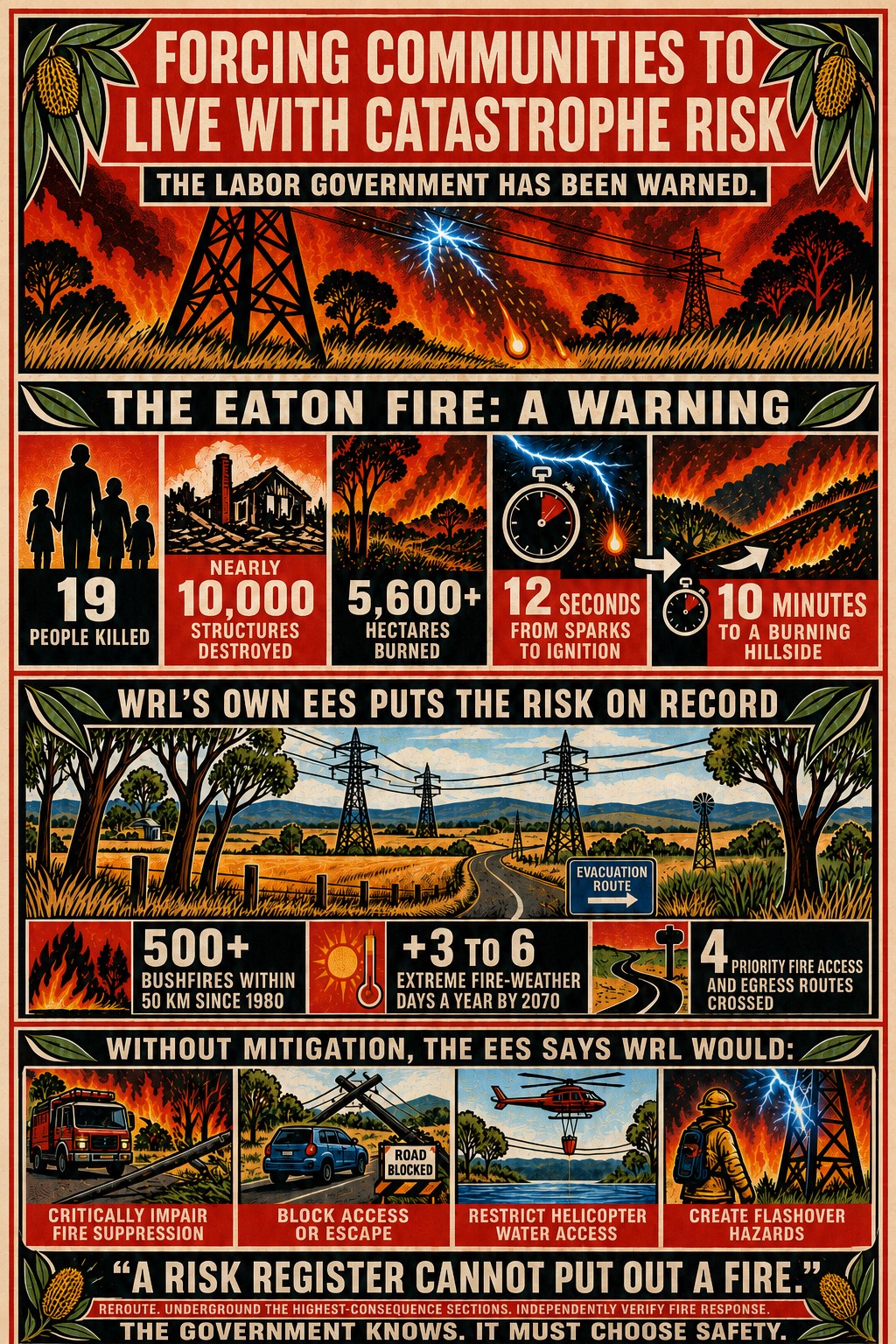
The Labor Government has been warned. If WRL fails, it cannot say it did not know.
Nineteen people died in California’s Eaton Fire. Almost 10,000 structures were destroyed. The fire burned more than 5,600 hectares.
Report confirms cause of deadly Califorina wildfire that killed 19
Investigators say sparks from a transmission tower fell into dry fuel. Video showed bright blue-white electrical flashes. Then glowing material fell from the tower. The fire ignited about 12 seconds later. Within 10 minutes, the hillside was burning.
This was not an act of nature alone.
There was wind. There was drought. There was dry vegetation. There was electrical infrastructure. And there were people in the path of the fire.
Victoria’s Labor Government should read that sequence carefully before it approves the Western Renewables Link in its present form.
The route crosses a known fire landscape and one of the worlds most vulnerable fire risk zones.
The project’s own Environment Effects Statement accepts that it traverses a highly susceptible bushfire-prone landscape – one in which uncontrolled fires have already caused injury, death, property loss and long-term disruption.
Its own documents identify more than 500 recorded bushfire events within 50 kilometres of the project area since 1980. They acknowledge that severe fire-weather conditions occur around the proposed route, and that climate change is expected to add three to six more extreme fire-weather days each year by 2070.
The route does not pass through an abstract risk on a map. It passes beside forests, woodlands, plantations, roadside vegetation, dry grasslands and crops: the fuels from which fast-moving bushfires are made.
This is a decision to place permanent, high-voltage infrastructure into a landscape already identified as vulnerable to bushfire.
The Government knows this.
Not just an ignition risk
The danger is not limited to a spark.
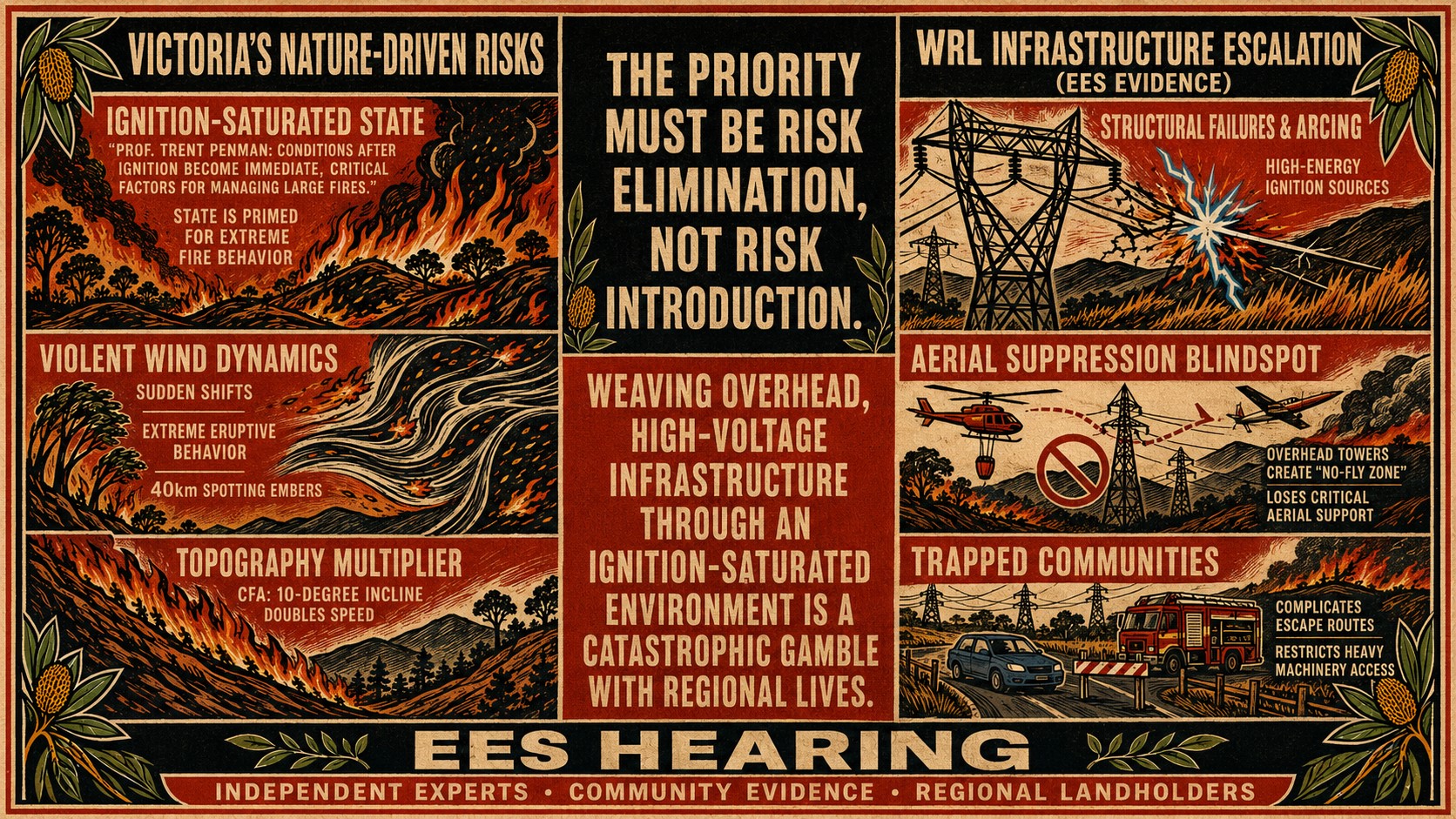
The WRL assessment admits that, without mitigation, the infrastructure could diminish fire suppression, constrain fuel management and impede access to, or escape from, an active fireground.
It identifies that the project crosses four priority bushfire access and egress routes.
These are not ordinary roads. They are routes designated for people fleeing bushland fire and for emergency services entering a fireground.
The assessment also concedes a tower or conductor failure could block such a route.
In a fire, that could delay an appliance. It could delay an evacuation. It could force families onto another road, at another time, toward another danger.
The document acknowledges that, once conductors are installed, fire-response helicopters may be unable to access some nearby farm dams. It acknowledges a transmission tower or line could create an aircraft-safety incident or near miss, potentially suspending aerial firefighting and increasing reliance on crews on the ground.
It also acknowledges that smoke and gases near high-voltage lines can create flashover hazards – electrical discharge that places firefighters and others at risk.
These are not allegations from opponents. They are risks described in the project’s own bushfire material.
The California catastrophe did not need a theory. It needed only an electrical failure, dry fuel and violent wind. Victoria has its own history of catastrophic fire weather. The WRL’s own assessment recognises that on highly elevated fire-weather days, fire behaviour is driven less by local fuel conditions and terrain than by the weather itself.
That is the central failure in the Government’s approach: it is treating an extreme-consequence risk as if it can be neutralised by a management plan.
A risk register cannot put out a fire.
A consultation process cannot reopen a blocked escape route.
An assurance written years before an emergency cannot bring back a person who did not get out.
Political responsibility begins now
No one should suggest that every overhead transmission line will start a bushfire. That would be false.
But it is equally false to pretend that the consequences of a failure in this landscape are unknowable, unforeseeable or someone else’s problem.
The Victorian Labor Government has been put on notice by the evidence before it. It knows the route is predominantly within bushfire-prone land. It knows the infrastructure introduces ignition, access, suppression and emergency-response hazards that must be managed for the life of the asset. It knows strategic fire-control lines and priority access and egress routes intersect the proposed corridor.
If ministers permit the project to proceed, they must accept political responsibility for choosing this overhead infrastructure and this route not merely responsibility for the paperwork that approves it.
The relevant test is not whether the project can be made to satisfy a minimum planning condition. The test is whether the Government has exhausted safer alternatives: route changes, technology changes, undergrounding at the highest-consequence locations, and independently verified fire-response arrangements.
Until it does, it is asking regional Victorians to carry a risk that it has the power to reduce.
The Eaton Fire should end the comfortable fiction that catastrophic failures are unimaginable. Nineteen people died after a transmission-tower fault ignited dry vegetation in extreme conditions. That is not a prediction for Victoria. It is a warning that public authorities have a duty to take seriously.
The Labor Government can still change course. If it does not, it should never be allowed to say that nobody warned it.