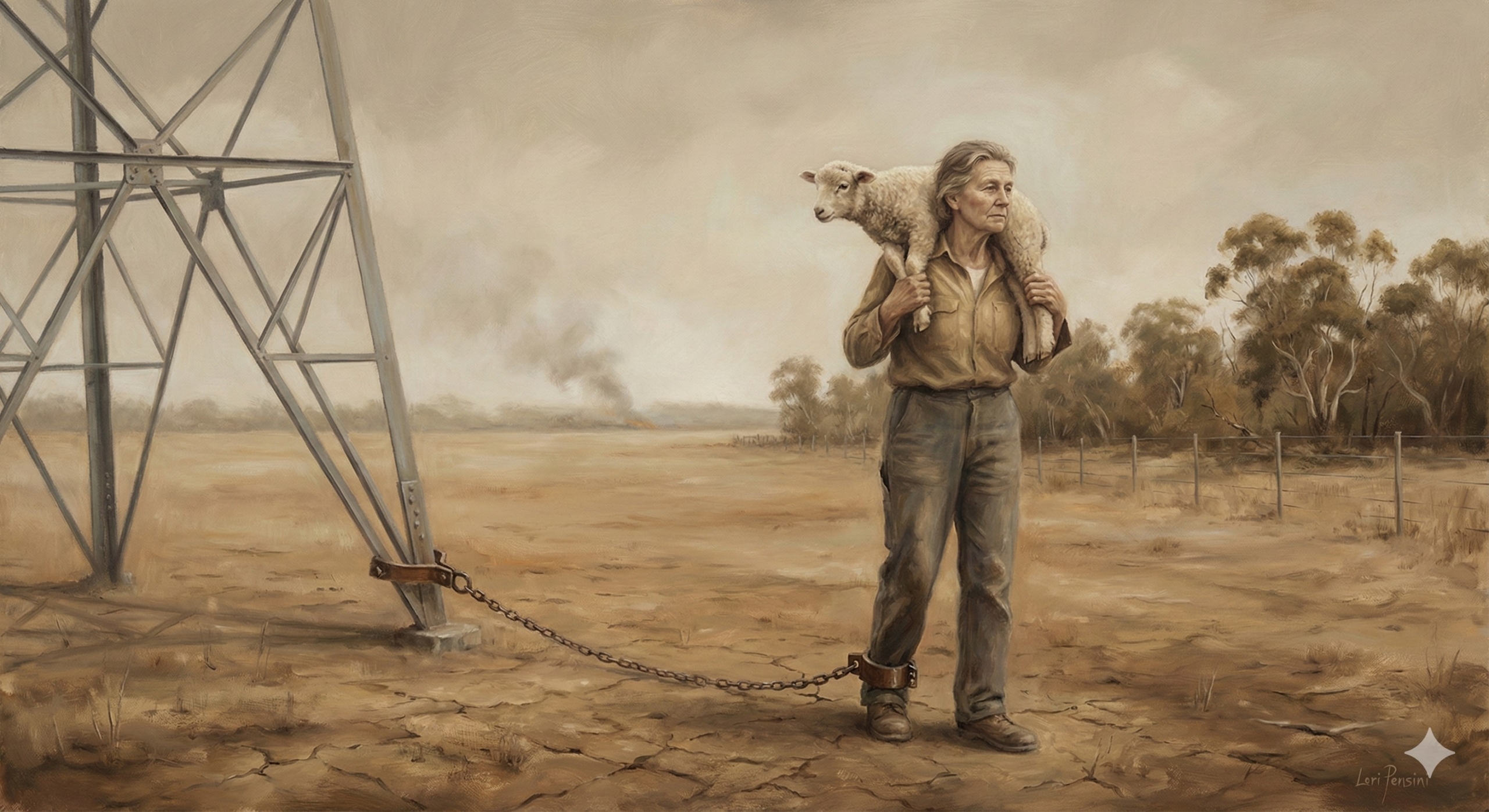
STOP LABORS TOWERS
NEWSLETTER – December 7 2025
Army of farmers confronts Victoria government in renewables standoff
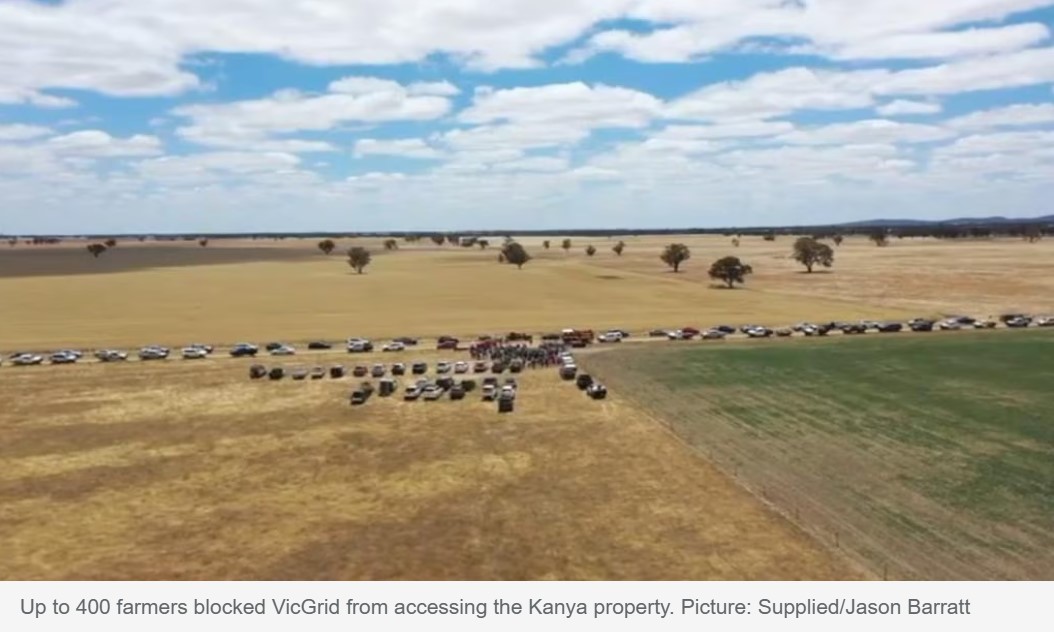
Hundreds of farmers have blocked the Victorian government from accessing land in another confrontation over a renewable energy project.
State agency VicGrid has been trying to conduct surveys on farmland for VNI West, a transmission line designed to move renewable energy from wind- and solar-rich areas to population centres.
VicGrid says it’s a crucial project to “keep the lights on” as the state retires coal and tries to hit its legislated goal of 95 per cent renewables by 2035.
But a grassroots movement against the project has been gathering steam for years.
On Tuesday, Kanya sheep and grain farmer Ben Duxson was the latest landowner to deny VicGrid access, part of a growing trend in the state.
Mr Duxson had the support of up to 400 other farmers who travelled to his property from across Victoria.
Drone footage showed the sheer scale of the protest, as a large crowd toted signs that read “stop Labor’s towers,” and “hands off our land”.
“VicGrid asked for the owner and said under section 93 we’ve got the right to come in, and we can come in,” Mr Duxson told news.com.au.
“We just say, ‘no, access denied.’ They don’t actually have the right – we’ll just keep locking the gate.”
It comes after the Victorian government passed a controversial bill allowing “authorised officers” to force entry onto private property with a court order and police support.
Anyone obstructing access could face fines of up to $6,000 – and potentially “reasonable force” – under the new law.
But Mr Duxson said farmers were not afraid of being fined or even arrested.
“I think we can double our numbers next time – are they going to fine us all?” he said.
“They’re going to need to bring in buses, and there’s not enough room in the jails.”
The farmer said the stand against VNI West had “unified” his community and support was pouring in from around Australia and overseas.
He opposed the project on the grounds that renewable energy systems were costly and inefficient, with components requiring frequent replacement.
Instead, he thought renewables had a part to play in a wider system that included coal and nuclear power.
“This is a government-induced energy crisis, it’s nothing to do with farmers holding up the project,” Mr Duxson said.
“It’s a bad policy and we’re not going to put up with it. That’s why people are standing at the gate, it’s on principle – it can’t work.”
In another encounter last month, a VicGrid worker was told by a group of farmers to “bugger off” while attempting to survey a sheep-cropping farm in Teddywaddy, north of Charlton.
Footage showed the contractor standing at the gate while another worker stood behind him and appeared to be filming with a body camera.
One of the farmers involved, James Burke, said the body camera was a common tactic and described VicGrid’s frequent visits as “predatory harassment behaviour”.
“These people that think they can come up into our area and take us on – they’ve got another thing coming,” Mr Burke told news.com.au.
In response to the protests, VicGrid CEO Alistair Parker said VNI West was a “crucial project to keep the lights on for all Victorians as we replace ageing coal-fired power with new renewable energy sources”.
“These surveys are about getting the best information so we minimise impacts on the landscape and on farming operations,” Mr Parker said in a statement.
“Our strong preference is always to agree voluntary access. That’s the way we want to keep working, because it leads to better outcomes for everyone.
“Safety comes first – for landholders, for community members and for our staff – and we’re asking everyone involved to approach this calmly and respectfully.”
WRL EES Hearing – End of Week Five
Last Week at the WRL EES Hearing
Last week’s Western Renewables Link (WRL) EES Hearing made one thing brutally clear: to the project’s proponents, individual lives do not matter.
Moorabool Shire delivered its closing arguments with precision and courage. Their case was powerful, evidence-based, and grounded in the lived reality of a community pushed to breaking point. Melton followed by calling expert witnesses, including specialists who presented credible undergrounding options that the proponent continues to pretend do not exist.
But the response from AusNet’s legal team told the real story.
Their approach was aggressive, dismissive, and openly hostile, mirroring exactly what landholders have faced on the ground for the past five and a half years. The lawyers treated council witnesses with the same contempt that communities have endured since day one: cutting people off, belittling concerns, and pushing a narrative in which the project’s convenience outweighs human safety, wellbeing, and survival.
We have seen this behaviour everywhere along the route.
Landholders have been yelled at, dismissed, intimidated, and in several cases physically confronted by the proponent’s representatives. Now the legal team has joined the act, replicating the same corporate arrogance inside the hearing room.
It is important to remember what the EES is supposed to do.
It exists to test impacts, interrogate risks, and determine whether a project can proceed responsibly or whether it should be refused altogether. It is meant to protect communities, landscapes, and lives.
But the conduct on display last week showed something far more disturbing.
This is not engagement.
This is not consultation.
This is pressure, power, and the quiet expectation that ordinary people will simply be pushed out of the way.
Five years on, the pattern is unmistakable.
And yet, despite the intimidation, councils stood their ground.
Communities stood their ground.
The truth stood its ground.
We will keep showing up, telling the story they want erased, and refusing to accept a future where regional lives are treated as collateral damage.
This Week at the Hearing
Monday 8 December
- Expert evidence: Social from Robert Panozzo of ASR Research
- Melton City Closing Submission
Tuesday 9 December
- Hepburn Shire Council represented by Greg Tobin and Xander Nguyen Meacham of Harwood Andrews Lawyers.
- · Expert evidence: Tourism from Karl Flowers of Decisive Consulting Pty Ltd
- Expert evidence: Landscape and visual from Brendan Papworth of Papworth Design
Wednesday 10 December
- Expert evidence: Agriculture from Gavin Beever of Cumbre Consultants
Note Mr Beever will present his evidence on behalf of both Hepburn Shire Council and City of Ballarat on this day.
Thursday 11 December
- City of Ballarat represented by Kirsten Richardson of Maddocks
Holding Power to Account
A strong community presence is essential to hold the proponent (AusNet) and its so-called independent experts accountable.
Your participation matters. Each voice contributes to transparency, truth, and community strength.
Below is a practical step-by-step guide to help you follow the hearings, access documents, and take part directly in questioning.
Step 1 – Access the Hearing Timetable
The Western Renewables Link (WRL) Environment Effects Statement (EES) Public Hearingscommenced on Monday, 27 October 2025, and will run through to Thursday, 5 March 2026.
How to Find It
- Visit the Inquiry and Advisory Committee (IAC) main page:
🔗 WRL EES Hearing Main Page - Go to “Tabled Documents.”
🔗 Tabled Documents Page - Download the latest Hearing Timetable (Document Here)
The timetable lists:
- Which expert witnesses are scheduled to appear,
- Their topics (e.g., bushfire risk, landscape and visual impacts, agriculture), and
- The session dates and times.
Community Submissions
The current timetable lists expert evidence, councils, and agencies through to late December 2025.
Community submitters are expected to present between January and March 2026, with Ballarat hearings (Weeks 11–14) scheduled for February 2026.
Keep checking for timetable updates to confirm your appearance date.
Step 2 – Review Expert Materials
Before each presentation, the proponent’s “independent” experts usually upload an overview of their evidence to the Tabled Documents section.
You can find them here:
🔗 Tabled Documents – Expert Evidence
TIP
Read these expert summaries before their scheduled presentation.
They reveal the assumptions, omissions, and technical biases underpinning the evidence – crucial for preparing questions or identifying misleading claims.
Step 3 – Request to Cross-Examine (Ask a Question)
If you wish to pose a question or cross-examine an expert, you must register your intent with the IAC Secretariat no later than 12:00 pm the day beforethe expert is due to appear.
| Requirement | Action to Take | Details / Contact |
| Notify the IAC | Email your intention to cross-examine. | 📧 planning.panels@transport.vic.gov.au |
| Deadline | Before 12:00 PM (noon) on the day prior to the expert’s scheduled appearance. | Confirm the expert’s date in the hearing timetable. |
| Email Content | Simply state your name, the expert or topic, and the approximate time required. | Example: “[Your Name] requests time to cross-examine [Expert Name] on [Topic] and estimates [X] minutes is required.” |
| Your Safeguard | You are formally listed as a participant for that part of the evidence. If your question is answered during the session, you may simply pass. | This ensures your right to speak is protected and recorded. |
Why This Matters
By following these steps, you help ensure the WRL hearing process remains transparent and accountable.
Every individual who observes, questions, or challenges the evidence strengthens the integrity of the process.
The hearings are not merely procedural – they are a test of truth.
When the facts are distorted, community participation becomes the only real counterbalance to corporate spin and political complacency.
Quick Links Recap
When You’re at Ground Zero of Net Zero
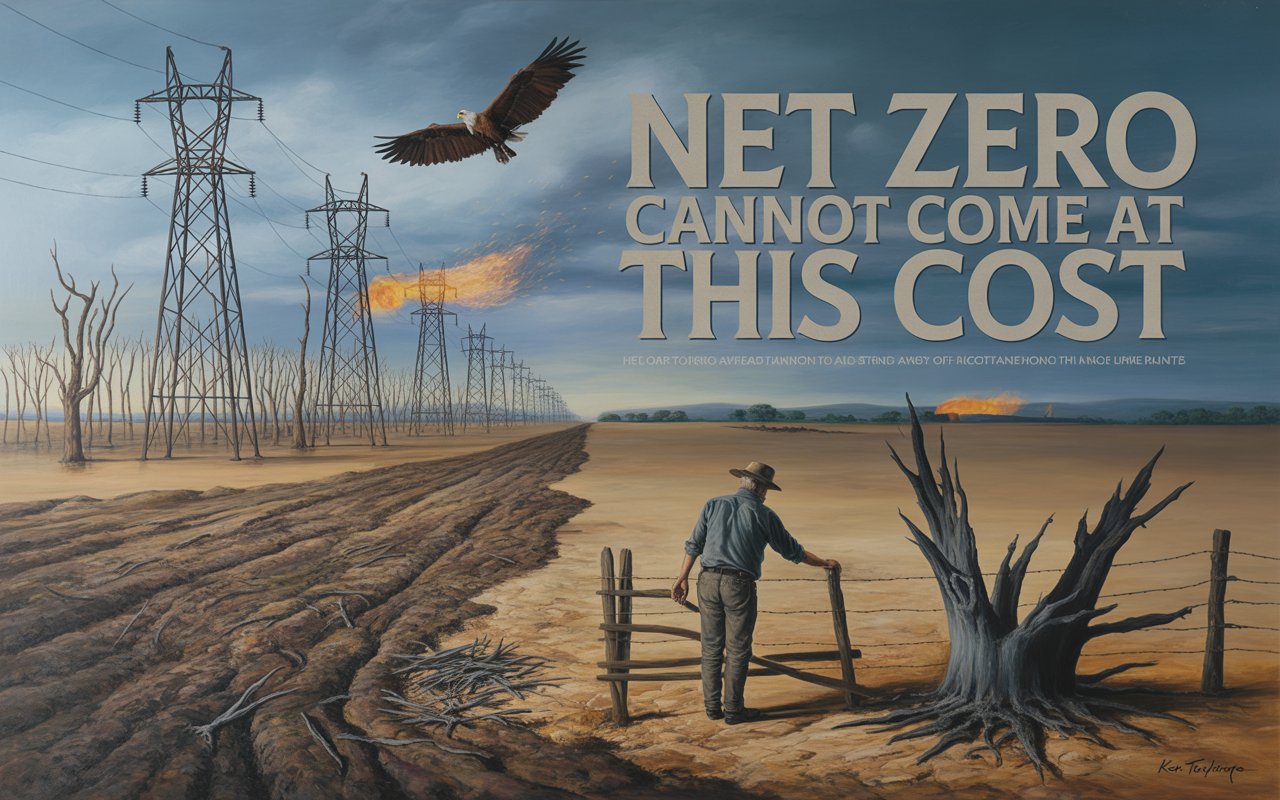
They speak of Net Zero with smooth certainty, as though it were a clean white page the nation could finally write its better future on. They speak of it in conferences and press briefings, in rehearsed lines delivered from polished lecterns. They nod gravely, invoke grandchildren, the planet, the century ahead.
And maybe the ambition is noble.
Maybe the goal is necessary.
Maybe the world truly does depend on our reaching it.
But out beyond the press conferences and policy papers, in the paddocks and gullies and town edges where people actually live their lives, Net Zero takes on another meaning entirely. It becomes something harder, something heavier, something cut from steel and humming with voltage.
Out here, you don’t get the rhetoric.
You get the reality.
You get ground zero.
A Landscape That Remembers What Came Before
There’s a particular light in places like Moorabool and Hepburn, early in the morning when the mist lifts off the grass and the distant ridges turn blue like bruises healing in slow motion. The Wombat and Lerderderg forests breathe deep in the dawn. The paddocks smell of dew and eucalyptus.
These landscapes carry memory the way old skin carries scars.
They remember drought and flood, flame and regrowth. They remember the generations who worked them, the quiet convenants of stewardship passed down like heirlooms.
And they know the difference between what heals a place and what wounds it.
The planners speak of “corridors” and “infrastructure footprints,” but these are words that do not belong to this soil. Here, a corridor is a wildlife path, a stand of yellow gums linking one habitat patch to another. A footprint is the imprint of a kangaroo crossing the creek bed, or the weight of the farmer who walks the same track every morning of his life.
To carve a transmission easement through this country is not just a planning decision.
It is a break in continuity.
A fracture in the story.
And the land feels it before anyone else.
Fire, and the People Who Do Not Forget
If you live in the shadow of Lerderderg Gorge or the Wombat State Forest, fire is not an abstract danger. It is a thing you can smell long before you see it. A thing that can turn the sky a terrible colour. A thing that moves with a wind that feels alive and wrong.
Fire here is old. It is powerful. It has written its name into rock and memory.
Yet the proponent’s experts, with their clipped tones and tidy charts, drain the danger of its substance. They tell communities that additional ignitions are “unlikely,” that corridor risks are “manageable,” that 85-metre steel towers pose minimal threat in “most scenarios.”
Most scenarios.
Tell that to the family with one road out.
Tell that to the volunteer truck that’s still cutting a path through smoke and embers when the official models say conditions should be stable.
Firefighters know what theory does not: that risk is not an equation – it is a moment.
One branch hitting a live wire. One gust at the wrong time. One narrow valley channelling heat in ways outsiders never think to calculate.
Fire has a long memory.
But the people who write these reports do not.
Displacement That Doesn’t Look Like Displacement
The planners will tell you that “no homes will be acquired.” (That’s a lie)
They think this means no one is displaced.
But displacement takes many forms.
Sometimes it begins with a white envelope on the kitchen table.
A survey flag in the paddock.
An unsolicited knock on the front gate.
A map that redraws your land without your consent.
A future you did not choose tightening around you like wire.
The government calls this “coordination.”
Communities call it something else: erosion of certainty.
A quiet theft of peace.
Residents still sleep in their homes, still drink their tea on their verandahs, still drive the same roads. But something has shifted – the knowledge that their land now carries someone else’s agenda. Someone else’s risk – a risk they sekk to place on us. Someone else’s convenience.
This is displacement without relocation.
A hollowing-out of belonging that doesn’t show up in statistics.
Agriculture Never Agreed to This
No farmer asked for high-voltage transmission towers in their working paddocks. Not one.
Agriculture is already at the weather’s mercy – drought cycles tightening, water regimes shifting, soil erosion creeping in like a slow undoing. Farmers navigate these pressures with skill earned over generations.
But the planners treat farmland as empty beige space on a diagram.
A space available for “efficient routing.”
They forget that:
- machinery needs clearance
• irrigation systems follow old, reliable patterns
• soil health depends on undisturbed continuity
• stock react differently to shadows, noise, and movement
• aerial spraying cannot occur around high-voltage structures
• yield changes when land is carved into unnatural shapes
• access paths shift from practical to dangerous
They forget that good agriculture is choreography – precise, patient, rhythmic.
The proponent promises no “significant impact,” yet ignores every farmer who says:
You cannot understand the cost unless you’ve worked this land.
A renewable transition that undermines the very sectors feeding its workers is not progress. It is folly dressed as inevitability.
The Environmental Contradiction No One Wants to Acknowledge
Politicians and executives often speak of “preserving the environment for future generations.” They use these words with real conviction.
But something cracks when the same people who champion environmental protection also approve the destruction of critical habitat:
- wedge-tailed eagle nesting ranges
• native grassland remnants
• riparian corridors
• biodiversity hotspots
• threatened species refuge
How can a country preach climate stewardship while bulldozing the ecosystems that buffer climate?
It is the great contradiction of the energy transition as currently designed:
Sacrifice the environment in order to save it.
Out here, where the creeks run low and the grasslands hide fragile things, people see the contradiction clearly.
They live beside it.
The Moral Weight of Ground Zero
People in these rural communities are not anti-renewable. They are not anti-environment. Many install solar. Many support grid reform. Many want desperately to hand a liveable world to their kids.
But they know when they’re being asked to pay more than their share.
Net Zero must be an eco-logical ambition, not a geo-political imposition.
An aspiration – not an excuse.
A transition – not a bulldozer.
What these communities reject is not the destination but the path chosen, a path carved through homes and heritage and bush without foresight or fairness.
Ground zero is never the place where decisions are made.
It’s only where consequences fall.
A Future Worth Fighting For
Some nights, when the wind is slow, you can hear the creak of old trees, the distant hum of the freeway, the soft rhythm of animals settling. Life here is not fragile – it is resilient. But even resilience has limits.
And that’s why people are standing up.
They are not fighting the climate.
They are fighting the careless planning of its salvation.
They are fighting for a future where:
- the renewable grid is built intelligently
• the environment is protected, not sacrificed
• fire risk is reduced, not rationalised
• agriculture is respected, not disrupted
• communities are partners, not obstacles
• alternative routes and technologies are genuinely considered
Out here, people have learned that survival often begins with a single act:
Refusing to be quiet.
Conclusion: The Real Work of the Transition
If Net Zero is to mean anything, it must honour those who live closest to the land.
It must listen to them.
It must protect them.
It must learn from them.
Because a country that sacrifices its rural communities for its climate targets has lost the plot – and lost its moral compass.
The truth is simple:
You cannot build a cleaner future by scarring the landscapes that have kept families, wildlife, and livelihoods alive for generations.
Ground zero should never be imposed.
And those who stand at ground zero deserve more than a pat on the shoulder and a pre-written assurance.
We deserve a better plan.
A safer plan.
A plan that respects the land and the people equally.
Until then, we will hold the line.
Not out of stubbornness, but out of love – fierce, rooted, enduring – for the country that raised us.