Stop Labors Towers Newsletter – November 1, 2026
IN THIS ISSUE
YOU HOLD THE POWER
- 27 days until the State Election. 17 days until early voting. the WRL is not inevitable.
- Eureka candidate debate exposes Labor’s arrogance
- Open the cabinet files. Expose the decisions behind the Western Renewables Link.
- The Great Energy Sabotage: Why regional Victoria is paying the price for Labor’s grid
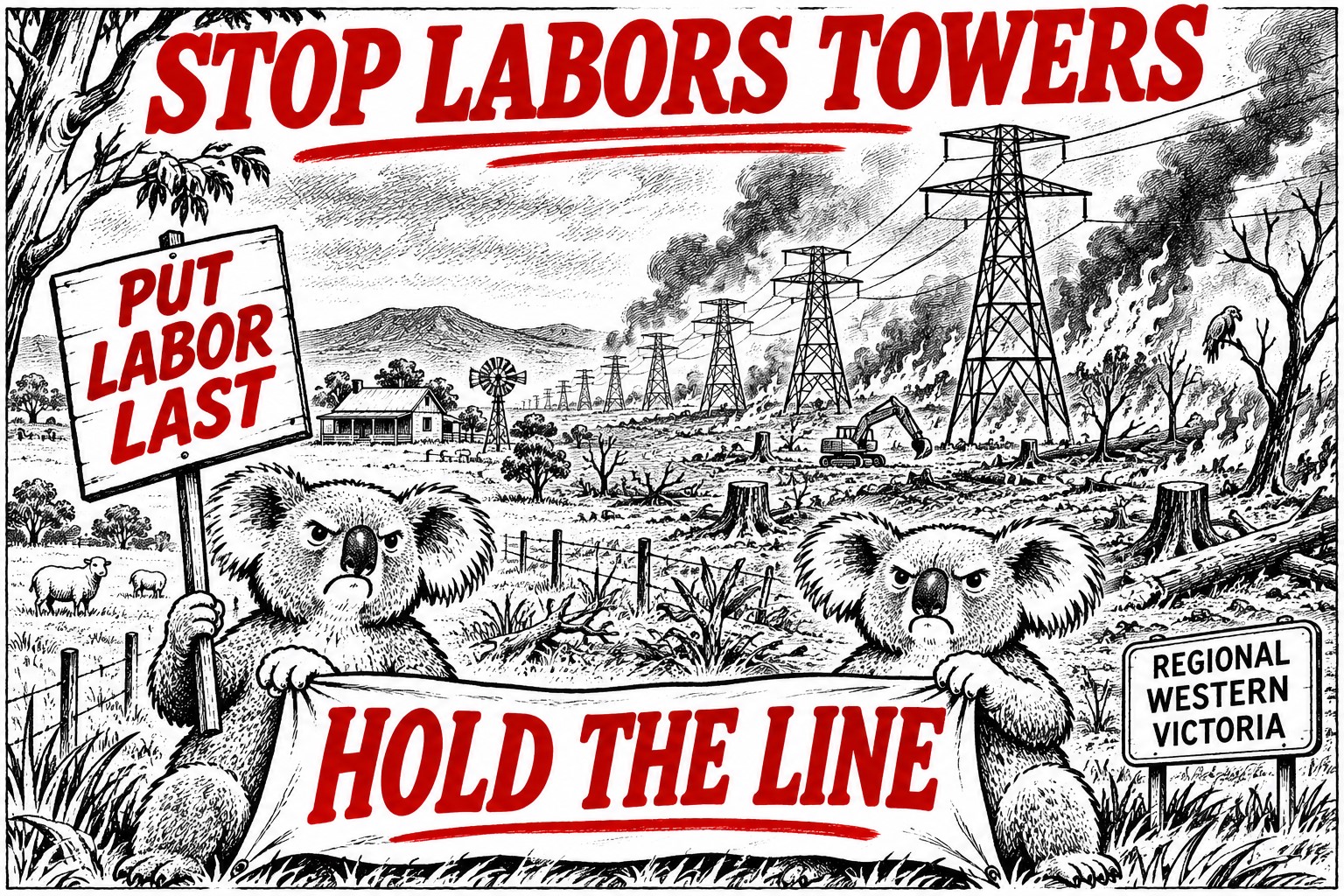
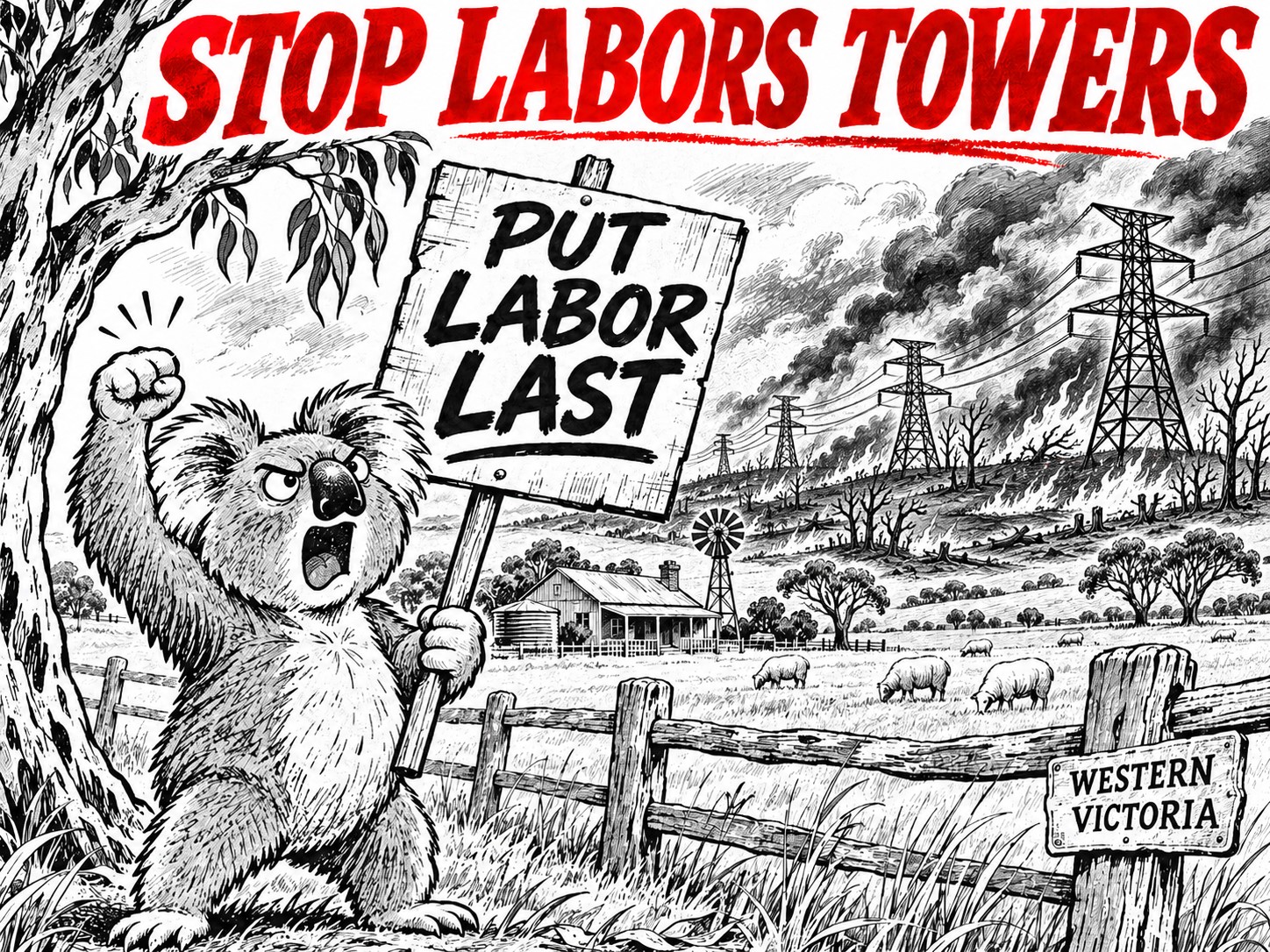
- New “PUT LABOR LAST” signs available
___________________________________________
27 DAYS UNTIL THE STATE ELECTION.
17 DAYS UNTIL EARLY VOTING.
THE WRL IS NOT INEVITABLE.
For six and a half years, we have fought to protect the homes, farms, livelihoods and landscapes that generations have built across western Victoria.
For six years, our communities have endured deceit, deflection, intimidation, corruption, endless inquiries, public hearings and hostility under Victoria’s Labor Government.
We have endured it all. We have not surrendered. We will not be silenced.
And still the Western Renewables Link advances.
Now, with the Victorian election approaching, the political differences over this project could not be clearer.
TWO THINGS EVERY COMMUNITY MEMBER NEEDS TO KNOW.
NUMBER 1: THE PARTIES ARE OFFERING DIFFERENT FUTURES FOR THE WRL.
- LIBERAL–NATIONAL COALITION: Will cancel VNI-West and will cancel the WRL in it’s current form, meaning fundamental changes to the WRL or cancelling it all together.
- ONE NATION: Has explicitly committed to CANCELLING the WRL and VNI West if elected.
- LABOR:Continues to advance the WRL through the approvals process.
NUMBER 2: AUSNET DOES NOT GET TO DETERMINE THE OUTCOME OF THE STATE ELECTION.
When AusNet tells landholders that the WRL is proceeding, it is describing the project under the present government’s processes and decisions.
IT DOES NOT MEAN THE PROJECT’S FUTURE IS BEYOND THE REACH OF A NEW GOVERNMENT.
Further approvals remain. Government decisions remain. Political accountability remains.
A CALL TO ACTION
18 NOVEMBER: EARLY VOTING BEGINS.
28 NOVEMBER: VICTORIA VOTES.
Make Your Vote Actually Count This Election:
- Independents Cannot Form Government: Good intentions don’t equal political power. Minor candidates have no seat at the cabinet table to block harmful policies. Don’t Vote for an independent as number #1 or #2.
- Don’t Split the Vote: Fracturing the anti-Labor vote only benefits Labor.
- The Only Viable Alternative: Deliver a decisive blow by backing a force that can actually govern or hold the balance of power.
Vote [1] Coalition (Liberal/Nationals) or One Nation — and put Labor dead last.
SHARE THE FACTS. DEMAND ACCOUNTABILITY. MAKE THE WRL AN ISSUE NO CANDIDATE CAN IGNORE.
___________________________________________
CANDIDATE DEBATE EXPOSES LABOR’S ARROGANCE
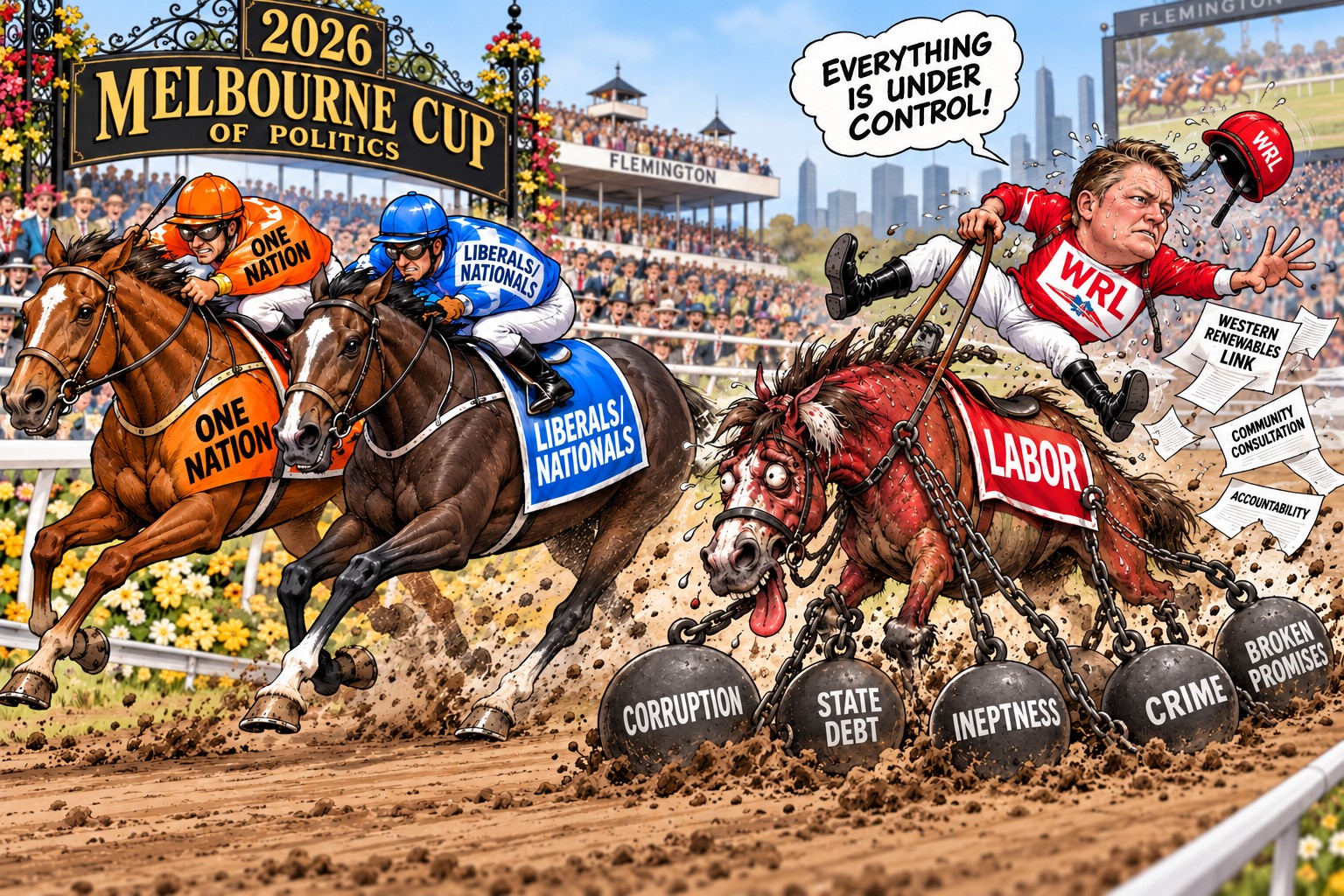
LIAR, LIAR, LABOR’S ON FIRE: YEARS OF DEPICT AND CORRUPTION
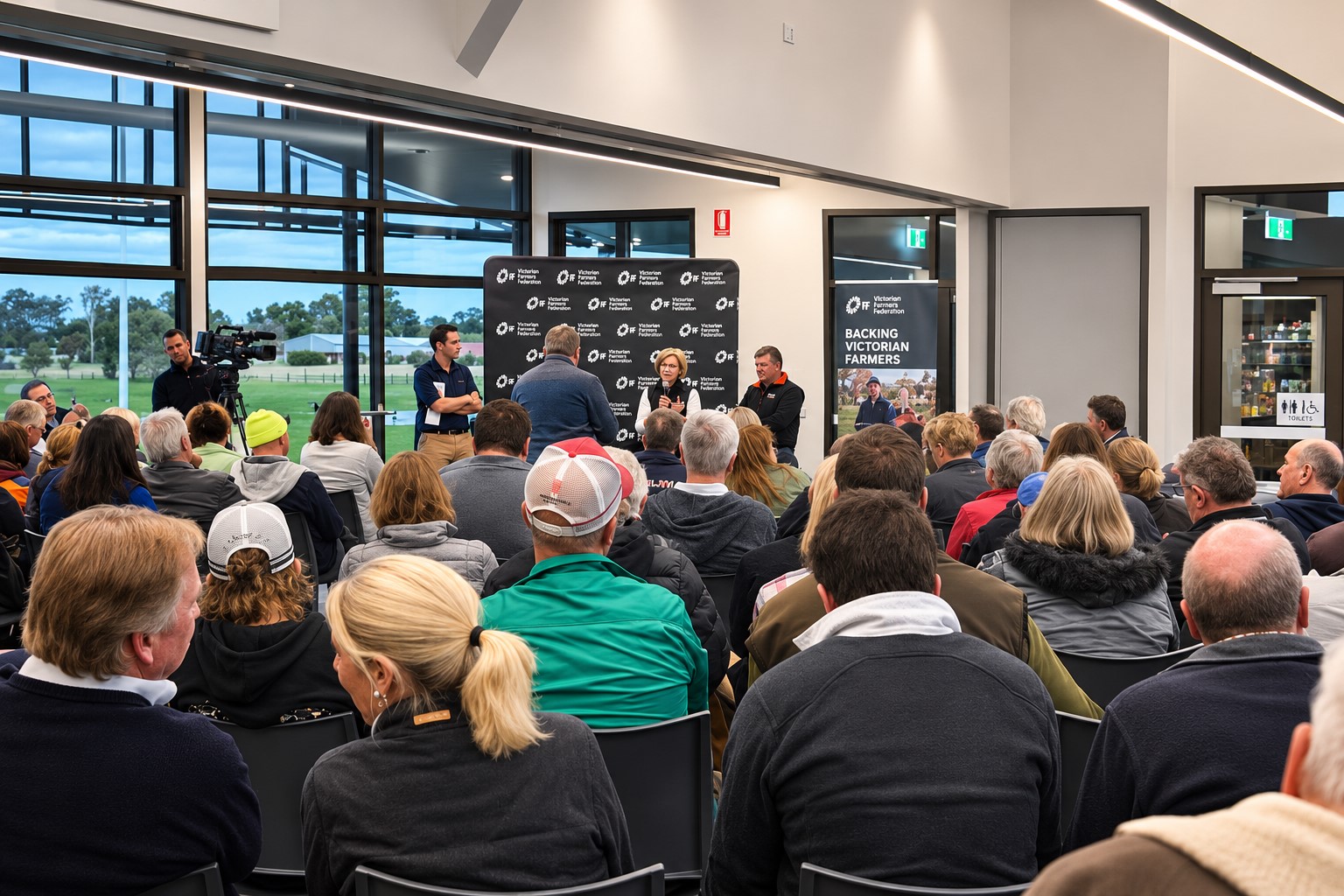
Tuesday night’s Victorian Farmers Federation election forum in Ballan was supposed to be an opportunity for political accountability. Instead, it exposed the extraordinary arrogance of a Labor government that has spent six and a half years telling our communities it is listening, while the Western Renewables Link continues to advance.
Before more than 100 farmers and residents on 27 October, three candidates faced questions about a project threatening homes, productive farmland, livelihoods, the environment and community safety.
The contrast was striking.
Liberal candidate Emma Muir, who has spent years fighting alongside affected communities, demonstrated an understanding of the consequences of the WRL. One Nation’s Paul Ballinger also challenged the current project and expressed support for a fundamentally different approach.
Both presented alternatives to simply accepting the destruction threatened by the existing proposal.
Then there was Labor’s Michaela Settle, the sitting member for Eureka and Victoria’s Minister for Agriculture.
Settle was challenged on many questions with three fundamental themes:
Why should this community trust her?
What tangible protection has she delivered?
And how can her government justify promoting community grants while advancing a project that threatens permanent damage?
In my assessment, what followed was a deeply disgusting display of political deflection.
What I witnessed was more than political arrogance. Settle personified everything that has eroded public trust in Labor: rehearsed party lines masquerading as truth, evasion dressed up as accountability, and an apparent determination to defend the indefensible.
Rather than confront the serious questions surrounding the WRL’s life threatening risks and impacts , it’s escalating costs, opaque dealings and allegations of corruption, she appeared content to recite the government’s deceitful narrative. When a minister chooses political loyalty over meaningful answers, the public is entitled to ask what is being concealed, who stands to benefit and why transparency remains so elusive.
Corruption must be established by evidence, but the refusal to properly confront serious questions only deepens public suspicion. In Ballan, Settle had an opportunity to demonstrate integrity and independence. Instead, she demonstrated just how far Labor’s political interests have drifted from those of the community she was elected to represent.
For six and a half years, our communities have demanded answers about bushfire risks, the destruction of agricultural land, property devaluation and the integrity of the project’s decision-making.
What has actually changed because she “stood up” for this community?
Community grants cannot extinguish bushfire risks. Government funding cannot restore destroyed landscapes. Political promises cannot compensate families for the permanent loss of what generations have built.
The most troubling impression I took from Ballan was that Labor continues to confuse listening with representing, and political reassurance with meaningful action.
Emma Muir and Paul Ballinger offered a challenge to the status quo. Michaela Settle was left defending it with lies.
With Victoria’s election approaching on 28 November, the question is no longer whether Labor has heard this community.
It is whether six and a half years of hearing us, without delivering the protections we have demanded, constitutes representation at all.
Self-interest or public interest? Political survival or community protection?
In Ballan, those were the questions Labor needed to answer. In my view, it failed.
_______________________________________________________________________
OPEN THE CABINET FILES. EXPOSE THE DECISIONS BEHIND THE WESTERN RENEWABLES LINK.
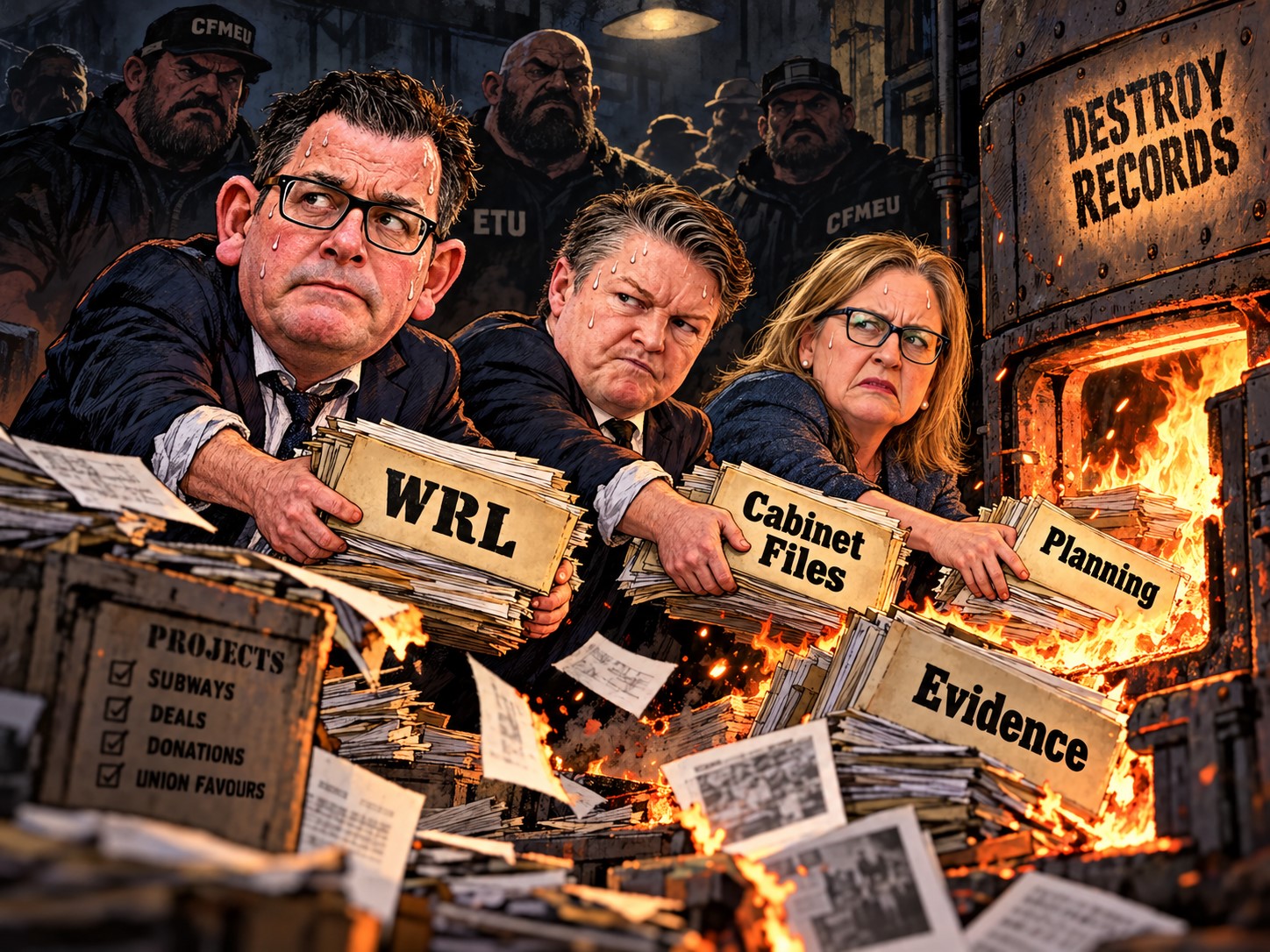
For six years, communities across western Victoria have been demanding answers about the Western Renewables Link. Who made the decisions? What alternatives were rejected? Who stood to benefit? And why has a project with such profound consequences for ordinary Australians been allowed to advance amid such deep community opposition?
Now a proposal to open Victoria’s secret cabinet records raises the prospect of answering questions that have lingered far too long.
One Nation has announced its proposed Open Cabinet Act, which would require the release of thousands of cabinet documents from the Andrews, Allan and Carroll governments within 100 days of the election. Future cabinet records would also face much shorter disclosure timeframes.
The Coalition has indicated an openness to greater disclosure, although it has not committed to adopting the legislation. Labor ministers have defended the importance of cabinet confidentiality.
This debate goes well beyond political theatre.
For western Victoria, it raises a fundamental question: what would the government’s internal records reveal about the Western Renewables Link?
The energy transition must not become a shield against scrutiny
The Western Renewables Link has been presented as essential infrastructure for Victoria’s transition to renewable energy.
But describing a project as part of the energy transition does not place its decisions beyond examination.
When the Australian Energy Market Operator published its preferred western Victorian transmission investment in 2019, the estimated cost was approximately $370 million.
The project subsequently evolved into a major 500 kV transmission development across some 190 kilometres of western Victoria.
By 2025, a revised construction estimate of $1.53 billion had been published, with a construction contract valued at approximately $1.6 billion. A separate shareholder disclosure describing the development as an approximately $4 billion project subsequently prompted questions in the Victorian Parliament about the full cost and what each figure included.
These figures do not all measure precisely the same expenditure. Nevertheless, the differences make transparent, independently verified cost information essential.
The current government has itself acknowledged the need for further scrutiny, announcing an independent cost assessment in September 2026.
If the project remains economically justified, the public deserves to see the evidence. If its scope, costs or underlying assumptions have materially changed, those changes deserve a full explanation.
The unanswered question of union influence
Victoria’s major construction sector has been shaken by serious allegations involving the CFMEU, organised crime, procurement practices and the administration of major public projects.
Those concerns are sufficiently substantial that the Victorian Government established a Royal Commission into the integrity of major public and civil infrastructure construction projects in August 2026.
This wider controversy raises legitimate questions about how major infrastructure decisions have been influenced, funded and delivered.
For the Western Renewables Link, those questions should extend to the relationships between government decision-makers, electricity planners, construction contractors, political stakeholders and relevant unions, including the CFMEU and Electrical Trades Union.
What representations were made by those organisations?
Were employment targets, industrial arrangements or political considerations discussed when transmission options were being developed?
Were any commitments made that influenced procurement, project timing, construction methods or the selection of alternatives?
And most importantly, were engineering and economic decisions made independently, with the interests of electricity consumers and affected communities placed first?
The evidence of serious corruption across Victoria’s major infrastructure projects is substantial and deeply troubling. There are compelling grounds to investigate whether the Western Renewables Link has been exposed to the same systemic corruption, improper influence and failures of government oversight.
The WRL must face the same rigorous scrutiny. Its contracts, procurement decisions, political connections, union involvement and financial arrangements must be independently investigated. The public deserves full disclosure, not another layer of secrecy and deflection.
Who made the decisions, and what did they know?
The Victorian Ombudsman’s 2023 investigation exposed serious concerns about politicisation within Victoria’s public service.
The investigation identified weakened independence, excessive secrecy and public servants fearful of delivering unwelcome advice.
It also found that restrictions on cabinet information prevented certain lines of investigation from being pursued to a conclusion.
That finding deserves particular attention.
What happens when crucial infrastructure decisions are developed behind closed doors and the public cannot examine the advice that informed them?
What happens when communities raise substantial concerns about bushfire safety, agricultural productivity, biodiversity, property rights and the permanent transformation of rural landscapes, yet cannot see the full basis on which competing interests were weighed?
In western Victoria, these questions are not abstract.
They concern family farms, homes, businesses and landscapes that communities have spent generations building and protecting.
The WRL’s environmental assessment concluded in September 2026 that its impacts could, on balance, be acceptable subject to conditions. That conclusion does not end legitimate scrutiny of the project’s economic assumptions, decision-making history or potential alternatives.
An environmental approval process is not a substitute for transparency about how a government reached its strategic decisions.
Open the records and follow the evidence
One Nation’s proposed cabinet disclosure reforms could provide an important new avenue of public scrutiny.
However, cabinet documents alone will not necessarily reveal every relevant decision.
A proper examination of the WRL should also consider ministerial briefings, project business cases, energy modelling, alternative-route assessments, procurement records, correspondence with industry and unions, and the reasoning behind subsequent government directions.
There should be particular scrutiny of whether the project remained the most efficient and least harmful practical option as costs and technical requirements evolved.
If the government can demonstrate that its decisions were independent, evidence-based and directed towards the public interest, those documents should help establish that.
If the records reveal improper interference, undisclosed conflicts or decisions shaped by interests unrelated to the legitimate needs of Victoria’s electricity system, those matters should be referred for independent investigation.
Secrecy cannot establish corruption. But neither should secrecy prevent corruption from being discovered.
Western Victoria deserves answers
The Western Renewables Link has become far more than an argument over transmission towers.
It has become a dispute about government accountability, the rights of landholders, the meaning of genuine consultation and the price communities are expected to pay for decisions made elsewhere.
The Victorian Government argues that the project is necessary to move renewable electricity and support future energy security.
Affected communities have challenged its route, impacts, economic justification and the adequacy of alternatives considered.
Both positions should be capable of examination against the underlying evidence.
The new debate about cabinet transparency offers an opportunity to move beyond competing assurances and allegations.
The public should be able to establish who authorised the crucial decisions, what they were told, what options were available and whether the process withstood appropriate independent scrutiny.
The central issue is not whether the WRL can be described as an energy-transition project. It is whether every major decision behind it can withstand public examination.
Western Victoria has waited years for answers.
It should not have to wait another thirty.
OPEN THE FILES. EXAMINE THE DECISIONS. FOLLOW THE MONEY. LET THE EVIDENCE SPEAK.
________________________________________________________________________
THE GREAT ENERGY SABOTAGE: WHY REGIONAL VICTORIA IS PAYING THE PRICE FOR LABOR’S GRID
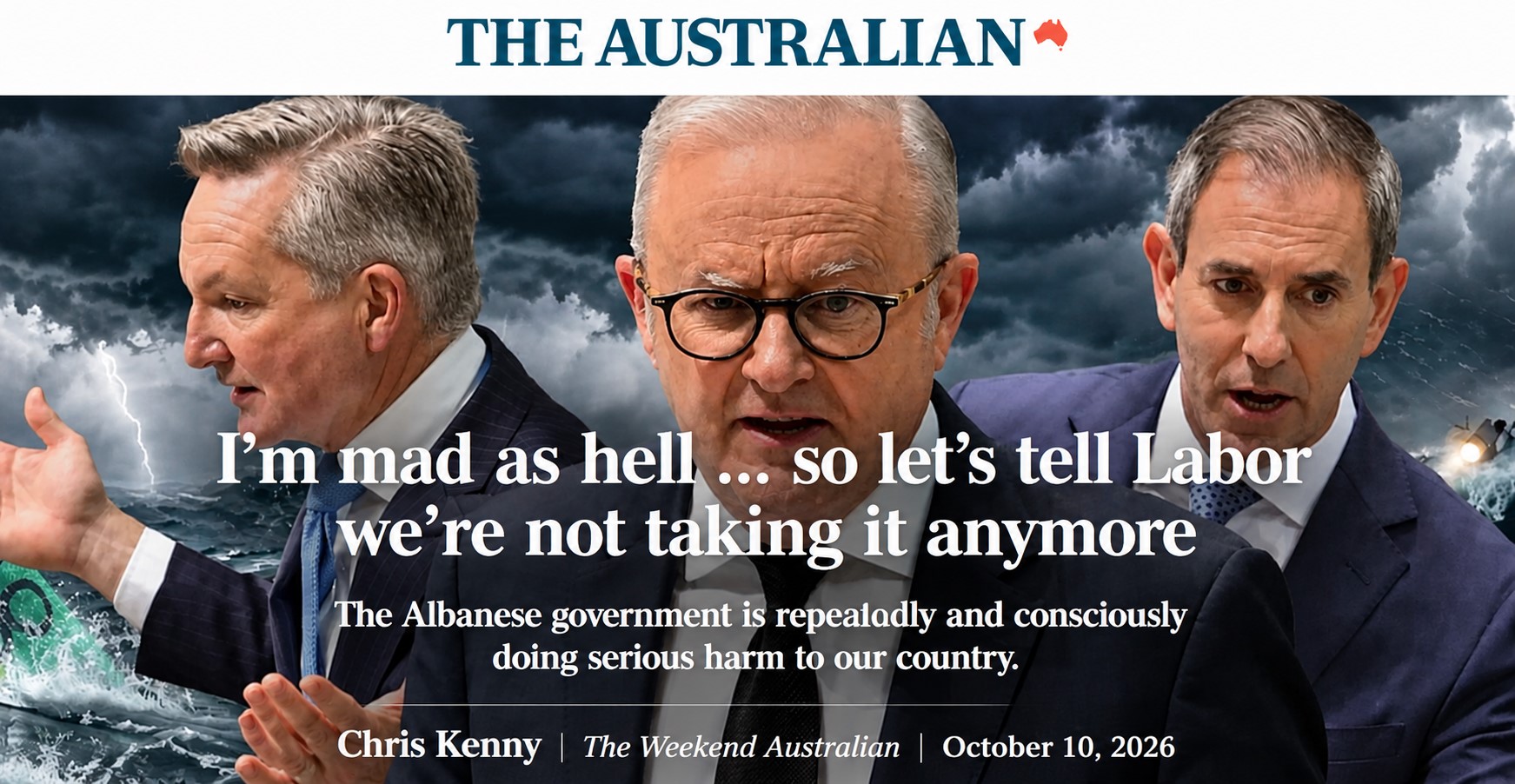
Writing in The Australian, commentator Chris Kenny recently put into words what regional communities across Victoria have felt for the last five years: our political leaders are actively squandering the country’s greatest economic advantages through stubborn ideology and bureaucratic ignorance.
In his hard-hitting column, “I’m mad as hell … so let’s tell Labor we’re not taking it anymore,”Kenny identifies Australia’s current energy trajectory as the single greatest sabotage of our national fortune. As he points out:
“Cheap and reliable energy is one of our great natural advantages, and we continue to squander it by dismantling an efficient coal-driven grid to build a vast, disperse, weak and unreliable wind and solar grid, with expensive batteries and gas-fired firming. Power prices have soared despite Labor’s promised cuts, large areas of bushland and farmland have been defiled, transmission network costs will keep prices high…”
For those of us living along the proposed path of the Western Renewables Link (WRL), Kenny’s critique isn’t an abstract economic theory—it is an exact description of the threat hanging over our properties, our livelihoods, and our safety every single day.
Regional Communities Are Being Treated as Collateral Damage
Kenny’s column cuts directly to the core flaw of Labor’s energy transition: the sheer scale of devastation required to make an intermittent grid function.
To connect far-flung wind and solar developments, the government and network operators are railroading massive 500kV overhead transmission lines through prime agricultural land, critical bushfire corridors, and historic landscapes across Western Victoria.
- Our Land Defiled: As Kenny observes, vast tracts of productive rural properties, farming country, and sensitive remnant bushland are being permanently scarred.
- Ignored Bushfire Risk: Labor continues to push ahead with towering steel structures across severe bushfire pathways, dismissive of the fact that these lines restrict aerial firefighting and place local communities directly in harm’s way.
- The Cost-of-Living Illusion: We were told this transition would deliver cheaper bills. Instead, power prices have surged, and billions in network costs for gold-plated transmission lines like the WRL will be passed straight through to consumers’ electricity bills for decades to come.
Ideology Over Engineering and Common Sense
The tragedy of the WRL is that it represents an ideological rush rather than sound engineering. Governments in Melbourne and Canberra are willing to carve up Western Victoria to meet arbitrary political timelines and appease inner-city voting blocs.
They refuse to consider genuine alternatives, they dismiss community submissions out of hand, and they treat landholders not as partners, but as obstacles to be steamrolled by ministerial declaration.
Instead of an orderly, reliable system that protects our economic backbone, we are left with skyrocketing costs, fractured regional communities, and a fragile grid that remains hostage to the weather.
Time to Send a Decisive Message
As Kenny rightly notes, the frustration boiling over in the bush is real. After more than five years of rallies, statutory submissions, and ignored pleas, polite requests have fallen on deaf ears.
Governments only take notice when the consequences arrive at the ballot box.
If we want to stop the WRL, protect our regional bushland, and halt the reckless dismantling of our power grid, we cannot reward the politicians who signed off on our destruction. When polling day comes, our message must be unmistakable: stand with genuine local voices, number every box, and put Labor dead last.
_______________________________________________________________________
NEW SIGNS AVAILABLE
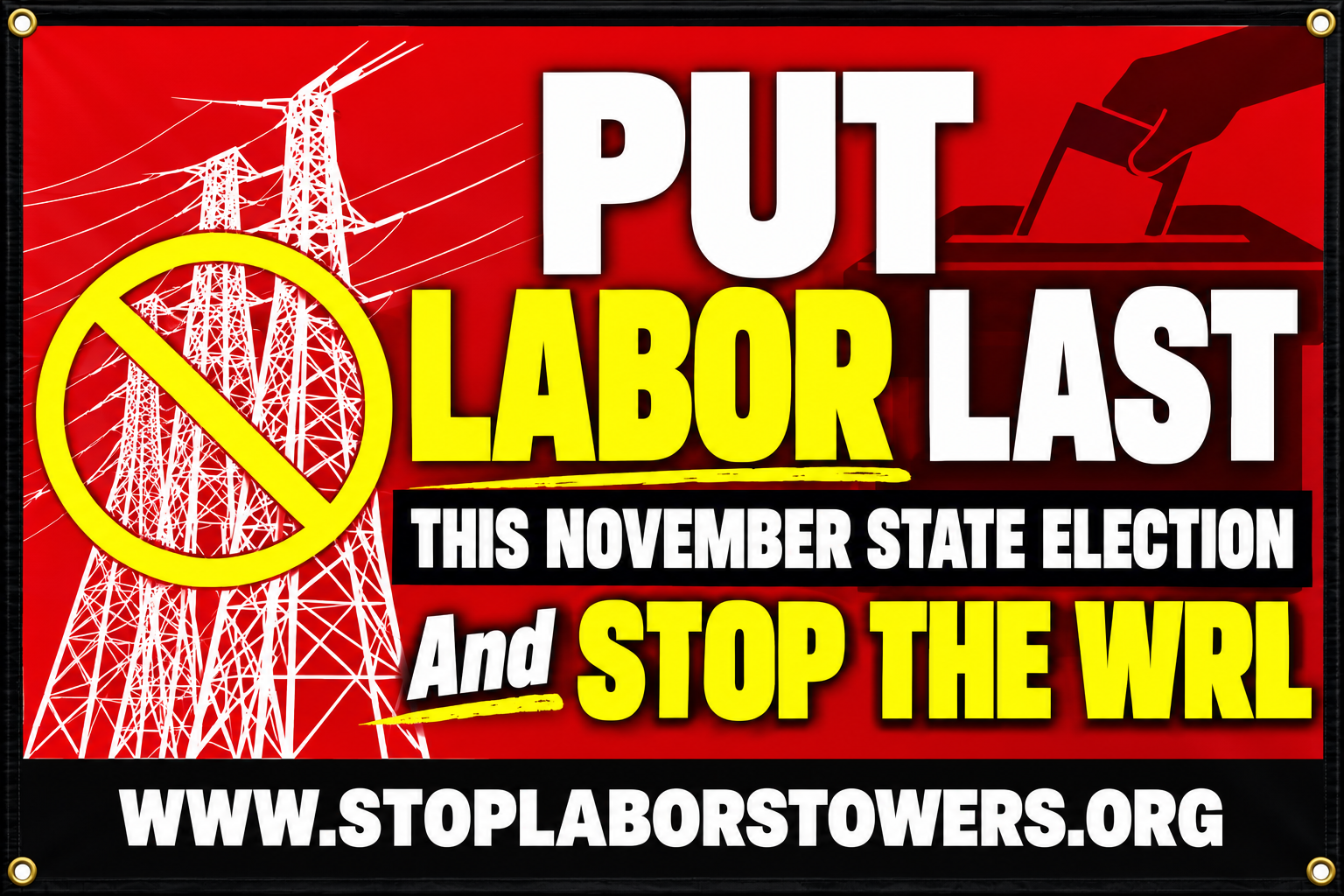
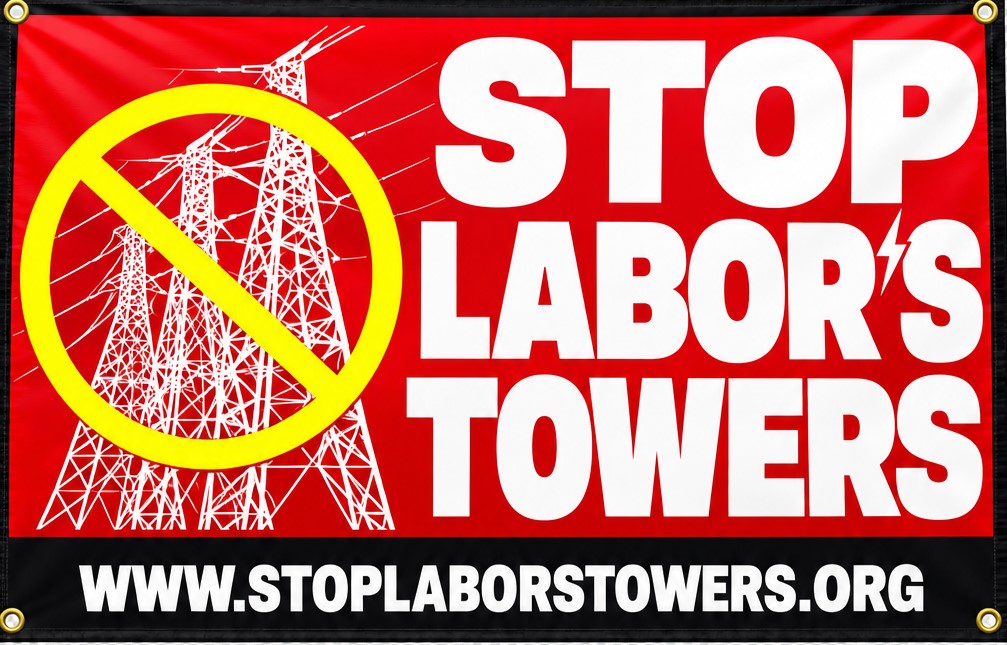
GET YOUR ELECTION SIGNS
The November State Election is approaching, and now is the time to make our message impossible to ignore!
We need our signs on fences, farm gates, front lawns and properties right across the region.
Let every passing motorist know where our communities stand. PUT LABOR
LAST AND STOP THE WRL!
LIMITED SUPPLY – PRE-ORDER TO SECURE YOUR SIGNS!
We have two designs of our bold, high-impact election signs available for collection in Ballan.
🪧 SIGN DETAILS:
- Size: 600 mm x 900 mm
- Material: Durable Corflute with eyelets, ready for mounting
- Two designs available
- PRICE: JUST $10 EACH (to cover production costs)
✉️ ORDER NOW – DON’T MISS OUT!
Email info@stoplaborstowers.org
EVERY SIGN COUNTS. EVERY FENCE COUNTS. EVERY VOTE COUNTS.
The more signs we get out across our communities, the harder our message will be to ignore.
Stand up for our farms, our homes and our communities.
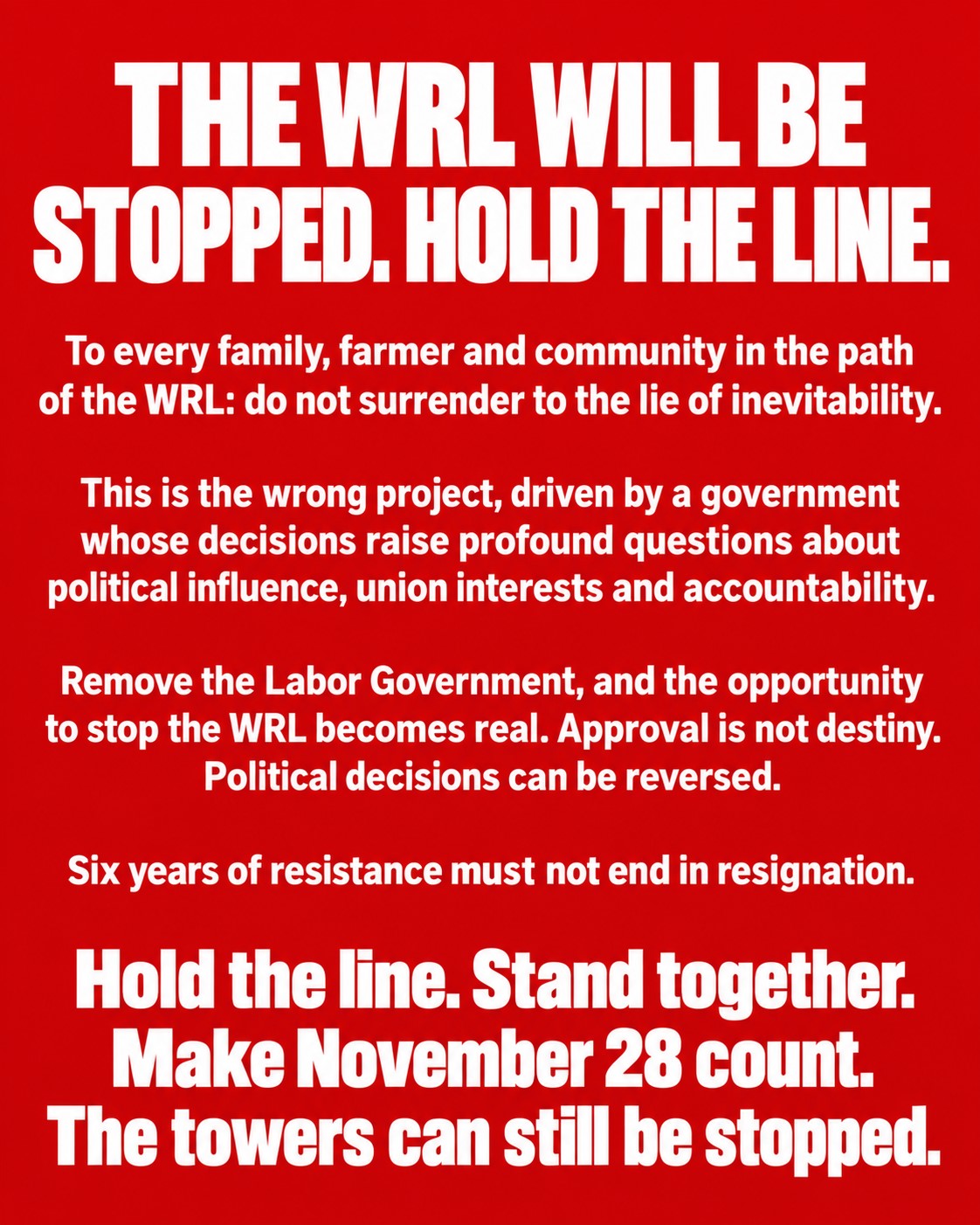
PUT LABOR LAST. STOP THE WRL. HOLD THE LINE!
_______________________________________________________________________
________________________________________________________________________
SHARE THIS NEWSLETTER – THE WRL WILL BE STOPPED. THIS FIGHT IS FAR FROM OVER!
________________________________________________________________________