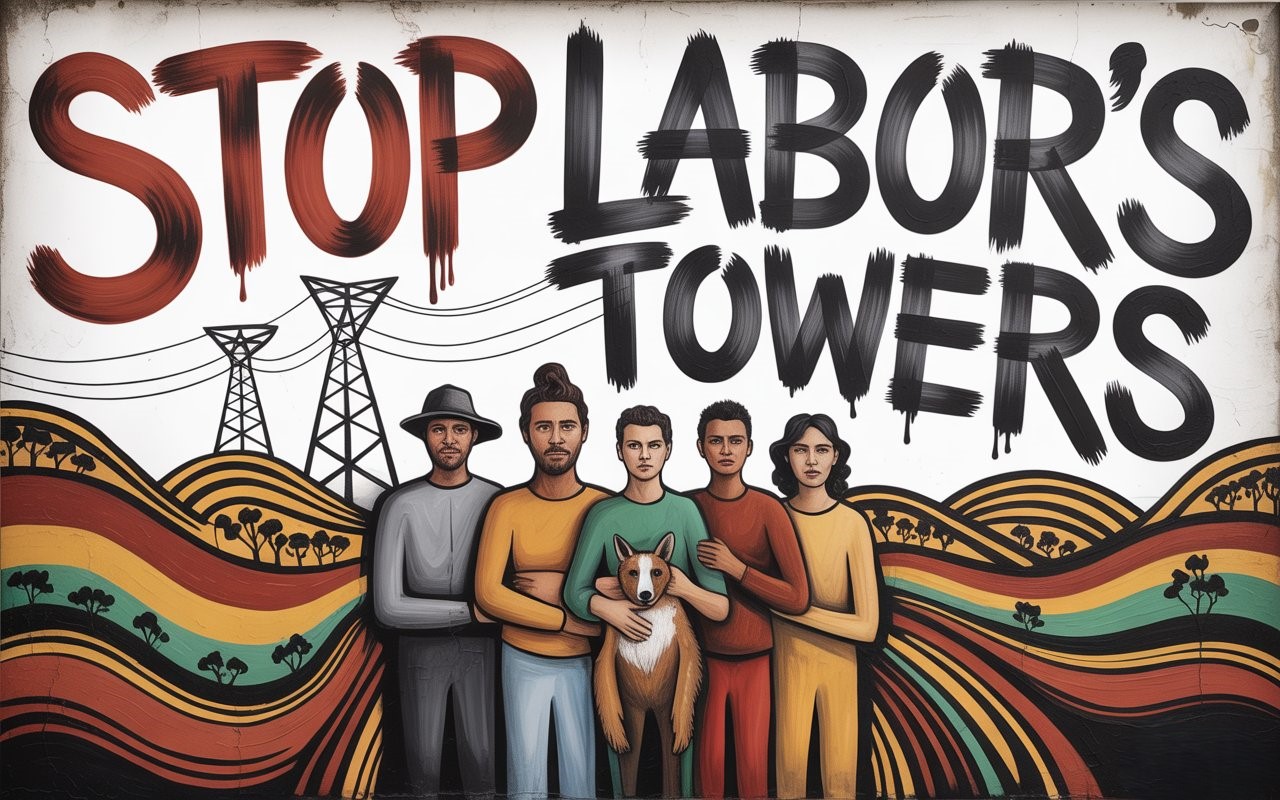
STOP LABORS TOWERS
NEWSLETTER – November 23 2025
WRL EES Hearing – End of Week Three and the Week Ahead
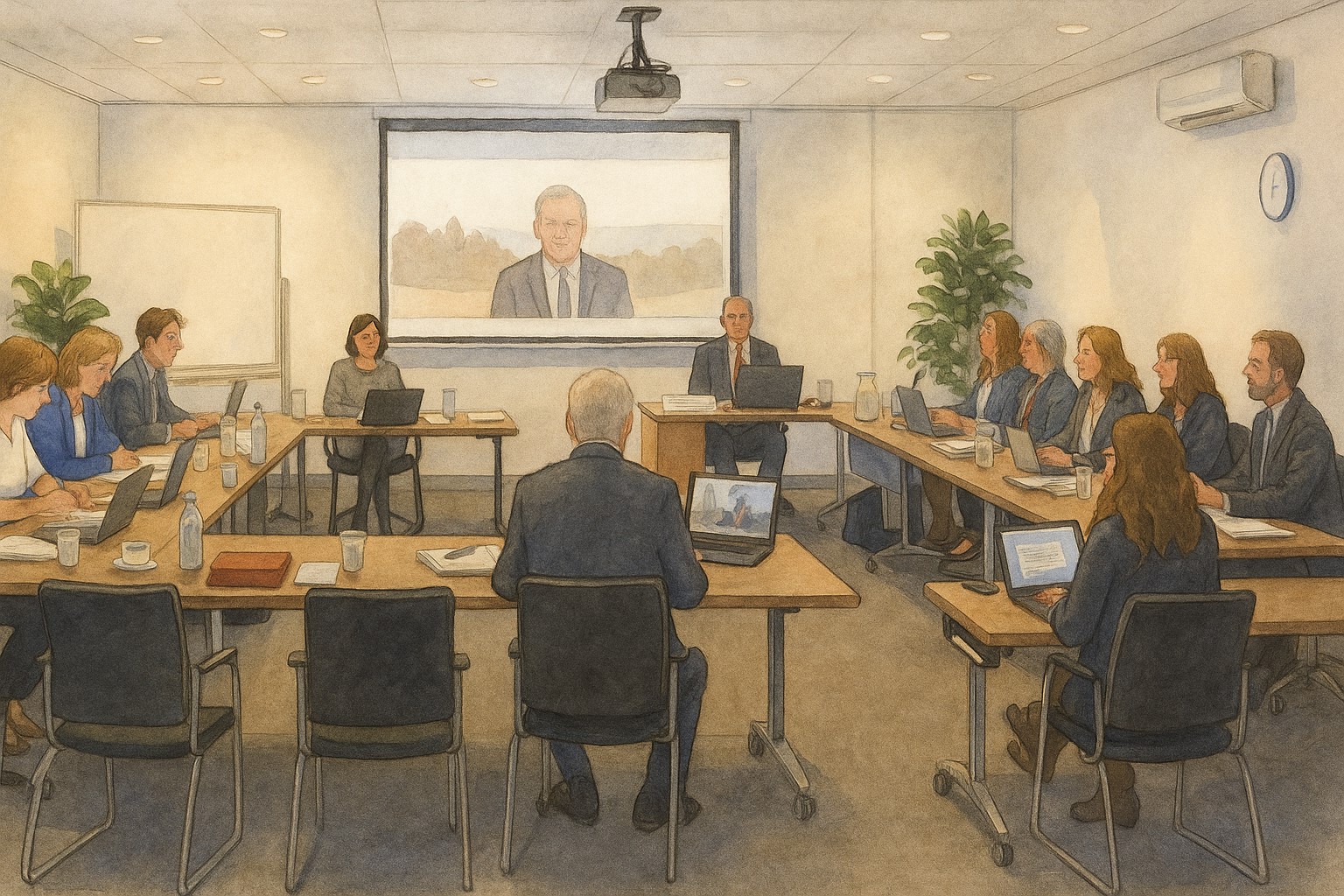
WRL EES Hearing – End of Week Three and the Week Ahead
After three weeks of the proponent rolling out its so-called “expert” witnesses – each one delivering evidence so selective and slanted it barely resembled the reality we live with – the Hearing now reaches a critical turning point.
Last week alone we sat through witness after witness on Land Use and Planning, Transport and Traffic, and Agriculture, each working hard to downplay impacts, dodge responsibility, and repeat the same rehearsed proponent-friendly lines. Their tone has been consistent: dismissive, defensive, and deliberately detached from the lived experience of the people and landscapes they are affecting.
Now the spotlight shifts. This week is where the narrative changes – and where the truth finally has a chance to be heard.
This coming week the Moorabool Shire will present it case and evidence to counter AusNet at WRL EES Hearing
From Wednesday 26th November, Moorabool Shire will present its case across four days, supported by three expert witnesses.
These sessions are the most significant to date. This is where the Shire will directly challenge the proponent on key matters, including:
- Social Impacts
- Bushfire Risk
- Undergrounding Feasibility
This is our moment and Your Presence Matters
Don’t let someone else write your story.
We need strong community presence – both online and in the room.
Why Your Presence Matters
- These sessions will otherwise appear to be AusNet versus the Shire. Without visible community presence, the depth of concern and lived experience behind the Shire’s evidence will not be felt.
- When the community is in the room or logged in online, it shifts the entire dynamic. It becomes impossible for the proponent to maintain the fiction that its “minimal impact” narrative reflects reality.
- Every face, every login, every person in a chair strengthens the Communities position and reminds the Inquiry that this is not abstract policy. This is real land, real families, real risk.
Please share this with your Networks of community members.
Hearing Details
Location:
Victorian Planning Panels – WRL EES Hearing
Karstens, Level 12, Rooms 1203 & 1204
123 Queen Street, Melbourne
(approx. 15-minute walk from Southern Cross Station)
Moorabool Shire Presentation Schedule:
(Links below to Expert Witness Statements)
- Wednesday 26/11 (10:00am – 4:30pm) – Social (Dr Kate Kirkin)
- Thursday 27/11 (10:00am – 4:30pm) – Bushfire (Michael Buxton and Alan March)
- Monday 01/12 (10:00am – 4:30pm) – Undergrounding (Les Brand, Amplitude) Joint Expert Statement
Attend one day, half a day, or all four — every bit of presence counts.
How You Can Participate
- Attend in person if possible — the impact is real and immediate.
- Watch online — your presence still counts.
- Share this message widely through your networks.
- Support each other — coordinate attendance, carpool, and encourage one another.
And yes — there is a real power in looking the proponent’s legal team in the eye and making it unmistakably clear that the risks they brush aside are the risks you and your family carry every single day.
What Happens Next
Attendance matters — but asking questions matters too.
Cross-examination is an opportunity to state your position and articulate the real impacts of the WRL on your life and property.
To ask questions, you must be party to the hearing (i.e. have a submission in) and then inform the committee the day prior of your intention (see below guide).
This is a pivotal moment.
The proponent will argue that WRL’s impacts are acceptable.
The Shire will argue they are not.
Only the community can demonstrate what these impacts truly mean.
Let’s make ourselves visible.
Let’s make ourselves heard.
Let’s stand together when it matters most.
Please attend — online or in person — and help strengthen Moorabool’s voice against the WRL.
Hold the line.
Community Action Guide: Western Renewables Link (WRL) EES Hearings
Holding Power to Account
A strong community presence is essential to hold the proponent (AusNet) and its so-called independent experts accountable. In Week 1, we have already seen examples of the proponent’s witnesses downplaying significant and life-threatening risks associated with the project.
This disingenuous and dangerous approach must be confronted.
Your participation matters. Each voice contributes to transparency, truth, and community strength.
Below is a practical step-by-step guide to help you follow the hearings, access documents, and take part directly in questioning.
Step 1 – Access the Hearing Timetable
The Western Renewables Link (WRL) Environment Effects Statement (EES) Public Hearingscommenced on Monday, 27 October 2025, and will run through to Thursday, 5 March 2026.
How to Find It
- Visit the Inquiry and Advisory Committee (IAC) main page:
🔗 WRL EES Hearing Main Page - Go to “Tabled Documents.”
🔗 Tabled Documents Page - Download the latest Hearing Timetable (Document Here)
The timetable lists:
- Which expert witnesses are scheduled to appear,
- Their topics (e.g., bushfire risk, landscape and visual impacts, agriculture), and
- The session dates and times.
Community Submissions
The current timetable lists expert evidence, councils, and agencies through to late December 2025.
Community submitters are expected to present between January and March 2026, with Ballarat hearings (Weeks 11–14) scheduled for February 2026.
Keep checking for timetable updates to confirm your appearance date.
Step 2 – Review Expert Materials
Before each presentation, the proponent’s “independent” experts usually upload an overview of their evidence to the Tabled Documents section.
You can find them here:
🔗 Tabled Documents – Expert Evidence
Examples of Key Expert Documents
- Joint Expert Statement – Economics (AusNet)
- Joint Expert Statement – Bushfire (AusNet)
Tip
Read these expert summaries before their scheduled presentation.
They reveal the assumptions, omissions, and technical biases underpinning the evidence – crucial for preparing questions or identifying misleading claims.
Step 3 – Request to Cross-Examine (Ask a Question)
If you wish to pose a question or cross-examine an expert, you must register your intent with the IAC Secretariat no later than 12:00 pm the day beforethe expert is due to appear.
| Requirement | Action to Take | Details / Contact |
| Notify the IAC | Email your intention to cross-examine. | 📧 planning.panels@transport.vic.gov.au |
| Deadline | Before 12:00 PM (noon) on the day prior to the expert’s scheduled appearance. | Confirm the expert’s date in the hearing timetable. |
| Email Content | Simply state your name, the expert or topic, and the approximate time required. | Example: “[Your Name] requests time to cross-examine [Expert Name] on [Topic] and estimates [X] minutes is required.” |
| Your Safeguard | You are formally listed as a participant for that part of the evidence. If your question is answered during the session, you may simply pass. | This ensures your right to speak is protected and recorded. |
Why This Matters
By following these steps, you help ensure the WRL hearing process remains transparent and accountable.
Every individual who observes, questions, or challenges the evidence strengthens the integrity of the process.
The hearings are not merely procedural – they are a test of truth.
When the facts are distorted, community participation becomes the only real counterbalance to corporate spin and political complacency.
Quick Links Recap
LANDHOLDERS STAND FIRM AS VNI WEST ACCESS BLOCKED
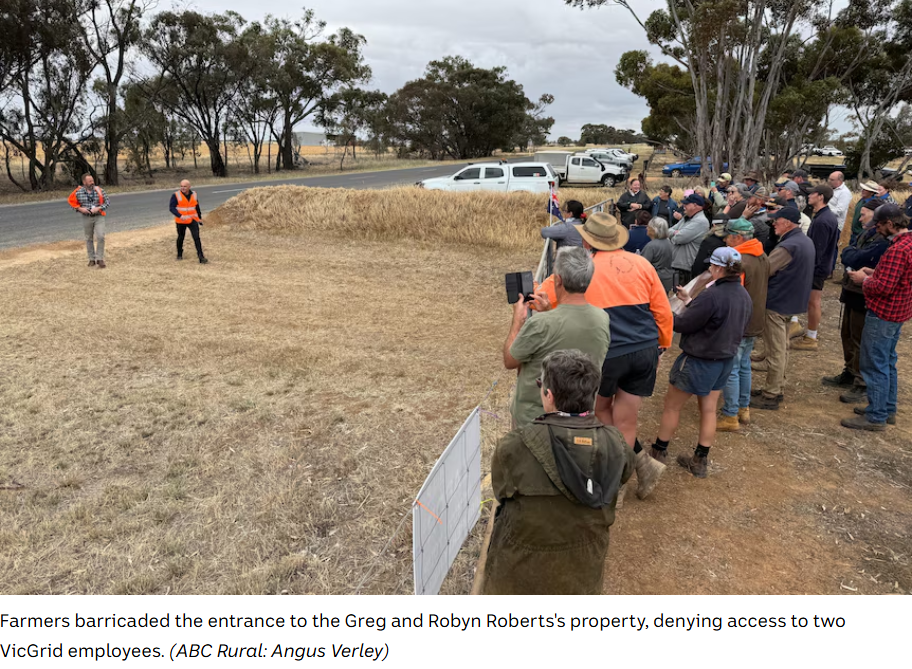
Community resistance strengthens across Victoria’s transmission corridor
A major development unfolded this week in Victoria’s north-west that echoes the growing resistance along the Western Renewables Link (WRL) and across every community being forced to bear the cost of the state’s transmission rollout.
As reported by ABC Rural, farmers at two properties along the proposed VNI West alignment refused entry to VicGrid survey teams attempting to access land under new compulsory-access laws. More than 50 landholders turned out in support, peacefully blocking the survey attempt and sending a clear message: the era of communities silently absorbing the damage of government-led transmission projects is over.
Why this matters
For years, regional communities have been told to accept the “greater good” of overhead transmission, regardless of the consequences. Now, with forced access underway and huge industrial infrastructure slated to cut through productive farmland, native habitat, and family homes, people are stepping forward and saying no more.
One farmer’s comments cut through the political spin:
“There are profound issues about forcing yourself onto people’s properties. The mental-health aspect is really profound.”
This is not an isolated concern. It is the lived reality of tens of thousands of Victorian landholders farmers, families, firefighters, conservationists who have been sidelined in the rush to build transmission towers at any cost.
Stop Labor’s Towers stands firmly with these landholders
We support every individual and community standing up for their rights, their land, and their wellbeing. What is unfolding along the VNI West route mirrors exactly what we have been fighting across Moorabool, Hepburn, Melton, Ballarat, and the broader WRL corridor.
For more than five years, communities have asked for fairness, transparency, and genuine alternatives such as undergrounding. Instead, they have received threats of forced access, poor consultation, and projects bulldozing ahead without social licence.
This resistance is not obstructionism. It is self-defence.
A failing model of the so-called “energy transition”
What happens when you attempt a renewable transition by overrunning the very communities that host it?
You get:
- Legal battles
- Delays
- Loss of trust
- Rising anger across regional Victoria
- Projects stalled by their own flawed assumptions
If the transition is to succeed, it must be fair. It cannot be built on compulsory acquisition, forced access, and the destruction of farms and fragile environments.
What happens next?
VicGrid may now pursue court orders to force access onto properties – a move that would only inflame tensions and further undermine community trust.
Meanwhile, the WRL EES Hearing continues, where the same issues are being argued daily: bushfire risk, environmental destruction, social harm, and the lack of proper assessment of underground alternatives.
The message from landholders statewide is consistent and clear:
We are not obstacles. We are the people who live here. We deserve a say in the future of our land.
Our Call to Action
To our supporters across the WRL corridor:
- Stay visible. Join the EES Hearings online or in person.
- Stay informed. Read the evidence, share it, talk to your neighbours.
- Stay united. VNI West, WRL, and every transmission corridor depend on regional communities remaining divided.
- Stay courageous. When others stand up, it becomes easier for the next person to do the same.
Heavy-handed access attempts show exactly why this campaign matters.
Victoria’s energy transition cannot be built on intimidation, secrecy, and environmental vandalism.
Stop Labor’s Towers stands with every landholder who refuses to be treated as expendable.
This fight is far from over – if anything, it is just beginning.
The Great Net Zero Land Grab – What The Spectator Just Exposed
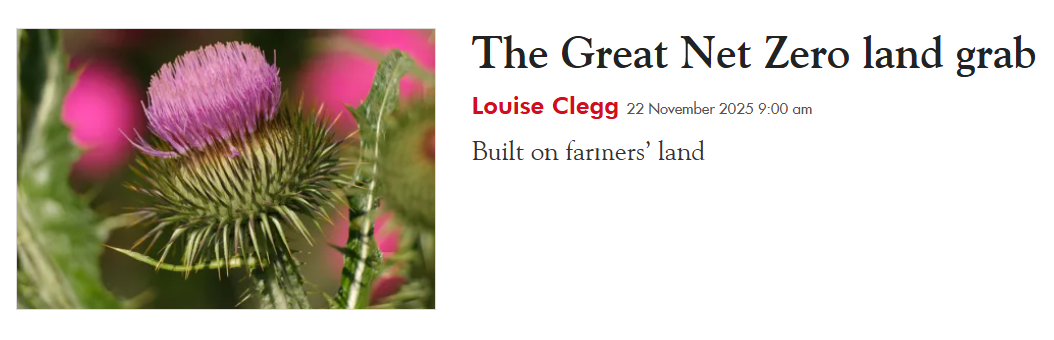
A new article in The Spectator Australia, titled “The Great Net Zero Land Grab,”has cut straight through the political gloss and exposed a reality regional Victorians know all too well.
It puts into words what communities along the Western Renewables Link corridor have been living for years:
Net zero may be an admirable goal, but the way it is being delivered is deeply flawed, deeply damaging, and profoundly unjust.
What makes this piece so striking is not its politics, but its accuracy. It articulates, bluntly and fearlessly, the hidden cost of Victoria’s energy transition and the cost is being carried almost entirely by rural landholders.
A Policy Wrapped in Environmental Rhetoric — But Hurting the Environment Itself
One of the article’s most confronting observations is this:
“A climate policy disguised as an environmental one.”
This one line captures the central contradiction at the heart of the WRL:
The government claims this project is essential for the environment, yet the environmental destruction it will cause is staggering.
The article lays out this contradiction with brutal clarity:
“The rhetoric of climate ambition masks a deep disregard for the communities asked to bear its costs.”
And that disregard is exactly what our communities have felt throughout the WRL process:
• Ancient habitat destroyed
• Bushfire risk increased
• Farmland fractured
• Cultural landscapes industrialised
• Local biodiversity discounted
• People treated as obstacles, not stakeholders
This is what a “land grab” looks like.
The Burden Has Been Shifted to the Paddock
“The burden of climate policy has been shifted from Canberra to the paddock.”
That is precisely what the Western Renewables Link represents a transfer of responsibility, risk, and sacrifice from government and corporations onto ordinary regional families.
Our homes.
Our landscapes.
Our safety.
Our environmental values.
All put on the line so the state can tick a box.
Environmental Damage Justified as Environmental Progress
The article reveals a painful truth: “The rules have produced the opposite of good ecological management… bushfire risk climbed while the government insisted the system was working.”
This is exactly the scenario we’ve raised in the EES Hearing:
An 80-metre-high industrial transmission corridor cut directly through one of the most fire-sensitive regions in Australia – and we’re told the risk is “acceptable.”
The lived reality contradicts the modelling.
And the community knows it.
The Heart of the Issue: Net Zero Cannot Come at Any Cost
This article finally articulates what the government refuses to acknowledge:
You cannot destroy the environment to save it.
You cannot fracture communities to meet a target.
You cannot impose risk on people who cannot refuse it.
Net zero is worth fighting for — but not with a method that leaves a corridor of damage across Western Victoria and calls it a miracle.
The Spectator’s article makes one thing undeniable:
The transition has gone wrong.
And those at the coalface — or what we now call the transition trench — are the ones paying the price.
Why This Matters for the WRL Hearing
This article provides a powerful external validation of what our community has been saying for almost six years:
- The process is flawed.
• The impacts are real.
• The decision-makers are insulated from the consequences.
• Regional people are carrying the cost of metropolitan policy.
The Spectator has given language to the truth the WRL process tries to suppress.
Use it. Share it. Cite it.
Bring it into the room when you speak at the Hearing.
Because the more voices that expose this reality, the harder it becomes for the proponent to pretend it doesn’t exist.
The Long Paddock – The Line That Never Will
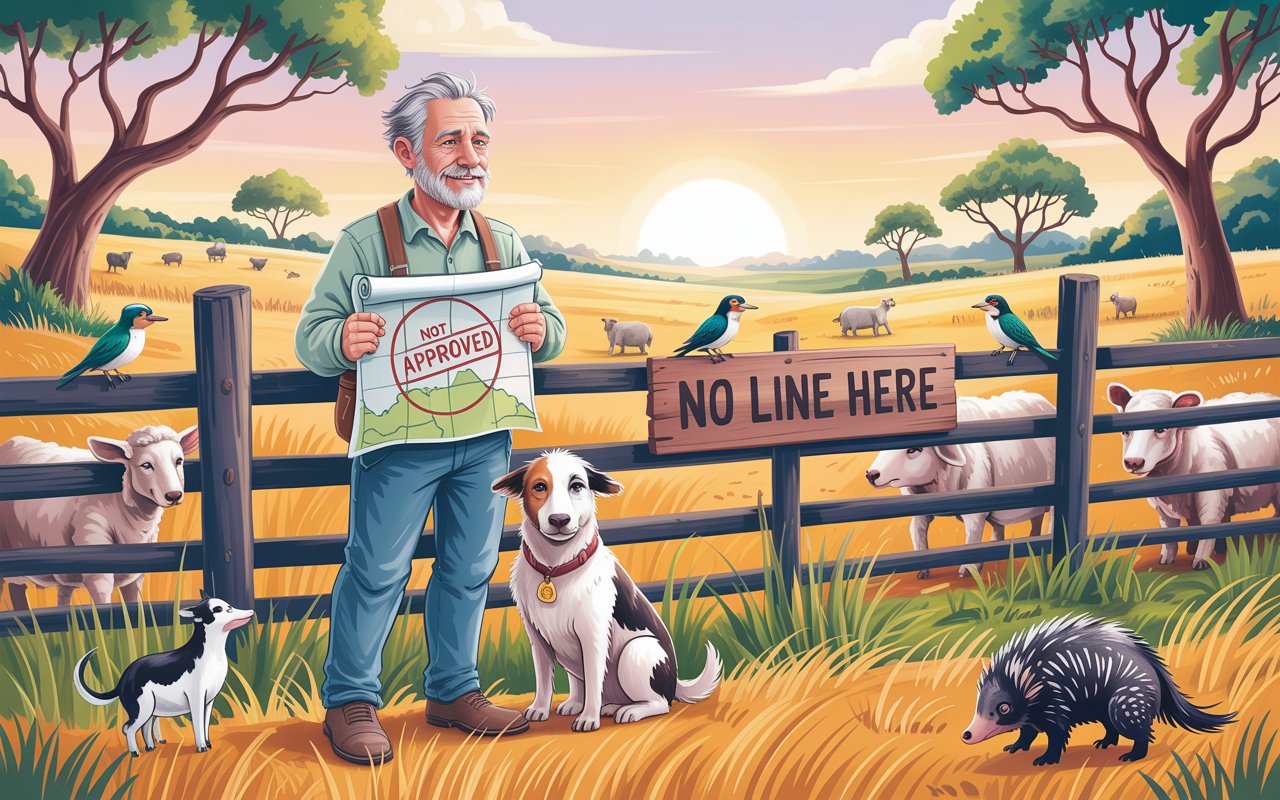
The Long Paddock – The Line That Never Will
Let’s call it the Line, because that’s what they called it, and lines, as any half-decent farmer will tell you, rarely follow sense or topography. The Western Renewables Link- WRL, if you like your evil wrapped neat in an acronym – came sniffing around like a stray dog with a council badge clipped to its ear.
It crept in on soft shoes and a ream of paperwork, all stamped and dated to look inevitable. Men with the good hair and the bad suits arrived in their shuddering white SUV’s to waggle maps, point with confidence, and promise “offsets” and “amenities,” words so slippery you’d swear they’d been greased before use.
“Progress!” they pronounced, the sort of progress that lives on PowerPoint slides and dies on the first fence-line it meets.
For a long while, we have lived under the shadow of something that isn’t here yet. The cattle watched the horizon like something might sprout legs out of it. The creeks stiffened. The old timers shook their heads in slow, knowing arcs – because nothing ruins land faster than a plan written somewhere else.
Ah, the town hall meetings – sweat, boiling tempers, and the stale perfume of civic disappointment. Locals in shirtsleeves, crossing arms like drawing battle lines. The official stood up with his practised smile and his phrases pre-polished for resistance.
“Greater good,” he said. “The right destination.”
And the room, unimpressed, counted potholes in the policy the way you count stars – there are plenty, and most are dead already.
For a while, the WRL became its own character around here – pure antagonist but not glamorous. More like the bastard in the post office queue who won’t move forward and won’t get out of the way. Pedantic. Self-important. Certain of its righteousness. A thing that knew the rules but never the people.
And meanwhile, the land held its breath. You could feel it – the tension running along fences, the hesitation of birds, the sag in conversations when the topic swung back, as it always did, to towers that threaten all that is dear.
But here’s the twist.
Here’s the part worth remembering, worth savouring like good whiskey after a hard season.
The WRL will never.
It threatened. It postured. It swaggered on paper.
But the people said no.
The paddocks said no.
The long lineage of this place – its history, its stubbornness, its deep instinct for self-preservation – all said no.
And in the end, that mattered more than the maps, more than the models, more than the men with the tidy hair.
The Line became folklore – a cautionary tale, told with a mixture of bitterness and relief. A reminder that ideology, when it meets real country, often withers like a bad crop in a late frost.
Net zero may still be the destination, and perhaps a fine one at that, but the road they are triying to drag us through is the wrong one. Too harsh. Too costly. Too blind.
And so the paddock remains unbroken.
The long horizon remains ours.
The land breathes again – not in victory, exactly, but in survival.
Because sometimes the greatest success is the thing that did not happen.
And sometimes the finest line ever drawn is the one you refused to let cross your boundary.
“Net Zero is the Right Destination, but the Road We’re On is Broken” by Cristina Talacko (Australian Financial Review, 11 Nov 2025)

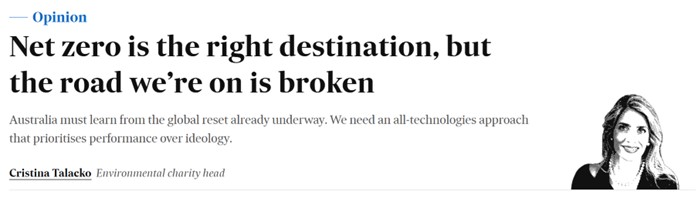
The Net Zero Road is Broken
Source: Australian Financial Review – Cristina Talacko, 11 November 2025
Headline: “Net Zero is the Right Destination, but the Road We’re On is Broken”
Australia’s commitment to net zero by 2050 remains the right goal – but the way we’re getting there is failing communities, the economy, and the environment.
In a sharp and timely critique, author Cristina Talacko argues that the nation’s energy transition has drifted far from its scientific and practical roots. Instead, it’s being driven by ideology, politics, and poor planning – leaving regional Australians to bear the brunt of costly and disruptive infrastructure projects.
“The destination is right – but the road we’re travelling is riddled with potholes of ideology and policy failure.”
– Cristina Talacko, AFR
The article notes that the shift toward renewable energy, while necessary, has been distorted by policy inconsistency and bureaucratic arrogance, leading to rising prices and rushed projects.
“Communities on the frontline of this transition are being treated as collateral damage.”
Talacko calls for a “technology-agnostic, all-energy approach” that prioritises reliability, affordability, and fairness. She urges policymakers to embrace innovationand local consultation rather than clinging to top-down programs that serve political optics more than people.
“We need a plan that works for people, not just for press releases.”
Her message reflects what countless communities across Western Victoria have been saying for years: that the Western Renewables Link is not progress – it’s a symptom of a broken process.
The road to net zero doesn’t have to bulldoze regional livelihoods, landscapes, and local democracy. It can – and must – be rebuilt with honesty, inclusion, and respect for the people who live on the land.
For regional Victorians, Talacko’s article validates what we’ve seen firsthand: a transition delivered to communities, not with them. The destination is still worth striving for – but only if the journey stops crushing those along the way.