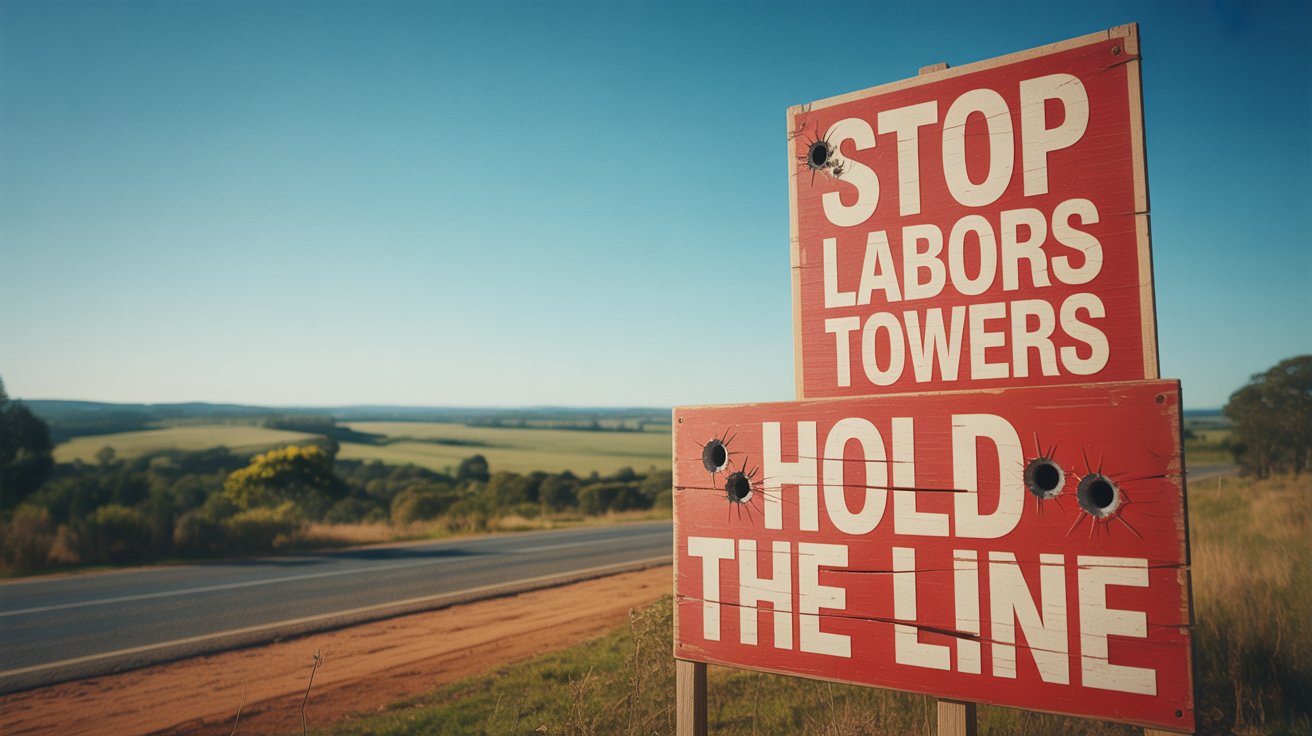
STOP LABORS TOWERS
NEWSLETTER – October 12 2025
Fear as Policy: How Victoria’s Government Silences Dissent to Mask Incompetence
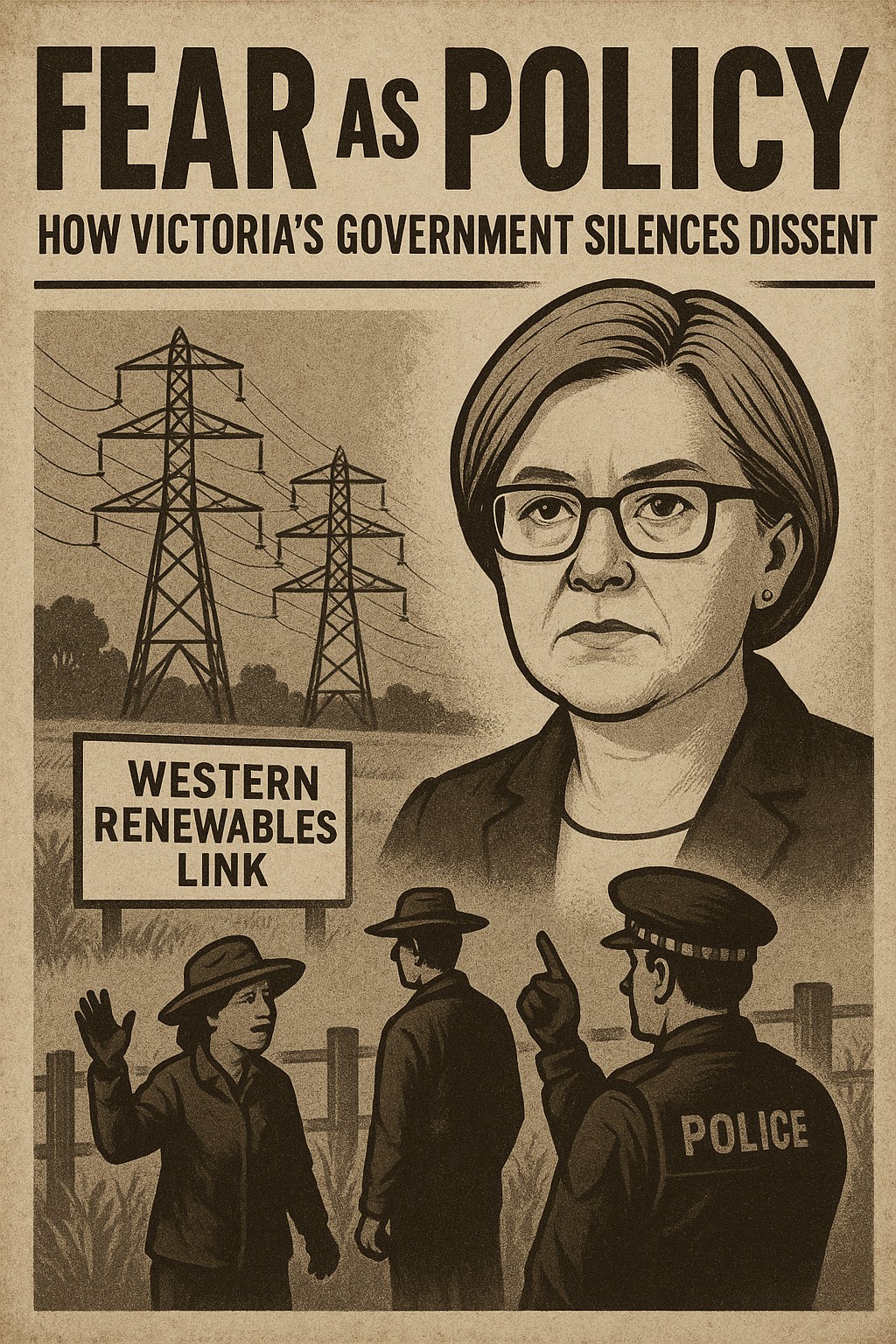
Victoria’s Labor government has developed a worrying playbook since 2020: use of fear and intimidation to quash community opposition, rather than address it. Under Premier Daniel Andrews – and now Premier Jacinta Allan – the government has leaned on legal threats, draconian legislation, and economic pressure to silence dissent. Communities, farmers and environmentalists fighting transmission towers who have challenge the government’s agenda are met not with dialogue, but with the heavy hand of the state. It’s a cynical strategy that may quiet voices in the short term, but it ultimately reveals a government covering for its own incompetence and failure to serve the public interest.
In this opinion piece, we delve into the Western Renewables Link as a central case study, to expose how “fear tactics” have become a tool of governance in Victoria. We argue that these tactics are a cover for poor planning and policy – a government hiding its missteps behind intimidation. The result is a damaging erosion of public trust and democratic engagement, as communities learn to fear their leaders more than they respect them.
Western Renewables Link: Fear and Force vs Community
The Western Renewables Link (WRL) has ignited fierce backlash. Farmers and landholders along the route are outraged at the prospect of giant power pylons cutting through their properties. Instead of winning over the community with consultation or improvements, the Victorian government reached for its bluntest instrument: force of law. In August 2025, after late-night debates, Labor pushed through controversial legislation granting new coercive powers in an attempt to ram the project through. Under these laws, “authorised officers” can force entry onto private farmland with police backing, and landholders who block access face steep fines and even arrest, the power that be decried defy us, and you could be hauled away in handcuffs.
Victorian Farmers Federation president Brett Hosking slammed these “coercive powers, [and] threats of compulsory acquisition [and] big fines” as policies that will only breed “discontent, distrust and disharmony” in country communities. Indeed, the threat of having one’s land seized or being financially punished for protest is a textbook fear tactic. It leverages the fear of losing one’s livelihood to cow people into compliance. Rather than respectfully engaging with community concerns, the government effectively told farmers: fall in line or face the consequences. As Shadow Energy Minister David Davis bluntly put it, “Jacinta Allan has stripped farmers of their rights”, resorting to “a huge raft of new, draconian powers” in an act of legislative thuggery. Even some crossbench MPs were shocked at the overreach needed to pass the bill, which one opposition figure labelled “tone-deaf” and indicative of a government reaching for a “big stick” to hit its own people.
For locals on the ground, the experience has been chilling. Claire Grant, who farms in the path of the WRL, said the government’s approach is “a complete abuse of power”. She and others report that when landholders wouldn’t be bought off with compensation, the state simply “chang[ed] all the rules” to bulldoze the project through. Yet rather than bow to intimidation, many landowners have defiantly dug in. “We don’t want them on our land… We will have whatever we need to block them,” Ms. Grant declared, even if it means risking jail time. Such resolve speaks to how deeply the government’s heavy-handed tactics have scarred trust. When ordinary people are prepared to be arrested to defend their rights, it signals a grave failure in governance. Citizens should not have to choose between their property and their freedom in a functioning democracy.
The tactics deployed in the WRL saga illustrate a pattern of fear-based governance, involving a mix of legal, legislative and economic weapons:
- Draconian Legislation: Passing special laws to override normal rights and fast-track projects, as seen with the 2025 bill allowing forced land access and punitive fines. This creates a climate of fear where communities know the government will suspend their rights if they don’t acquiesce.
- Legal Threats and Punishments: Dragging community groups through the courts and saddling them with massive legal cost orders, discouraging any challenge.
- Economic Pressure Tactics: Using money as both carrot and stick – offering pay-outs or “community benefits” to entice cooperation, while threatening to seize land or withhold compensation if people won’t comply. The WRL’s developer, AusNet, for example, announced a “community benefits program” funding local projects in affected towns, which critics say is essentially a bribe to buy support. Moorabool Shire’s Mayor publicly warned that accepting such money would “give the impression Council is pre-empting [approval]” and firmly stated “Moorabool is not for sale.” The message from wary communities is clear: no amount of cash can compensate for lost voices and damaged landscapes.
One particularly striking episode highlighting the legal intimidation strategy came after a community coalition the Moorabool and Central Highlands Power Alliance (MCHPA) – took the government to court. This alliance of residents banded together to challenge Energy Minister Lily D’Ambrosio’s move to “fast-track” the WRL project without a fresh cost-benefit analysis. They argued the minister’s order was improper. In December 2023, the Supreme Court acknowledged the group had standing to sue but ultimately rejected all their claims – and then hit this grassroots alliance with the bill for the government’s legal costs. The judge’s ruling meant the volunteer-led group was on the hook for the Minister’s expenses in defending the case, reportedly around $1.5 million.
Then, in an opaque twist, reports emerged of a secret deal to make that crushing debt disappear. According to investigative reporting by The Weekly Times, the Victorian government quietly agreed to waive the $1.5 million in costs if the MCHPA dissolved itself – effectively paying off the group in exchange for its silence. In other words, the alliance had to abandon its advocacy and disband so that its members would not be financially destroyed by the state. Such a move goes beyond the usual hardball of politics; it is extortionate in all but name. The government created a climate of fear (the risk of bankruptcy), then offered a lifeline of relief if its critics would simply shut up. Democracy by checkbook and intimidation is a far cry from the transparency and accountability Victorians expect. “It kind of implies the government doesn’t have to follow the rules,” said Katherine Myers, a farmer in the WRL corridor, reacting with dismay to the court saga. “Why do they bother with the pretence of community consultation? Why not just show up with concrete trucks?” Her sarcastic question cuts to the heart of the issue: locals feel the government’s engagement processes are a sham. If decisions are predetermined and opposition is to be steamrolled (whether by fast-track orders or late-night bills or legal maneuvers), then public input is meaningless. This cynicism is poisonous to democracy – and it’s entirely self-inflicted by the government’s fear-first approach.
As an aside, their attempt to silence this community has backfired spectacularly. More than 10,000 people now subscribe to and read this newsletter proof that every time they try to quiet us, our voice only grows louder.
Perhaps the greatest irony is that all these bullying tactics aim to push through a project that itself is fundamentally flawed. The Western Renewables Link is part of a broader plan to “rewire” the grid, but energy experts have raised serious doubts about its design and merits. Professor Bruce Mountain, director of the Victoria Energy Policy Centre, warned that if the WRL and its sister project VNI West proceed on their current course, “it will be a giant public policy failure”. Mountain, a leading authority who even briefly advised the government’s own State Electricity Commission, has proposed alternative transmission solutions that could deliver renewable power more cheaply and with far less harm to landowners. His analysis suggests the official plan could blow out to $11 billion (far above the touted $7 billion) and slug consumers with a 15% hike on power bills, whereas smarter, more localised upgrades would cost much less. The government’s response to these concerns? Dismissive at best. It appears bent on its chosen path – perhaps to save face or stick to ideological commitments – even if that path bulldozes rural communities and soaks up billions in public money. By ignoring expert input and cracking down on community pushback, the government broadcasts an unmistakable message: it would rather silence problems than solve them. This is the behavior of a regime insecure about its competence – a government that fears scrutiny because it might reveal embarrassing mistakes or better ideas it failed to consider. In the words of one opposition MP, “the government is so secretive… it’s very hard to get to the facts”. That secrecy, enforced by fear, is a cover for an administration that increasingly cannot earn public buy-in on the merits of its policies.
Eroding Public Trust and Democratic Engagement
From the farm gates of western Victoria, the Victorian government’s fear-based tactics have exacted a heavy toll. The immediate victims are, of course, the individuals and communities silenced or punished – farmers fearful of crippling fines, volunteers one lawsuit away from losing their homes, protesters weighing a year behind bars for their cause. But the damage runs deeper, corroding the civic fabric of the state. When people see their government resort to secrecy, strong-arm laws, and backroom deals to push its agenda, they lose faith that the system is working for them. Public trust plunges, and cynicism fills the void.
Consider the perspective of those communities facing the Western Renewables Link. They are told that an infrastructure project is for the greater good – renewable energy for all! – yet their lived experience is being lied to, ignored, and threatened when they raise legitimate questions about that project’s route and rationale. The government’s behavior sends a loud message that citizen input is irrelevant. “Why do they bother with the pretence of consultation?” Ms. Myers asked after watching the state brush aside her community’s court challenge. It’s a heartbreaking question, because it signals a collapse in the social contract. When consultation is perceived as a sham, people understandably disengage from the democratic process. Why participate if the outcomes are preordained and any opposition will be steamrolled or bought off? A democracy cannot function if citizens believe their voice doesn’t matter – or worse, that speaking up will bring retribution.
By leaning on fear rather than persuasion, the Victorian government is teaching its citizens a dangerous lesson: stay silent, or suffer. This might silence some dissent in the short term, but it breeds a far more intractable long-term problem: alienation and anger. As Brett Hosking warned, using coercion and threats “is not fair. It’s not just. It’s not right” – and it will only ensure that opposition “will last longer, be stronger”. We can already see this playing out. Instead of diffusing conflict, the WRL heavy-handedness has galvanized farmers from different regions to unite under slogans like “Labor puts ’em up, we’ll pull ’em down.” Protests have multiplied, not ceased.
Worse still, the cover-up of incompetence that these fear tactics are meant to achieve simply delays the inevitable reckoning. By trying to silence critics, the government deprives itself of feedback that could improve its policies. The WRL project’s pitfalls – from cost blowouts to route controversies – were flagged early by landholders and experts, but dismissing them meant the government doubled down on a flawed approach. Now, implementing it will be harder than ever, with bitter landowners vowing resistance “over our dead bodies” and even informed observers like Professor Mountain resigning in frustration. In short, silencing opposition often backfires, exposing the very failings one sought to hide. As sunlight is the best disinfectant, so is open debate the best way to refine policy. Snuffing it out leads to rot.
Conclusion: Leadership by Fear Is No Leadership at All
Fear can be a powerful political tool – but it is a coward’s tool. What we see in Victoria is a government that has lost faith in its own ability to persuade and lead, and so it reaches again and again for coercion to enforce compliance. Legal threats, punitive laws, hush-money deals, and brute economic force: these are the weapons of a regime more concerned with suppressing symptoms than curing the disease. The disease, in this case, is the government’s persistent failure to genuinely serve the public interest in a competent, transparent way. The Victorian Labor government’s reflex has been to mask its shortcomings by attacking those who expose them. But make no mistake – intimidation is not a cure for incompetence.
If anything, these fear tactics have laid bare a troubling hollowness at the heart of the government’s claim to public service. A confident, compassionate government does not need to threaten its people to achieve progress. It does not need to criminalize dissent to avoid embarrassment. It does not need to cover up its mistakes in a cloak of secrecy and intimidation. By doing so, the current Victorian leadership has eroded the very democratic foundations that give it legitimacy. Public trust, once lost, is difficult to regain. And public interest, once betrayed, is difficult to defend.
Victoria’s citizens deserve better. The transition to renewable energy, requires leaders who can admit error, accommodate constructive criticism, and bring people along through respect, not fear. The Western Renewables Link saga stands as a warning of what happens when those qualities are absent. As an opinionated observer of these events, I argue that it’s time to reject governance by fear in favor of governance by competence and consent. The true test of leadership is not how effectively you can quell opposition, but how well you can address the reasons for that opposition. On that test, the Victorian Labor government from 2020 to now has largely failed.
Fear as policy is not just bad ethics – it’s bad governance. It’s the stance of a government that has run out of ideas and moral authority, relying on the crack of the whip when it can no longer inspire with the power of its argument. Such a government might maintain power for a time, but at immeasurable cost to the public interest and the health of our democracy. Victorians are left to wonder: if their government truly had confidence in the merits of its projects and policies, would it really need to bully its own people into submission? The evidence suggests not. It’s time our leaders remembered that democracy is not built on fear – it’s built on trust, transparency, and the consent of the governed. Without these, all the legal threats and legislation in the world won’t secure the public good. They’ll only tighten the lid on a pressure-cooker of discontent, delaying an explosion that grows more likely the longer genuine voices are denied.
In the end, intimidation is a poor substitute for inspiration. Victoria’s government must abandon the politics of fear and relearn the politics of listening. Otherwise, the judgment of history – and perhaps of voters – will be harsh: no mandate endures that is built on fear instead of foresight. The people have been intimidated for too long; they deserve to be heard.
WRL Dissent Featured on Nine’s A Current Affair
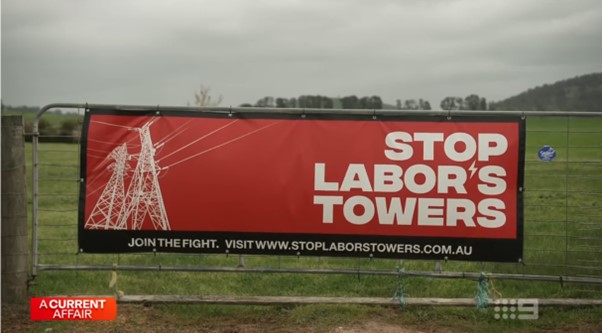
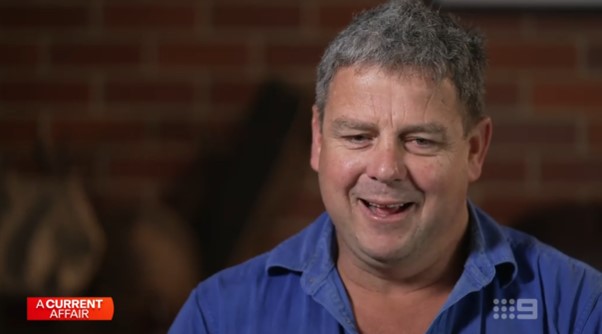
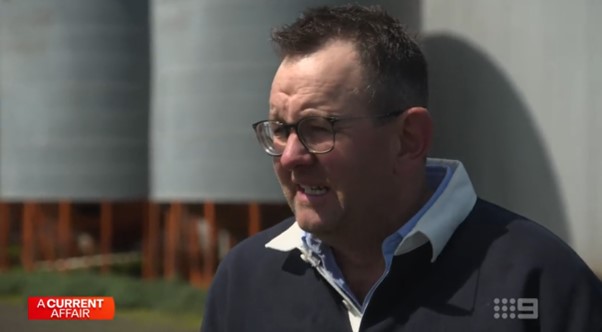
Last night (Saturday, 11th October), the leading story on Channel Nine’s A Current Affair shone a spotlight on the dangerous and deeply flawed Western Renewables Link (WRL) proposal. Huge credit goes to Kain Richardson (potato farmer from Newlyn, Western Victoria), Kevin Maher (fifth-generation potato farmer from Springbank in Western Victoria), and Tom Drife (farmer from Glendaruel, Western Victoria) for their outstanding advocacy they spoke with clarity and conviction, representing our community’s concerns with integrity and strength.
The report captured the determined fight of farmers across country Victoria who are working to overturn plans for a 190km power transmission line that would cut through our productive farmland. Their statements underscored the intense anxiety communities face over forced land acquisition for the WRL. They powerfully argued that the proposal threatens the environment, puts our farms at risk, and has been pressed forward with inadequate consultation or genuine respect for the land and its people.
Bowen’s Claims Unravel — “Profound Ignorance”, Mixed Numbers and No Backing Data
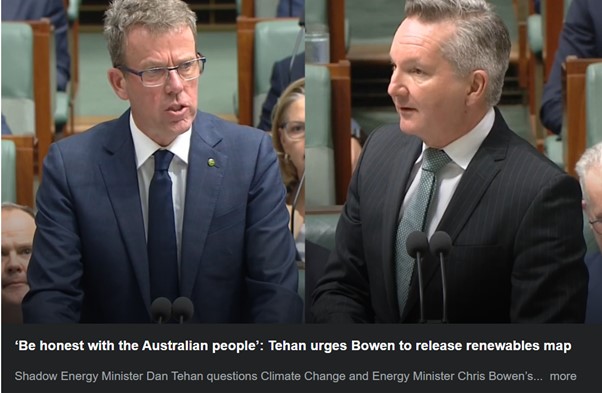
“Chris Bowen’s claims about renewables aren’t optimistic – they’re bluffs. When forced to defend them, the numbers collapse, the science is ignored, and legitimate critics are dismissed.”
- Walkback on scale – confusion exposed
Bowen had asserted that renewables infrastructure would require only “12 per cent” of the land area estimated by conservation mapping. Critics immediately pounced. In Parliament, Bowen effectively conceded he’d mixed up NSW data with national figures — drastically understating the footprint. - Accused of “profound ignorance”
Media commentary didn’t hold back: Bowen was publicly chastised for presenting misleading figures without transparency. He was accused of dismissing serious environmental concerns and playing political games with numbers. - No evidence. No proof. Just rhetoric.
Bowen attacked Rainforest Reserves Australia (RRA), labeling them “anti-renewables, pro-nuclear activists,” while refusing to provide the data supporting his claims about land use. RRA stood firm, saying their nationwide mapping covers over 483,000 ha of existing + proposed projects, with high confidence in their methodology. - Environmental alarm sounded – Bowen ignored it
Leading ecologists — including Professor Hugh Possingham — warned that poorly sited renewables projects could devastate biodiversity, turning the push to “green” energy into an environmental disaster. He has called for a moratorium until robust biodiversity and land-use mapping is in place. Yet Bowen has repeatedly waved away these concerns, failing to commit to meaningful safeguards. - Dangerous politics of dismissal
Instead of engaging substantively, Bowen derides critics and environmental science. By recasting valid concerns as “anti-renewables” rhetoric, he attempts to silence debate. That tactic is being seen less as leadership and more as intellectual cowardice.
These are frightening headlines – words from a man with enormous power, openly willing to sacrifice the environment, our farms, and our community for his agenda. This cannot go unchallenged. It’s up to us – every one of us – to stand our ground. Let Chris Bowen wave his Authorised Officer card and see if he dares set foot on our land. We must hold the line. This is our home, our livelihoods, and our future. Now is the time to unite, resist, and send a message: we will not be forced aside or silenced. Hold the line – our land, our rules, our fight.
Red Herrings and Deflection: A Deliberate AusNet Strategy
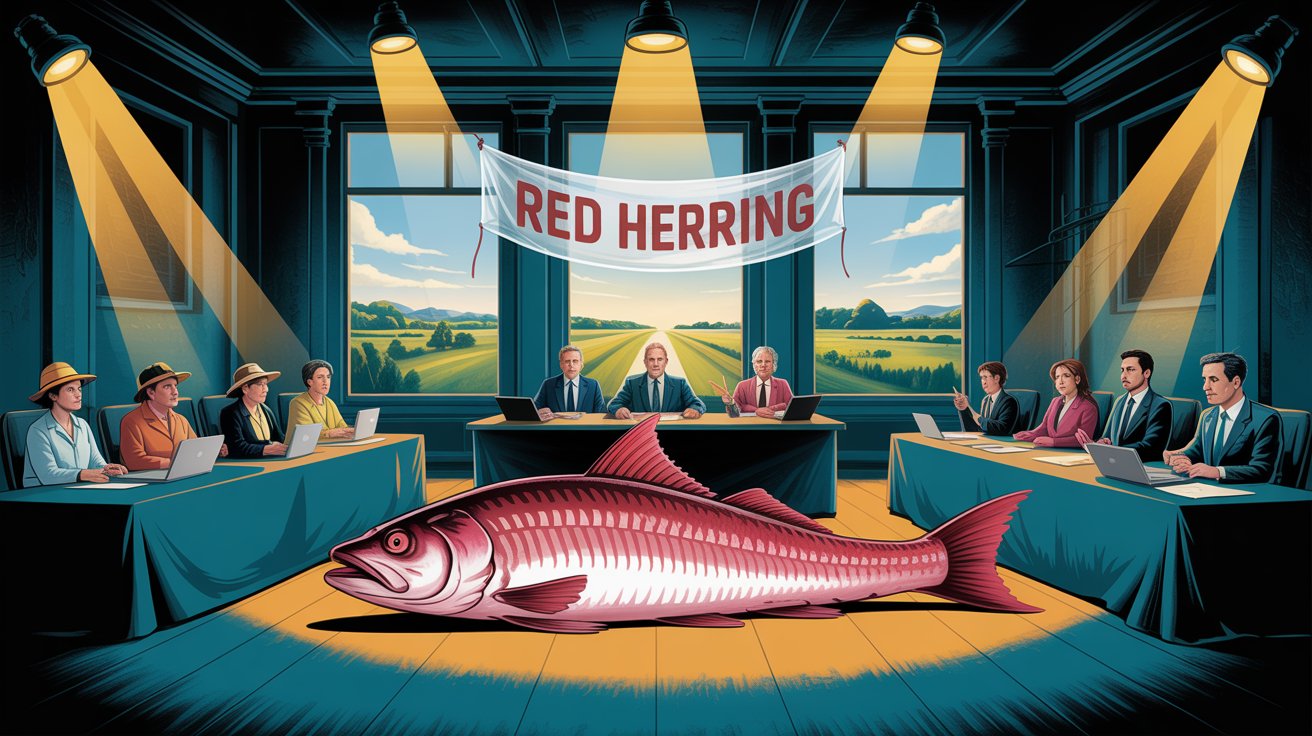
We recently witnessed the proponent’s legal team, at the conclusion of the Western Renewables Link Environmental Effects Statement (WRL EES) Directions Hearing, return to the issue of AI-assisted submissions. This was not an innocent procedural question. It was a calculated and deliberate move by AusNet to plant a red herring in the record, to distract the Inquiry and Advisory Committee from the real and deeply confronting issues embedded in this project.
This tactic is neither new nor subtle. Throughout the EES process, AusNet has demonstrated a consistent pattern of behaviour: whenever the spotlight turns to the real risks of this project, it shifts the conversation elsewhere. When challenged on bushfire risk, they point to consultation processes. When pressed on biodiversity, they cite technical uncertainties. And now, when communities expose the impacts of this project with clarity and evidence, they question the method of how those submissions are written.
This latest fixation on AI is simply the newest diversion in a long line of distractions.
Core Argument: Veracity Over Method
The only question that should concern the Committee is whether the information presented is true, relevant, and substantiated. The method by which it is written is irrelevant.
No one has ever accused a landholder of “cheating” because they sought help from a lawyer, consultant, or technical writer. No one has accused AusNet of undermining its own credibility because it relies on battalions of consultants, PR strategists, and legal teams. Yet when community members use modern tools like AI to ensure their concerns are articulated clearly, suddenly it is painted as suspect.
This is a textbook double standard. It’s not about procedural integrity. It’s about controlling the narrative and weakening community voices.
At the Directions Hearing, the proponent went even further. They characterised the community as hostile and dangerous, even suggesting that a “significant security presence” would be required for any site visits in the region. This was not an offhand comment. It was another carefully placed red herring, designed to vilify the community and shift the Committee’s attention away from the project’s monumental risks and impacts.
Reframing AusNet’s Argument: The Red Herring
These tactics are not isolated. They are part of a clear strategy to deflect scrutiny from the central, unresolved concerns:
• escalating bushfire risk in already vulnerable landscapes
• destruction of biodiversity and critical habitat
• agricultural disruption and land devaluation
• cultural, visual, and social impacts on entire regional communities.
By forcing a debate over how submissions were prepared, rather than what they contain, AusNet seeks to undermine the credibility of community opposition without ever engaging with the substance of the evidence.
If their argument were applied consistently, every submission prepared with professional assistance – including their own – would be disqualified. Of course, that is not the intention or spirit of the EES process.
A Simple Test
Truth is truth. It does not become less valid because it was typed by a farmer, dictated to a lawyer, or assisted by AI. The only question that matters is whether the evidence stands up to scrutiny.
The Committee must not allow itself to be pulled into procedural side shows carefully crafted to obscure the very real risks of this project. These red herrings are distractions, and they should be called out as such.
The people of regional Victoria deserve a fair hearing based on evidence, not on manufactured narratives designed to silence them.
In light of this we asked ourselves the following:
Disclose the use of AI? Oh, that’s rich. They want us to disclose the use of AI? How about they start by disclosing their own laundry list of screw-ups. Yeah, let’s see AusNet stand up in front of the Inquiry and say: ‘Ladies and gentlemen, today we’d like to disclose our incompetence. We’d like to disclose how we got lost in our own maps, how we couldn’t model fire risk without leaving out the fire, and how we managed to turn ‘community engagement’ into ‘community enragement.’’
And while they’re at it, maybe they could also clear the air. Explain the handshakes behind closed doors, the quiet understandings that seem to shape every decision. Tell us how many consultants have been brought in, over and over again, to deliver the same polished line: “Don’t worry, it’s safe. Don’t worry, it’s fine. Don’t worry, the towers will be beautiful, you’ll learn to love them.” If there’s nothing to hide, then where’s the disclosure?
But no, they’re not asking those questions. They’re not asking if a community member had help from a neighbour, a farmer, a lawyer, or yes, even a computer. Because they know that’s fair game. No, what they’re really saying is: ‘We’re terrified. We’re terrified because suddenly the community’s submissions are better written than our multi-million dollar reports.’ And that’s the truth. That’s the comedy. That’s the punchline they don’t want to hear.
Idiots! They’ve got more lawyers than sheep on a hillside, more spin doctors than doctors in a hospital, and yet they still can’t out-write a volunteer with a busted laptop and a bad internet connection. And now they’re scared. They should be scared. Because they’re not the smartest guys in the room – they’re just the richest. And there’s a big difference.
So let’s play their game:
• Disclose how many submissions they’ve ignored.
• Disclose how many times they’ve claimed ‘community support’ while everyone in the room was booing them out the door.
• Disclose how many times they’ve said ‘no significant impact’ right before a fire, a flood, or a farmer proved them dead wrong.
And the kicker? They want to make us feel guilty. ‘Oh, you used AI? That’s cheating!’ Cheating? Please. Cheating is telling people you’re building a renewables project while you’re bulldozing farmland, torching biodiversity, and saddling the next generation with risk. Cheating is calling it clean energy while leaving a dirty scar across Victoria. Cheating is rigging the whole game, then acting like the ref.
So yeah, let’s disclose something. Let’s disclose that the community doesn’t scare so easy. Let’s disclose that we’ve got truth, land, and stubbornness on our side. And let’s disclose one more thing – that the only reason they’re even whining about AI is because it finally gave ordinary people a louder, sharper voice. And now that voice is echoing through every hearing, every meeting, every newspaper. And it’s not going away.
So AusNet, VicGrid, whoever’s pulling the strings – go ahead, keep demanding disclosures. We’ll disclose this: you’re out of excuses, out of credibility, and soon enough, you’ll be out of luck.”