STOP LABORS TOWERS
NEWSLETTER – September 6 2025
WRL EES
533 Submissions: A United Stand
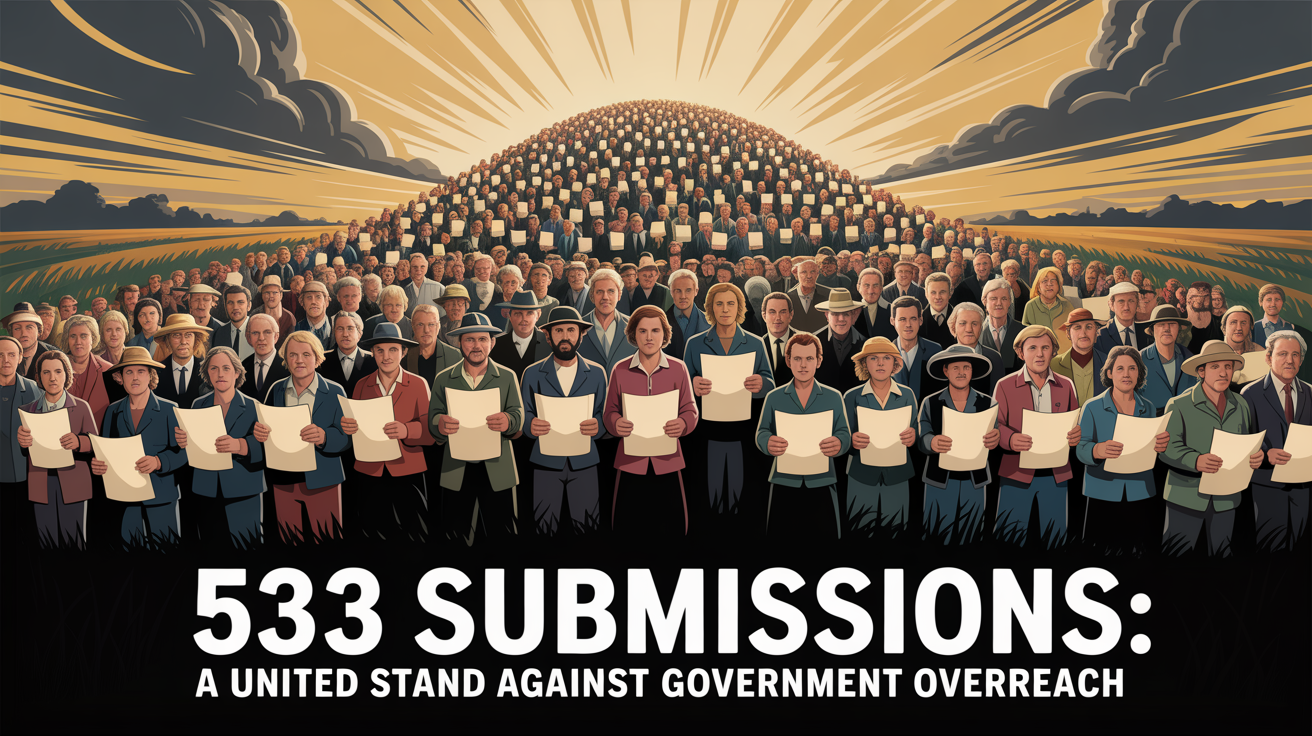
533 WRL EES Submissions: A United Stand Against Government Overreach
Last week marked the close of the submission period for the Western Renewables Link Environment Effects Statement (EES), and the response was nothing short of monumental. 533 community submissions were lodged, a powerful testament to our collective resolve. To all who participated, we say: well done. You have proven that to be silent is to acquiesce, and you have refused to be silenced. Your submissions, now available online for review, reflect an immense effort to hold the government and its agencies accountable.
Here’s the Western Victoria Community Alliance WRL EES Submission
The EES Hearing is Not About Policy – It’s About People
We’ve reviewed the submissions and a disturbing pattern has emerged. Several organizations, including the joint VicGrid/AEMO submission, have chosen to focus almost entirely on justifying the Western Renewables Link (WRL) in the context of broader energy transition policy. They speak of renewable energy targets and the need for new transmission lines. While these topics are important in a policy debate, they are misdirected and fall entirely outside the scope of this Inquiry.
Let us be clear: the EES process is not a forum to re-litigate government policy. That framework has already been established. The purpose of this Inquiry is far more specific and critical: to assess the actual, tangible impacts of the WRL on our environment, our society, our land, and our lives. It is a process designed to test whether the proponent has adequately considered alternatives and mitigation measures, not to provide a platform for project justification.
By failing to engage with the statutory terms of reference, VicGrid and AEMO have provided evidence that is completely irrelevant to the Panel’s task. Their submissions ignore the real issues: environmental risks, bushfire threats, visual and social impacts, and land use conflicts. The Panel must recognize these submissions for what they are – a desperate attempt to shift the focus away from the project’s devastating local impacts. We demand that the Panel place limited weight or remove on such submissions, as they fail to address the core purpose of this Inquiry.
The Fight Continues: Join Us at the Hearings
The battle is not over. On Monday September 15th, a Directions Hearing will take place, followed by the main Hearings where community members can attend and make their voices heard.
With regards the Directions Hearing We will be there, and we will be raising several critical issues, including:
• An official objection to VicGrid and AEMO’s misguided submission. Noting a handful of submissions have focused on policy which is outside of EES scope.
• The lack of proof for desktop studies on properties, which we believe invalidates the entire EES process. AusNet’s refusal to release these studies is a glaring admission that they likely do not exist.
• The procedurally unfair and biased 40-day response window for the EES. While this period has passed, it is crucial to document this injustice.
• Our demand for adequate presentation time during the Hearings, ensuring the community is given the time we need to present our case.
Note: AusNet have requsted 15 days at the Hearing – this cannot come at the cost of hearing our voices
If you wish to have a matter raised at the Directions Hearing you will need to e-mail this to Planning.Panels@transport.vic.gov.au by 12:00pm Monday 8th September
We will not be silenced. We will not be ignored. Our fight for our community, our land, and our future is just beginning. Stay informed and join us as we continue to stand strong against this unjust proposal.
VicGrid and AEMO are making a strategic play to gain a powerful position within the EES hearing to advocate for the project on policy grounds. This is a direct threat to the integrity of the process, which is supposed to be focused on the evidence in the EES.
VicGrid and AEMO are trying to use the EES process to refrarme the project’s legitimacy. The 2019 RIT-T PACR never identified WRL as a stand-alone project with economic justification, it only existed as a supporting augmentation for a broader transmission pathway (VNI-W). They know community groups have been hammering the line that “WRL served no purpose under the RIT-T”. So what do they do?
It’s clear VicGrid and AEMO are now using the legal and regulatory detail as a rhetorical shield. They want to (a) legitimise the project as already endorsed by ministerial and legal authority, (b) close down challenges about process or jurisdiction, and (c) justify their own presence at the hearings as essential institutional stakeholders rather than mere advocates. The effect is to discourage further arguments that the project is procedurally invalid or vulnerable to judicial review.
This is why VicGrid and AEMO’s submission reads more like a justification brief than an EES submission. They’re trying to shut down debate before it even starts, and position the IAC as having no role in revisiting whether the WRL is necessary, only in dealing with “how” it should proceed.
VicGrid and AEMO’s submission attempts to reframe the very foundation of the Western Renewables Link. It is now apparent that their intent is to shut down the well-established narrative that the WRL served no independent purpose under the 2019 RIT-T PACR. Rather than confronting this fundamental flaw, they seek to recast the project as being defined solely by ministerial orders under the National Electricity (Victoria) Act 2005. This is a sleight of hand. The RIT-T was the statutory instrument designed to test whether the project delivered net market benefits; the WRL did not withstand that scrutiny as a stand-alone augmentation. To now rely on NEVA orders as the sole source of legitimacy is not evidence of project merit, but of political intervention overriding regulatory and economic discipline.
Act now – Download our template letter, add your name, and send it to Planning Panels Victoria before 12:00 pm on Monday, September 8. If we don’t raise this at the Directions Hearing, our chance to be heard may be lost.
TEMPLATE : Objection to VicGrid and AEMO’s Participation at the Western Renewables Link EES Hearing
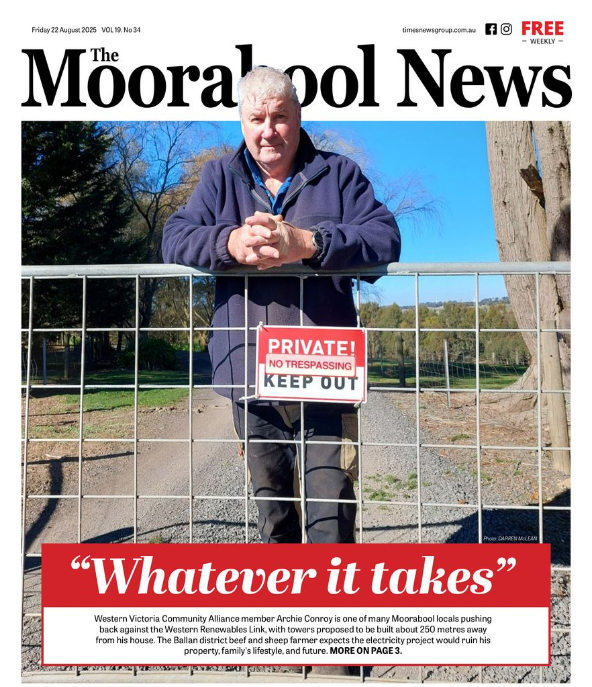
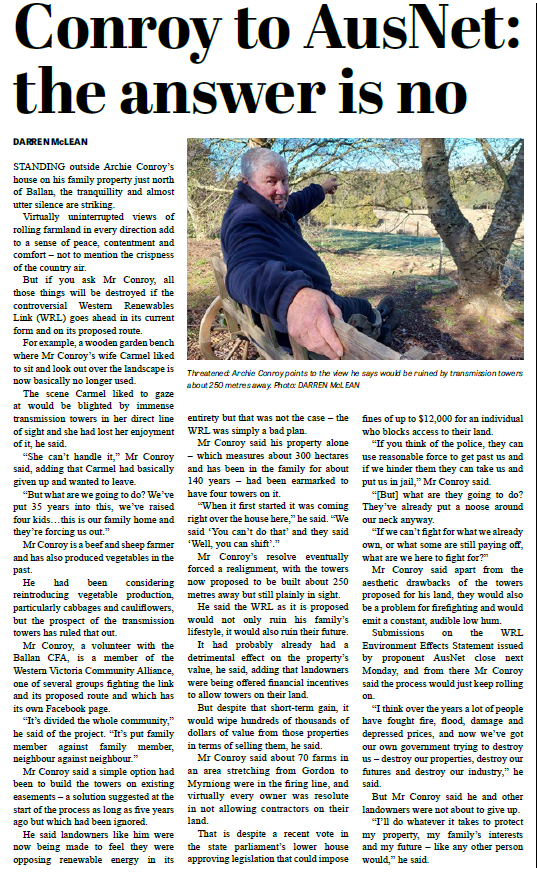
Net Zero? More Like Net-Zero Effort
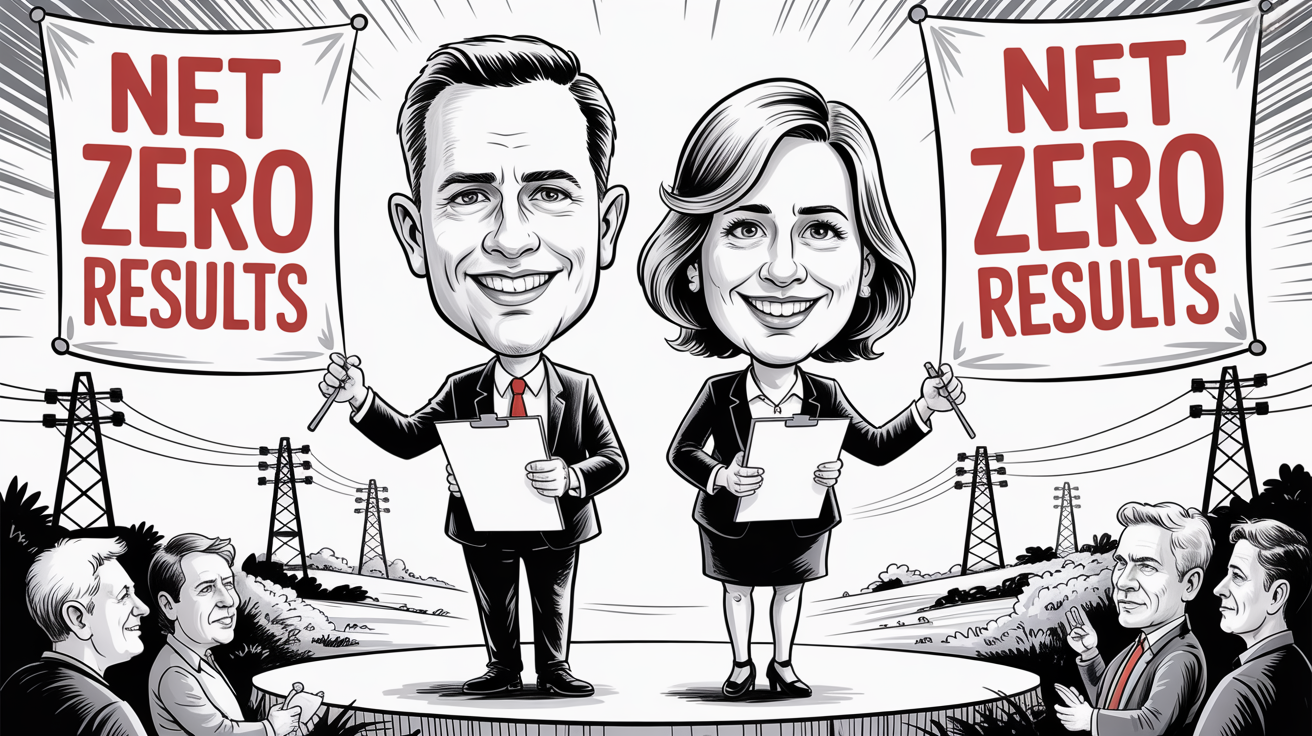
You know, some politicians are a bit like those old tractors you see rusting in a paddock. They look impressive from a distance, with all their big parts and official paint, but when it’s time to actually get the job done – to plow the field, to haul the load – they just sit there, gathering dust.
Take, for example, our local MPs, Catherine King and Sam Rae. You’d think, with a big, ugly project like the Western Renewables Link threatening their own backyard, they’d be out there, boots on the ground, ready to defend the farm. They are, after all, Ministers. They have a voice. They have power. We know this because they have an abundance of titles, as our research team – by which I mean Google – helpfully pointed out.
This week the so-called dynamic duo lodged a WRL EES submission that neither condemned the project nor supported the communities affected. Instead, it simply pushed their own agenda. And when it came to standing up for their constituents – the very people they are meant to represent? Their support has been a resounding zero.
This government bangs on about its Net Zero policy, right? It’s their big thing. Their legacy. Well, if “Net Zero” is the goal, then our local MPs have achieved it with a resounding flourish: zero compassion, zero action, and zero representation of their communities.
It’s a perfect analogy, really. While they’re busy telling the nation they’re reducing emissions, they’ve completely eliminated their own responsibility to us. It’s a clean, green, perfect zero. No messy community concerns to muddy up their pristine political record.
So, here’s to our political “leaders”. They’ve truly redefined the meaning of “net zero.” It’s not just about emissions anymore. It’s about zero effort, zero backbone, and zero shame. Bravo.
Sincerely,
The Communities You Have Abandoned
This video powerfully illustrates how passive acceptance of injustice lays the groundwork for future harms, a principle directly relevant to those opposing the Western Renewables Link (WRL) project.
In this short lecture, the speaker underscores that ignoring injustice simply because it does not directly affect oneself perpetuates a cycle where others—and ultimately oneself—may suffer harm. This message is a call to action for landholders, community members, and advocates involved in the WRL Environmental Effects Statement (EES) process: silence and inaction in the face of unfair treatment, inadequate consultation, or wrongful impacts means accepting the erosion of rights and protections for all.youtube
For those preparing responses or engaging in campaign work around the WRL, this video offers a motivating reminder: active participation and opposition to injustice are essential to prevent future harm and safeguard community interests.youtube