STOP LABORS TOWERS NEWSLETTER – August 16 2025
STRANGLING REGIONAL VICTORIA:
A FALSE GREEN
Strangling Regional Victoria: A False Green
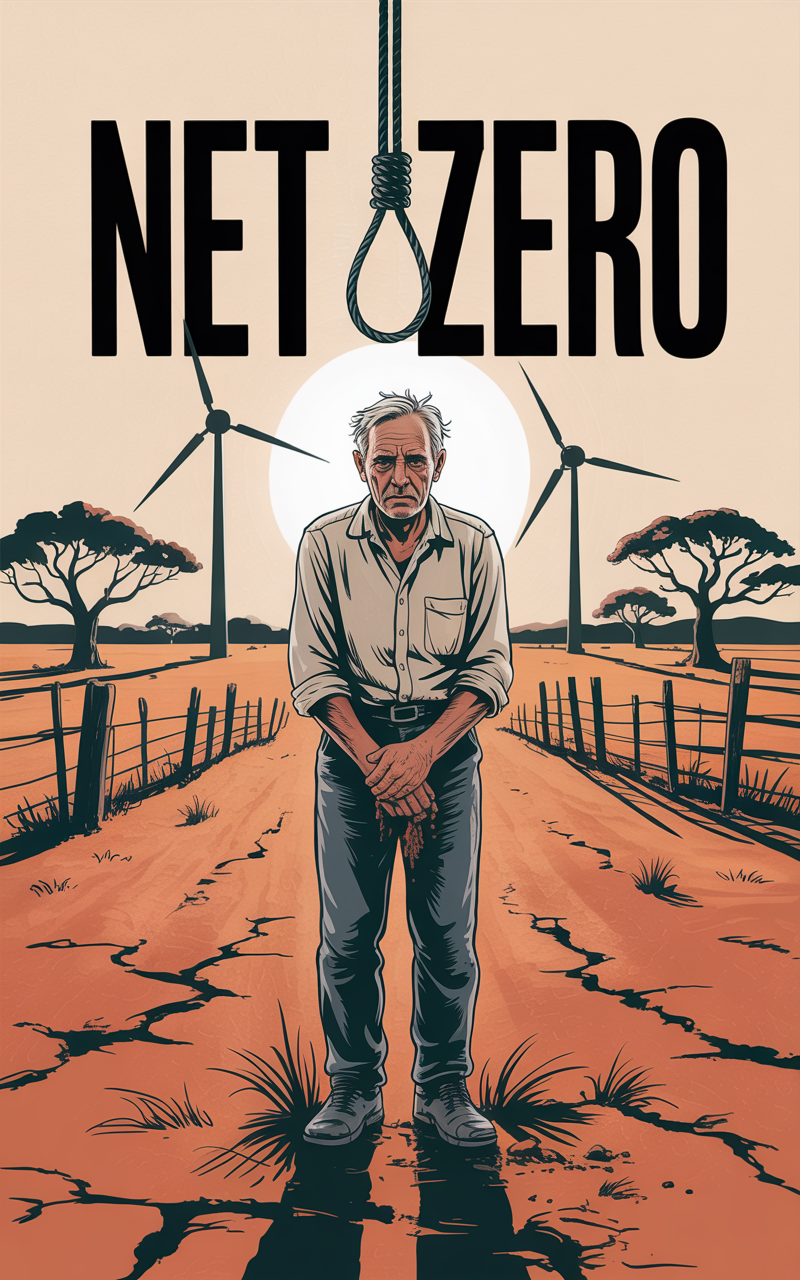
They call it Net Zero, as if the name itself could bleach the stain from the earth. From the polished rooms of Melbourne and Canberra, it’s sold like a miracle cure, a gentle turning of the tide. But out here in the long shadows of gum trees and in the fields, we see it for what it is: not a climate salvation, but a chain slipped quietly around the neck of regional Victoria.
The green story goes like this – transmission corridors will thread the landscape like stitches healing a wound, clean energy will flow, and the future will be secured. But the truth is different. In the fields, heavy boots trample seedlings. Survey stakes sprout faster than barley. Fences come down, not for harvest, but for high-voltage towers. The National Electricity (Victoria) Amendment (VicGrid Stage 2 Reform) Bill 2025 would grant unaccountable officials the right to walk onto private land, override landholders, and dictate its use. They call these “pathways” and “zones,” but each line drawn is a piece of someone’s life erased.
One-third of Australia’s prime agricultural land could be sacrificed to this Net Zero machinery. Farmers are not laying down their tools – across the state we are locking gates, pledging to resist even under threat of fines or legal force. The government frames it as “renewable progress,” but the balance sheet tells the real story: the winners are not the soil, the rivers, or the communities who know the weight of drought and the balm of a good rain. The winners are corporations carving billions from infrastructure contracts, and a state government so hungry for control for their own egos it would uproot the very people who feed the nation.
This isn’t stewardship. It’s extraction in a green disguise – a fevered consolidation of capital dressed in the language of the planet’s salvation. The paddocks will keep producing, but the wealth will flow elsewhere, and the voices of those who warned, those who resisted, will be scattered like chaff in the wind.
And let it be understood — this fight will not fade quietly into the bureaucratic margins. For every tower they plan, there will be a voice raised. For every paddock they mark, there will be a gate closed. For every law they twist, there will be communities standing shoulder to shoulder. We are the custodians of this land, and we will not surrender it to the false prophets of Net Zero. Those who seek to push this agenda against the will of the people should take heed: the resistance will be as unyielding as the soil beneath our feet.
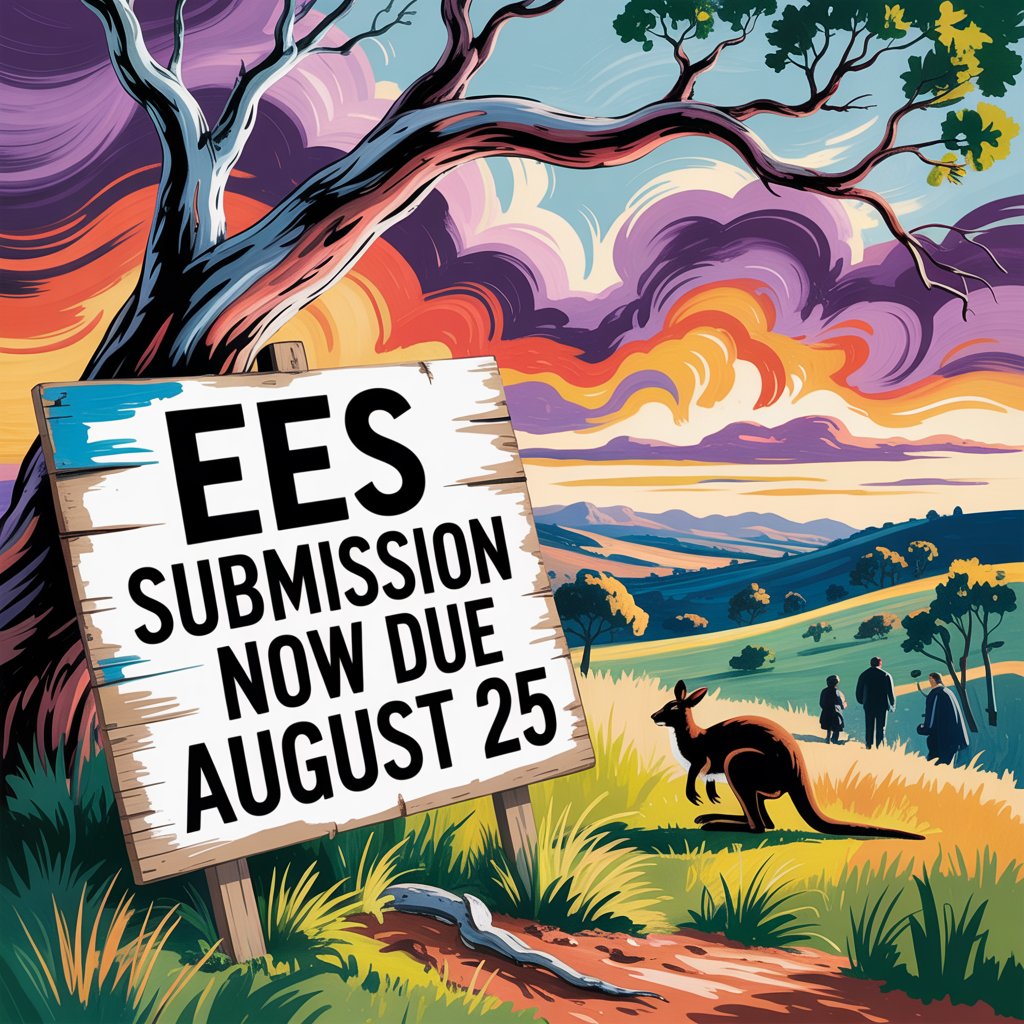
EES SUBMISSIONS – ACT NOW
DUE BY AUGUST 25, 2025

The EES Is Not What It Seems — And Time Is Running Out
The Western Renewables Link Environmental Effects Statement (EES) is sold to us as a safeguard, a public service. A process to inform and protect. But anyone who’s looked even briefly beneath its polished surface knows this isn’t a neutral exercise. It’s a performance – and the ending was written long before you or I ever walked into the theatre.
We’ve now seen some extraordinary EES submissions community in the past few weeks.
People have told their truths with force, with clarity, with evidence the official documents couldn’t dream of touching.
Farmers mapping watercourses in the dirt with their boots. Locals showing in hard, irrefutable detail the wildlife, the fire paths, the cultural lines. These submissions have been works of grit and grace, and they have cut through the spin like a blade.
Because make no mistake: less than 10% of this land has been physically surveyed. The rest? Dressed-up modelling, educated guesses, and assumptions polished until they pass for fact. The deep, lived knowledge of landholders the kind that could save lives in a fire, or keep fragile ecosystems intact is dismissed as “anecdotal.” They call it science. It isn’t. It’s stagecraft.
This is not consultation. It’s consent-manufacturing. It’s the slow, deliberate work of making you feel that the process was fair, so that when you object, you’ll look like the unreasonable one.
Your submission is not a formality. It is a strike against the official record they want to write in your absence. Every one is a mark they cannot erase, proof that people were watching, that people knew, that people refused to be silent.
You don’t have to be an expert. You don’t need perfect grammar or fancy charts.
You need your truth about your land, your community, your future. Because if you don’t tell it, they will write it for you, and it will be a lie.
Do not wait for someone else to carry this. Do not decide your voice is too small. This is your land, your rights, your say. And when the record is written, let it show that you stood up.
Make your submission. Make it count. And never give them the silence they’re counting on.
Don’t step aside. Stand up. Submit.
This is your step-by-step tool for action. Our community has developed this guide to make the WRL EES submission process simple, clear, and powerful.
Whether you’re a landholder, a neighbour, or simply someone who cares about the future of our region, your voice matters. Use this guide to speak up, protect our land, and ensure your concerns are part of the official record.
WHEN HOME STOPS FEELING
LIKE HOME AND WE SAY NO
For most of us in Western Victoria, our land is more than dirt and fences. It’s where we’ve built our homes, raised our families, grown our food, and cared for the wildlife that shares it with us. It’s part of who we are.
That’s why what’s happening with the Western Renewables Link isn’t just a planning issue – it’s personal. It’s about watching the place you love change in ways you never agreed to, and feeling powerless to stop it.
There’s a word for that feeling – solastalgia. It’s the pain of seeing your home environment damaged or transformed, knowing it’s happening right in front of you, and thinking it’s beyond your control. Experts link it to depression, anxiety, and even post-traumatic stress.
Then there’s climate grief. It’s that deep, ongoing sadness when the land and climate you know shift so much they feel like strangers. It’s cumulative. It doesn’t go away.
And for many of us, the WRL is triggering exactly that a slow, grinding sense of loss.
But here’s the thing grief can turn into rage. And rage, when it’s shared, becomes power.
The WRL isn’t just a set of towers. It’s an insult to our intelligence, our connection to the land, and our right to decide what happens to our future. They want us tired, they want us silent, and they want us to believe this is inevitable.
It’s not.
We’ve seen enough. We’ve felt enough. And now we’re done being victims of their “process.” This project is not welcome here and we dismiss it. Flat out.
Our land will not be defined by their modelling. Our communities will not be defined by their spin. And our future will not be defined by their towers.
That’s why every submission matters. Every voice raised is another blow to the fiction they’re selling. Together, we don’t just resist we reject.
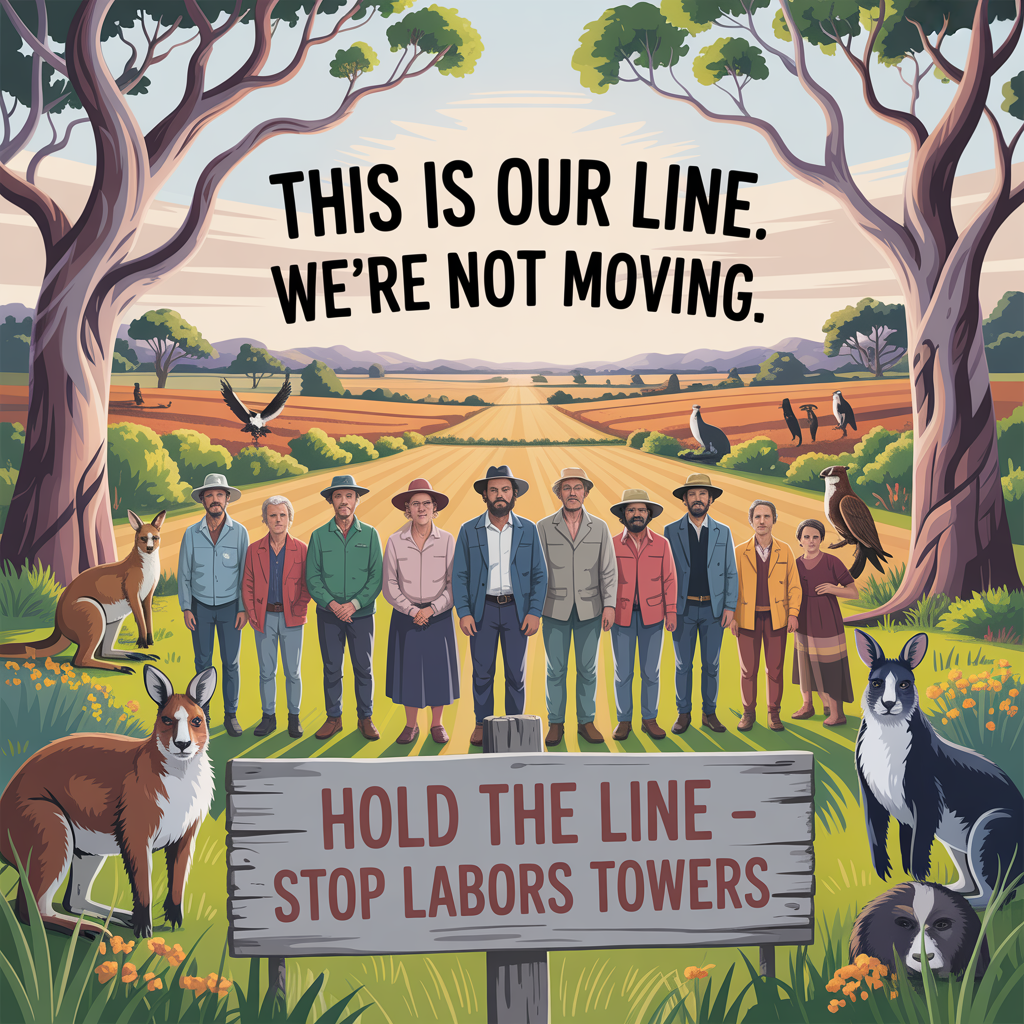
Because this isn’t just our home. It’s our line in the fertile Western Victorian soils. And we’re not moving.
WRL EES COMMUNITY RESOURCES KEY EES CHAPTERS FOR YOUR USE
11 CHAPTERS INCLUDED
SEE BELOW High Level Community produced reports containing a sample of our assessment of the EES.
Purpose: These reports highlight significant flaws in the EES and are provided to empower you to prepare and submit your own response.
Analysis: Our analysis is following a chapter by chapter basis and should assist in navigating and responding to the EES in detail.
Customisation: Please tailor these and the other reports to your own circumstances, or simply use them as inspiration. Our analysis takes a broad approach, your specific impacts may differ and provide powerful inputs.
We encourage you to review these reports, adapt them as needed, and use them to build your own informed submissions.
Chapter 8: Biodiversity and Habitat (LINK TO FILE)
- The biodiversity impact assessment is fundamentally flawed, with much of the Project Area left unsurveyed due to so-called ‘land access constraints.’ This systemic failure renders the ecological impact analysis speculative and unreliable, exposing significant risks to critically endangered ecological communities and protected habitats.
- Deferring essential ecological surveys to a post-approval phase subverts the core purpose of the EES process and denies decision-makers and the public the critical data needed to assess the project’s environmental consequences. The proposed clearance of over 238 hectares of native vegetation, including critically endangered ecological communities, represents a stark failure to adhere to environmental standards.
Chapter 14: Economic impacts (LINK TO FILE)
- The economic assessment systematically understates significant long-term negative impacts on local businesses and communities, relying on superficial qualitative ratings that fail to capture the true scale of economic distress. This flawed approach risks undermining public trust and misinforming planning decisions, leaving vulnerable sectors like tourism and hospitality inadequately addressed.
- By dismissing cumulative impacts and omitting key considerations like property value depreciation and adequate compensation, the economic analysis presents a dangerously incomplete picture. The lack of independent peer review and transparency in modelling further compromises the credibility of its findings, leaving local communities exposed to unmitigated financial losses.
Chapter 16 Aviation Impacts (LINK TO FILE)
- Permanent Degradation of Melton Aerodrome Safety. The assessment downplays permanent, significant safety impacts on Melton Aerodrome, unjustifiably characterising them as ‘minor.’ Forcing steeper non-standard approaches and shortened landing thresholds endangers pilots and degrades the aerodrome’s functionality, blatantly transferring risks to operators and violating statutory obligations. This mischaracterisation compromises aviation safety and undermines basic regulatory compliance.
- Critical Failures in Risk Management for Low-Flying Aircraft. AusNet’s proposed mitigation for increased risks to aerial agriculture and firefighting relies on mere administrative notifications, leaving a permanent hazard in place. This lack of tangible safety measures, such as high-visibility markers for transmission lines, disregards mandatory safety standards and endangers critical, life-saving operations. Relying on a map warning instead of addressing physical hazards is a profound safety failure.
- Deficient and Flawed Cumulative Impact Assessment. The claim that existing obstacles ‘shield’ new transmission towers and wind turbines is a dangerous logical fallacy. Instead of reducing risks, the proliferation of infrastructure creates cluttered, hazardous airspace, increasing the potential for pilot errors and restricting safe emergency operations. This failure to address growing cumulative risks exposes western Victoria to severe long-term aviation safety threats.
Chapter 19 – Noise and Vibration (LINK TO FILE)
- The noise and vibration assessment is critically deficient, with the complete omission of baseline vibration monitoring – a direct breach of EES Scoping Requirements. By relying on unsubstantiated assumptions and proxy data from unrelated projects, the report invalidates its own findings and exposes communities to unacceptable risks.
- Deferring key noise and vibration assessments to post-approval stages subverts the statutory purpose of the EES process and undermines accountability. Combined with unenforceable performance standards and a lack of independent peer review, the report fails to provide any credible assurance of environmental protection or community welfare.
Chapter 21 – Social Impact (LINK TO FILE)
- The Social Impact Assessment is fundamentally flawed, relying on a biased and invalid ‘landholder sentiment’ metric, gathered by project staff with a vested interest, to misrepresent community opposition as manageable. This ignores the profound and enduring social harm, including loss, powerlessness, and division, caused by imposing an unwanted project on unwilling communities. This contradicts AusNet’s own evidence of strong opposition to the proposed route and overhead design and consistent community demand for undergrounding.
- Critical social impacts, such as ‘ongoing frustration and resentment’ and an ‘enduring sense of loss,’ are dismissed with superficial mitigation measures like visual screening and a community fund. Coupled with a lack of independent peer review, this report fails to meet statutory requirements and undermines both the credibility of the project and the trust of affected communities.
Chapter 29 – The Environmental Management Framework (LINK TO FILE)
- Self-Regulation and Conflicts of Interest. AusNet’s Environmental Management Framework is fundamentally flawed, allowing the proponent to ‘approve’ its own environmental plans – a clear conflict of interest that bypasses independent regulatory scrutiny. This self-regulatory governance model privatises public oversight functions, putting commercial objectives ahead of environmental protection and violating the statutory intent of the Environment Effects Act 1978.
- Compromised Independent Audits. The so-called ‘Independent Environmental Auditor’ is neither independent nor reliable, as it is appointed and paid by AusNet – the very entity being audited. This blatant conflict of interest reduces compliance to a procedural formality, eroding public trust and leaving environmental risks effectively unmonitored.
- Unenforceable and Vague Requirements. AusNet’s Environmental Performance Requirements (EPRs) are systematically vague, using loopholes like ‘so far as reasonably practicable’ and ‘if necessary’ to evade concrete commitments to environmental outcomes. This approach makes auditing impossible and offers no assurance that the project’s significant impacts will be managed, monitored, or mitigated effectively.
- Collectively, the inadequacies in the EMF create an unacceptable risk that the WRL’s significant environmental impacts will not be adequately managed, monitored, or mitigated. The proposed EMF lacks the transparency, accountability, and enforceability required for a project of this scale and controversy.
Chapter 7 Community and Stakeholder Engagement (LINK TO FILE)
Extract: The evaluation of Chapter 7, “Community and Stakeholder Engagement,” reveals significant deficiencies and compliance risks that undermine the credibility and robustness of the project’s social impact assessment. Persistent “Community distrust” indicate a profound failure to achieve the substantive transparency and genuine public involvement objectives inherent in the Act.
Chapter 11 Landscape and Visual (LINK TO FILE)
Extract: The analysis reveals significant deficiencies and inconsistencies within the EES’s LV assessment. While the EES outlines a methodology, its application frequently lacks the rigor, transparency, and evidence-based justification required for such a major infrastructure project. Key flaws include subjective impact rating justifications, inadequate consideration of heritage landscape impacts, and an over reliance on design mitigation without robust evidence of effectiveness.
Chapter 12 Land Use and Planning (LINK TO FILE)
Extract: This examination concludes non-compliance with key EES Scoping Requirements and Victorian planning principles. These flaws pose substantial risks, including a significant underestimation of project impacts, potentially leading to inadequate planning and management of adverse effects on land use,agricultural enterprises, residential amenity, and cultural heritage. Such deficiencies risk eroding public trust due to perceived biases and the dismissal of community concerns. Potential legal and regulatory challenges may arise from non-compliance, leading to sub optimal environmental and social outcomes if mitigation measures are insufficient.
Chapter 13 – High Level Assessement of Bushfire
Extract: The WRL EES’s assessment of bushfire risk is fundamentally flawed. It underestimates ignition potential, misrepresents emergency service limitations, and fails to uphold the legal and ethical primacy of human life. Without a rigorous, site-specific, and transparent reassessment – grounded in best practice and local realities – the project should not be allowed to proceed in high-risk areas. The current EES is insufficient, misleading, and places lives and property at unacceptable risk.
Chapter 15 – High Level Assessment of Agriculture
Extract: The WRL EES fundamentally underestimates and misrepresents the severe, multifaceted impacts of high-voltage transmission infrastructure on agricultural operations. The EES’s optimistic framing of residual impacts as “minor” or “negligible” is contradicted by independent research, industry guidelines, and the lived experience of farming communities.This analysis identifies major shortcomings in the EES’s approach, demonstrate these flaws undermine agricultural viability…
See the full EES here
Don’t wait. Start your submission today and stand up for Western Victoria.
More details and resources here via Moorabool Shire
AERIAL MAPPING IMAGES TO HELP YOUR EES SUBMISSION
Aerial Mapping Support
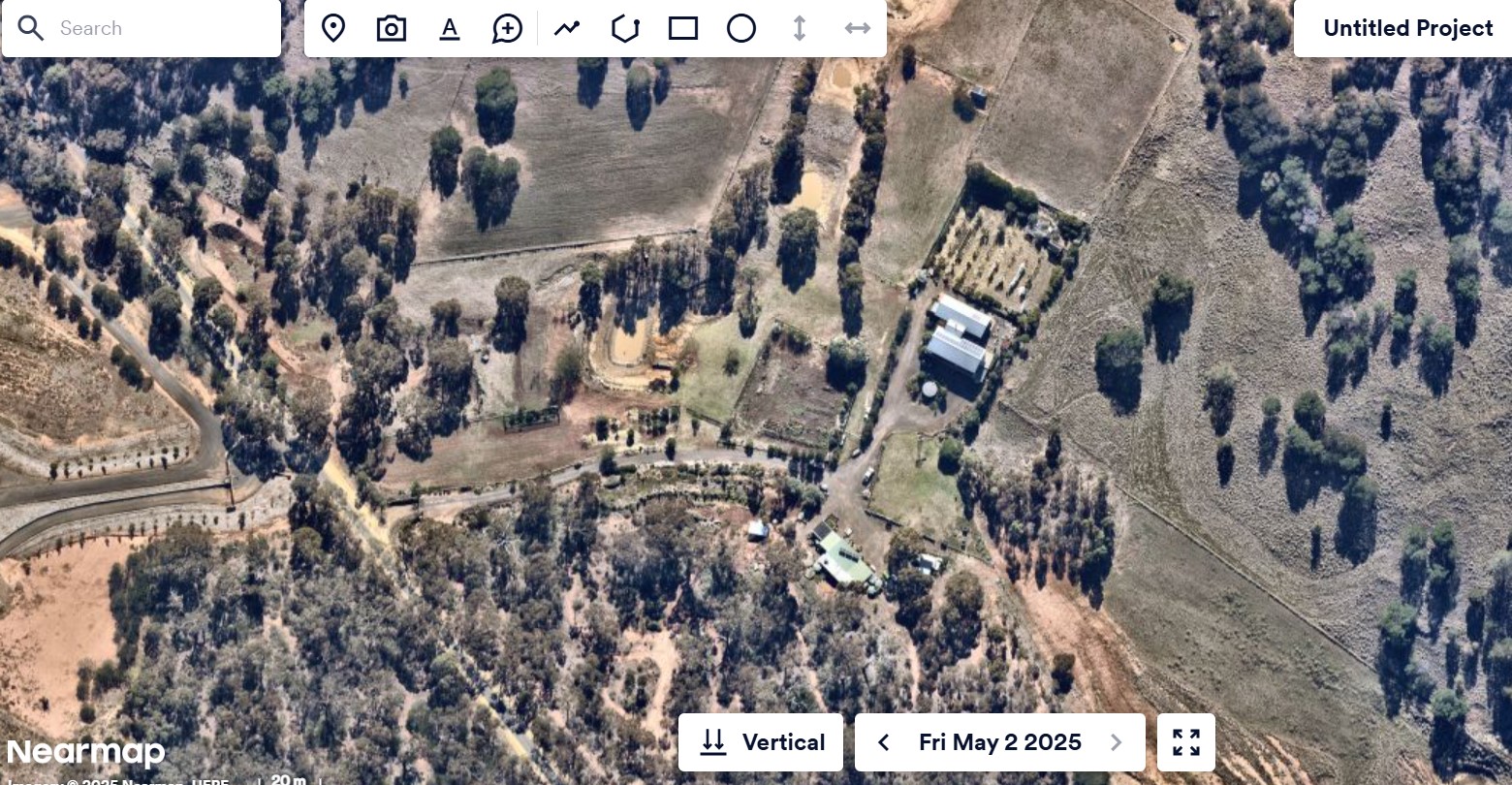
With the assistance of Moorabool Shire, the Alliance has been granted access to Nearmap’s aerial imaging platform. This imagery may assist landowners in preparing visual materials, including aerial maps of your property, for use in their EES submissions.
If you would like a map, please provide:
• Your Name
• Your physical address, and
• Any specific zoom detail required (e.g. “a zoom, in of my house and 100 metres surrounding it”).
Requests can be submitted to info@stoplaborstowers.org with the subject line
“MAPPING REQUESTED”.