STOP LABORS TOWERS NEWSLETTER – August 23 2025
THIS IS WHAT DEMOCRACY
LOOKS LIKE?
REALLY?
Right now, what’s happening in Western Victoria is nothing short of a disgrace.
We have a government – a Labor government, no less – ramming through a project that strips away land rights, steamrolls communities, and pretends to call it progress. It’s called the Western Renewables Link. But let’s be clear – this isn’t about clean energy. It’s about corporate capture, it’s about cutting corners, and it’s about silencing the very people who are supposed to have a voice in this process.
If you push back? They don’t listen. They ignore your feedback. They deny access to your land. They punish transparency. That’s not democratic consultation. That’s a threat.
And no – this isn’t a partisan issue. It doesn’t matter whether you’re a Labor voter or a Liberal voter, whether you’re a farmer, firefighter, immigrant, or retiree. If you value your rights, if you believe in due process, if you think governments should work for people – then this affects you.
Because this government has shown one thing very clearly: if you get in the way of their agenda, you are disposable.
Let’s be honest – it’s easy to look away. It’s easy to feel powerless. But this is exactly what they count on – your silence. Your exhaustion. Your willingness to throw up your hands and say, “What’s the point?”
Here’s the point: you still have a voice. And if enough of us use it, they will hear us.
This isn’t just about one bad project. It’s about what kind of democracy we live in. One where a government listens, or one where it bulldozes – literally and politically – everything in its path.
You want a better future? Then show up. Speak out. And don’t let them write the story without you.
STAND UP FOR THE BUSH
– RALLY IN BALLARAT!
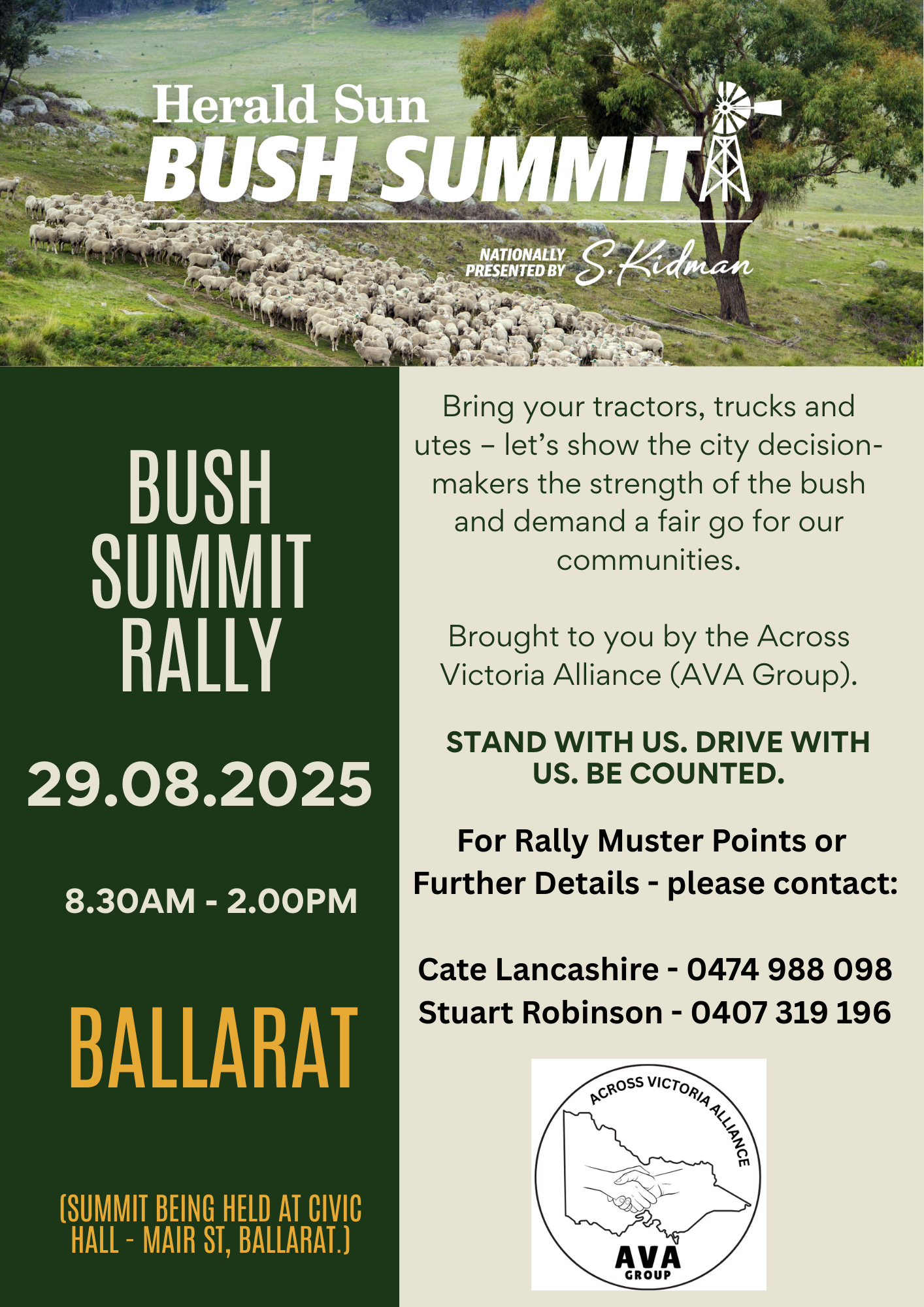
STAND UP FOR THE BUSH – RALLY IN BALLARAT!
City decision-makers are gathering in Ballarat for the Herald Sun Bush Summit – but this is our moment to show them the true strength of the bush.
It’s time to stand together and demand a fair go for our communities. Bring your tractors, trucks and utes – let’s make it impossible to ignore the voices of regional Victorians.
📅 Date: Friday, 29 August 2025
🕣 Time: 8.30 AM – 2.00 PM
📍 Location: Civic Hall, Mair Street, Ballarat
👉 Rally with us outside the Summit. Drive with us. Be counted.
For muster points and more details, contact:
• Cate Lancashire – 0474 988 098
• Stuart Robinson – 0407 319 196
This is not just another event – this is about the future of our communities, our land, and our livelihoods. Let’s make sure our voices are heard loud and clear.
STAND WITH US. DRIVE WITH US. BE COUNTED.
At the Herald Sun Bush Summit, Wimmera crop farmer Barry Batters delivered a blistering attack on the government’s “terrible” transmission project plan, accusing bureaucrats of riding roughshod over hardworking farming families. “I’m sick to death of people from afar telling us how to live our lives,” he declared, furious that four 80-metre towers are slated to be built on his 3000-hectare property, with another six planned on land his family leases.
Barry says the consultation process has been nothing more than a sham. “They’re just ticking the boxes – that’s what they call consultation,” he warned, condemning the government for handing farmers mountains of paperwork with little time to respond. With the project’s costs exploding from $3.4 billion to a staggering $11.4 billion, he calls it “an ill-planned project costing an unknown amount of money. They haven’t even dug a hole yet and nobody has any idea what they’re doing.”
Farmers like Barry are uniting in defiance, vowing not to be silenced or coerced by compulsory acquisition powers. “We’re getting more traction,” he said, insisting the fight is far from over. “Farmers aren’t to blame for politicians’ incompetence.” Read the full story below.
EES SUBMISSIONS – ACT NOW
DUE BY AUGUST 25, 2025
Ensure Your Voice Is Heard – Tell Your Story
The Western Renewables Link EES is built on models and assumptions, not lived reality. The truth lies with you the farmers, the locals, the communities who know every watercourse, every fire path, every fragile habitat.
Your submission is more than a document. It is ground truth. It is your story, your evidence, your stand against a process designed to overlook the people most affected.
This is the moment to step forward. To show that our communities cannot be ignored, that our knowledge is real, and that our voices matter.
Tell your story. Ground-truth the record. Make your submission – and make sure you are heard.
Have Your Say – And Be Heard at the Hearing
In addition to lodging your written submission on the Western Renewables Link EES, you can also request time to present at the Panel hearing. We strongly encourage you to take up this opportunity.
You may nominate a time that suits you, and choose to present in person or via video conference. This is your chance to ensure your voice is heard directly, not just on paper.
When you lodge your submission, make sure you tick the box to request a hearing slot.
.
This is your step-by-step tool for action. Our community has developed this guide to make the WRL EES submission process simple, clear, and powerful.
Whether you’re a landholder, a neighbour, or simply someone who cares about the future of our region, your voice matters. Use this guide to speak up, protect our land, and ensure your concerns are part of the official record.
Exposed: The Truth Behind the Western Renewables Link and VicGrid Bill
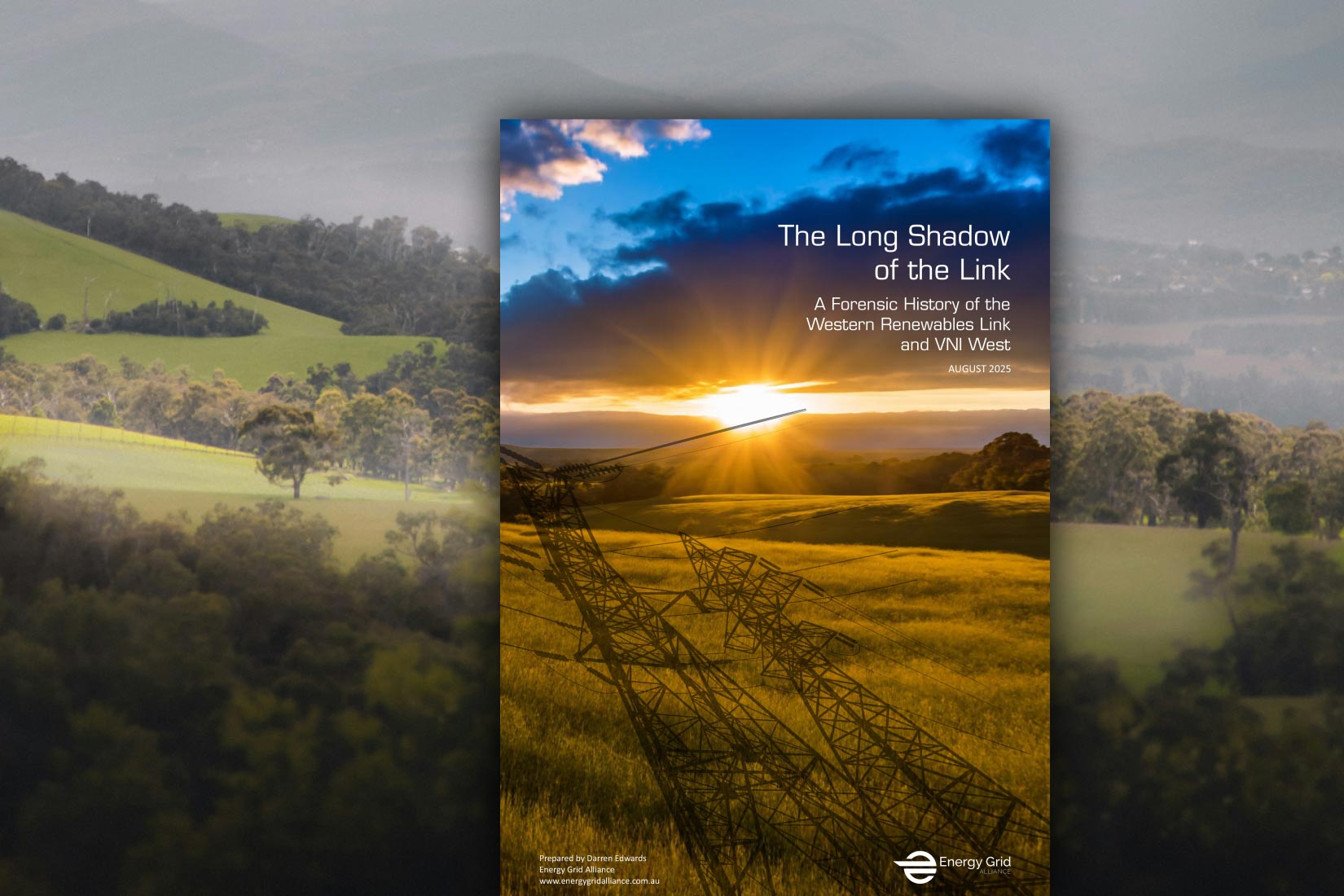
Exposed: The Truth Behind the Western Renewables Link and VicGrid Bill
Energy Grid Alliance has released three explosive documents that rip the veil off the Western Renewables Link (WRL), VNI West, and the Victorian Government’s new VicGrid Stage 2 Reform Bill. Together, they provide the clearest evidence yet of a planning process corrupted by political interference, catastrophic cost blowouts, and a complete breakdown of community trust.
The Long Shadow of the Link (Document Here)
A forensic history of the WRL and VNI West that reveals:
- The WRL was never about unlocking local renewables, but a “Trojan horse” for VNI West.
- AEMO engineered the process around land-banking and speculative future projects.
- Costs have exploded from $370 million to more than $3 billion for WRL alone, while VNI West has blown out to as much as $11.4 billion.
Briefing Paper: VicGrid Stage 2 Reform Bill (Document Here)
An in-depth legal and policy analysis showing how the Bill will:
- Concentrate unchecked power in VicGrid, merging planner, regulator, and enforcer.
- Strip communities of rights by allowing forced entry onto private land and criminalising protest.
- Shield decision-making from scrutiny by exempting VicGrid from Freedom of Information laws.
Released ahead of the Bush Summit, this statement lays bare the truth:
- “This entire process was engineered to deliver a predetermined outcome,” said EGA Director Darren Edwards.
- “The VicGrid Bill is the ultimate admission of failure… legislating the power to proceed without social licence”.
Why This Matters
These revelations confirm what communities have said for years: the WRL and VNI West are ill-planned, unjustified, and destructive. Worse, the VicGrid Bill seeks to lock in this broken model statewide ensuring conflict, delay, and spiralling costs for every Victorian household.
An Open Letter To the Lawmakers of Victoria:

History will remember the day you are now called to meet. For today is not merely a test of political resolve, but a reckoning for the principles that have defined our democracy a democracy that should never cast aside its community for bureaucratic convenience or speed disguised as progress.
You stand poised over the VicGrid Stage 2 Reform Bill, a piece of legislation that would remake Victoria’s infrastructure not through partnership, but through decree through power stripped of balance, and through silence forced upon those who dare to speak of their land and their rights.
Let us face the truth: this Bill does not accelerate Victoria’s transition to clean energy; it puts it in peril. It does not deliver public benefit; it delivers unchecked power. In a single legislative blow, it concentrates the roles of planner, developer, regulator, and enforcer into a single, government-controlled instrument shielded from Freedom of Information laws, immune to public scrutiny, and empowered to cross private thresholds with “reasonable force” and a Magistrate’s order.
Protest becomes crime. Dissent becomes danger. And civil disagreement is met with the cold authority of the state, rather than a fair hearing.
In passing this Bill, you would sever the centuries-old bond between people and the land – a bond that has endured drought and fire, built communities and fed the nation.
You would replace negotiation and social licence – the lifeblood of every successful public project – with coercion and secrecy. You would foster not consent, but resistance, not unity, but fracture.
Consider the consequences. You will not build faster. You will build on outrage and on litigation. You will see the landscape become not the foundation for a future, but the battleground for defending what should never have been threatened. Costs will spiral, delays will multiply, and mistrust will infect every corner of Victoria’s energy transition.
This is your moment. Reject the false choice between energy security and democracy – between progress and the rights of the people. Stand for a Victoria where accountability is not an inconvenience, and where power is never wielded without answer to those it governs.
If you pass this Bill unchanged, you will not accelerate progress. You will ignite opposition, guarantee costly delays, and fracture the social contract our communities uphold. You have been entrusted as stewards of public trust; do not betray that trust for political convenience.
Reject legislation that makes enemies of your own citizens. Build this transition with us, not against us. Let the legacy you leave be one of courage, fairness, and the unbreakable bond between people and their land.
Vote this Bill down, your decision today will be judged by history – not only for the visual and environmental damage caused, but for the deeper betrayal of rights that allowed it to happen.
Victoria is watching. Choose wisely.
WRL EES COMMUNITY RESOURCES KEY EES CHAPTERS FOR YOUR USE
11 CHAPTERS INCLUDED
SEE BELOW High Level Community produced reports containing a sample of our assessment of the EES.
Purpose: These reports highlight significant flaws in the EES and are provided to empower you to prepare and submit your own response.
Analysis: Our analysis is following a chapter by chapter basis and should assist in navigating and responding to the EES in detail.
Customisation: Please tailor these and the other reports to your own circumstances, or simply use them as inspiration. Our analysis takes a broad approach, your specific impacts may differ and provide powerful inputs.
We encourage you to review these reports, adapt them as needed, and use them to build your own informed submissions.
Chapter 8: Biodiversity and Habitat (LINK TO FILE)
- The biodiversity impact assessment is fundamentally flawed, with much of the Project Area left unsurveyed due to so-called ‘land access constraints.’ This systemic failure renders the ecological impact analysis speculative and unreliable, exposing significant risks to critically endangered ecological communities and protected habitats.
- Deferring essential ecological surveys to a post-approval phase subverts the core purpose of the EES process and denies decision-makers and the public the critical data needed to assess the project’s environmental consequences. The proposed clearance of over 238 hectares of native vegetation, including critically endangered ecological communities, represents a stark failure to adhere to environmental standards.
Chapter 14: Economic impacts (LINK TO FILE)
- The economic assessment systematically understates significant long-term negative impacts on local businesses and communities, relying on superficial qualitative ratings that fail to capture the true scale of economic distress. This flawed approach risks undermining public trust and misinforming planning decisions, leaving vulnerable sectors like tourism and hospitality inadequately addressed.
- By dismissing cumulative impacts and omitting key considerations like property value depreciation and adequate compensation, the economic analysis presents a dangerously incomplete picture. The lack of independent peer review and transparency in modelling further compromises the credibility of its findings, leaving local communities exposed to unmitigated financial losses.
Chapter 16 Aviation Impacts (LINK TO FILE)
- Permanent Degradation of Melton Aerodrome Safety. The assessment downplays permanent, significant safety impacts on Melton Aerodrome, unjustifiably characterising them as ‘minor.’ Forcing steeper non-standard approaches and shortened landing thresholds endangers pilots and degrades the aerodrome’s functionality, blatantly transferring risks to operators and violating statutory obligations. This mischaracterisation compromises aviation safety and undermines basic regulatory compliance.
- Critical Failures in Risk Management for Low-Flying Aircraft. AusNet’s proposed mitigation for increased risks to aerial agriculture and firefighting relies on mere administrative notifications, leaving a permanent hazard in place. This lack of tangible safety measures, such as high-visibility markers for transmission lines, disregards mandatory safety standards and endangers critical, life-saving operations. Relying on a map warning instead of addressing physical hazards is a profound safety failure.
- Deficient and Flawed Cumulative Impact Assessment. The claim that existing obstacles ‘shield’ new transmission towers and wind turbines is a dangerous logical fallacy. Instead of reducing risks, the proliferation of infrastructure creates cluttered, hazardous airspace, increasing the potential for pilot errors and restricting safe emergency operations. This failure to address growing cumulative risks exposes western Victoria to severe long-term aviation safety threats.
Chapter 19 – Noise and Vibration (LINK TO FILE)
- The noise and vibration assessment is critically deficient, with the complete omission of baseline vibration monitoring – a direct breach of EES Scoping Requirements. By relying on unsubstantiated assumptions and proxy data from unrelated projects, the report invalidates its own findings and exposes communities to unacceptable risks.
- Deferring key noise and vibration assessments to post-approval stages subverts the statutory purpose of the EES process and undermines accountability. Combined with unenforceable performance standards and a lack of independent peer review, the report fails to provide any credible assurance of environmental protection or community welfare.
Chapter 21 – Social Impact (LINK TO FILE)
- The Social Impact Assessment is fundamentally flawed, relying on a biased and invalid ‘landholder sentiment’ metric, gathered by project staff with a vested interest, to misrepresent community opposition as manageable. This ignores the profound and enduring social harm, including loss, powerlessness, and division, caused by imposing an unwanted project on unwilling communities. This contradicts AusNet’s own evidence of strong opposition to the proposed route and overhead design and consistent community demand for undergrounding.
- Critical social impacts, such as ‘ongoing frustration and resentment’ and an ‘enduring sense of loss,’ are dismissed with superficial mitigation measures like visual screening and a community fund. Coupled with a lack of independent peer review, this report fails to meet statutory requirements and undermines both the credibility of the project and the trust of affected communities.
Chapter 29 – The Environmental Management Framework (LINK TO FILE)
- Self-Regulation and Conflicts of Interest. AusNet’s Environmental Management Framework is fundamentally flawed, allowing the proponent to ‘approve’ its own environmental plans – a clear conflict of interest that bypasses independent regulatory scrutiny. This self-regulatory governance model privatises public oversight functions, putting commercial objectives ahead of environmental protection and violating the statutory intent of the Environment Effects Act 1978.
- Compromised Independent Audits. The so-called ‘Independent Environmental Auditor’ is neither independent nor reliable, as it is appointed and paid by AusNet – the very entity being audited. This blatant conflict of interest reduces compliance to a procedural formality, eroding public trust and leaving environmental risks effectively unmonitored.
- Unenforceable and Vague Requirements. AusNet’s Environmental Performance Requirements (EPRs) are systematically vague, using loopholes like ‘so far as reasonably practicable’ and ‘if necessary’ to evade concrete commitments to environmental outcomes. This approach makes auditing impossible and offers no assurance that the project’s significant impacts will be managed, monitored, or mitigated effectively.
- Collectively, the inadequacies in the EMF create an unacceptable risk that the WRL’s significant environmental impacts will not be adequately managed, monitored, or mitigated. The proposed EMF lacks the transparency, accountability, and enforceability required for a project of this scale and controversy.
Chapter 7 Community and Stakeholder Engagement (LINK TO FILE)
Extract: The evaluation of Chapter 7, “Community and Stakeholder Engagement,” reveals significant deficiencies and compliance risks that undermine the credibility and robustness of the project’s social impact assessment. Persistent “Community distrust” indicate a profound failure to achieve the substantive transparency and genuine public involvement objectives inherent in the Act.
Chapter 11 Landscape and Visual (LINK TO FILE)
Extract: The analysis reveals significant deficiencies and inconsistencies within the EES’s LV assessment. While the EES outlines a methodology, its application frequently lacks the rigor, transparency, and evidence-based justification required for such a major infrastructure project. Key flaws include subjective impact rating justifications, inadequate consideration of heritage landscape impacts, and an over reliance on design mitigation without robust evidence of effectiveness.
Chapter 12 Land Use and Planning (LINK TO FILE)
Extract: This examination concludes non-compliance with key EES Scoping Requirements and Victorian planning principles. These flaws pose substantial risks, including a significant underestimation of project impacts, potentially leading to inadequate planning and management of adverse effects on land use,agricultural enterprises, residential amenity, and cultural heritage. Such deficiencies risk eroding public trust due to perceived biases and the dismissal of community concerns. Potential legal and regulatory challenges may arise from non-compliance, leading to sub optimal environmental and social outcomes if mitigation measures are insufficient.
Chapter 13 – High Level Assessement of Bushfire
Extract: The WRL EES’s assessment of bushfire risk is fundamentally flawed. It underestimates ignition potential, misrepresents emergency service limitations, and fails to uphold the legal and ethical primacy of human life. Without a rigorous, site-specific, and transparent reassessment – grounded in best practice and local realities – the project should not be allowed to proceed in high-risk areas. The current EES is insufficient, misleading, and places lives and property at unacceptable risk.
Chapter 15 – High Level Assessment of Agriculture
Extract: The WRL EES fundamentally underestimates and misrepresents the severe, multifaceted impacts of high-voltage transmission infrastructure on agricultural operations. The EES’s optimistic framing of residual impacts as “minor” or “negligible” is contradicted by independent research, industry guidelines, and the lived experience of farming communities.This analysis identifies major shortcomings in the EES’s approach, demonstrate these flaws undermine agricultural viability…
See the full EES here
Don’t wait. Start your submission today and stand up for Western Victoria.
More details and resources here via Moorabool Shire
AERIAL MAPPING IMAGES TO HELP YOUR EES SUBMISSION
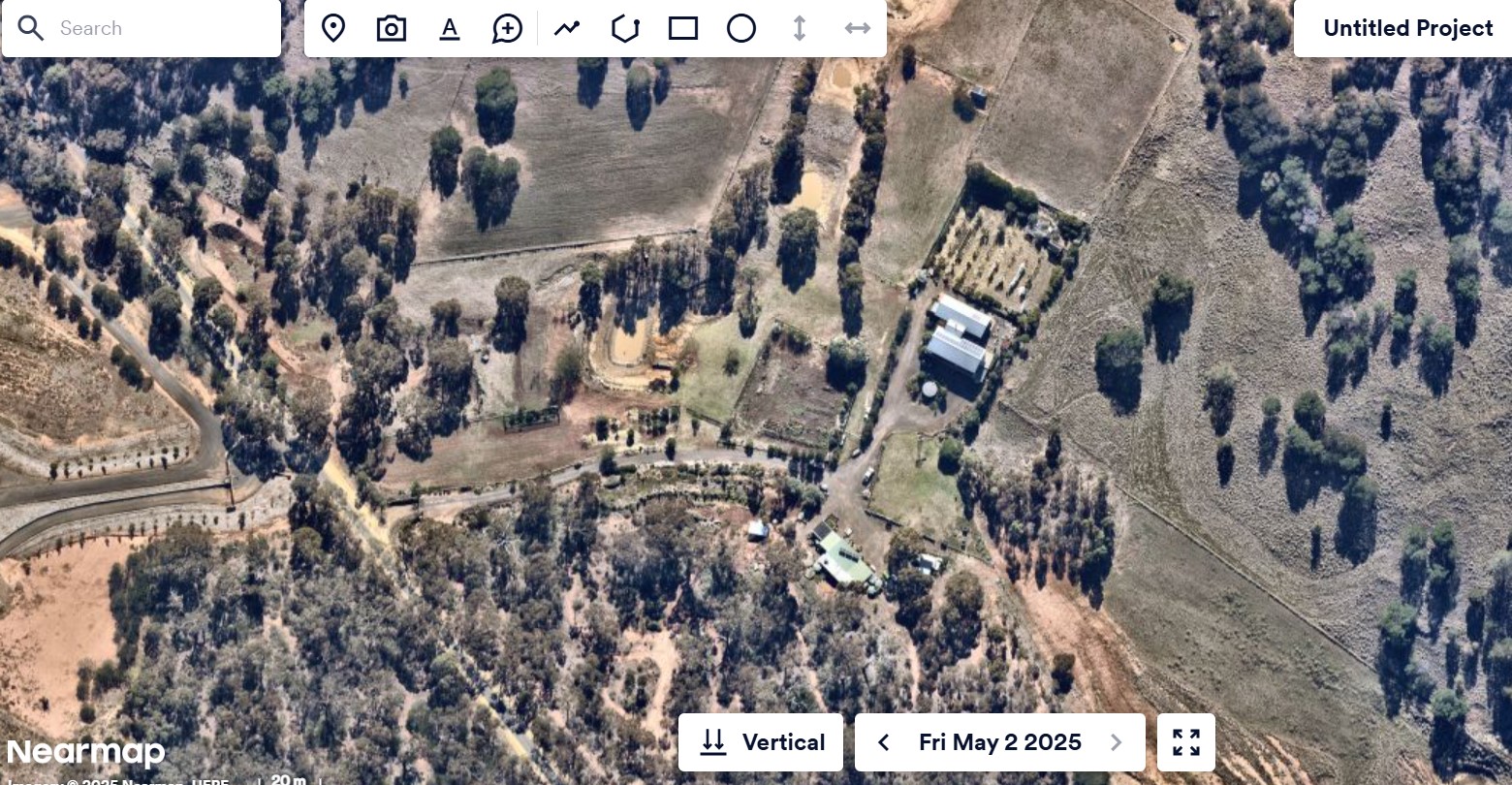
Aerial Mapping Support
With the assistance of Moorabool Shire, the Alliance has been granted access to Nearmap’s aerial imaging platform. This imagery may assist landowners in preparing visual materials, including aerial maps of your property, for use in their EES submissions.
If you would like a map, please provide:
• Your Name
• Your physical address, and
• Any specific zoom detail required (e.g. “a zoom, in of my house and 100 metres surrounding it”).
Requests can be submitted to info@stoplaborstowers.org with the subject line
“MAPPING REQUESTED”.